How Much Does Herd Health Cost Per Cow?
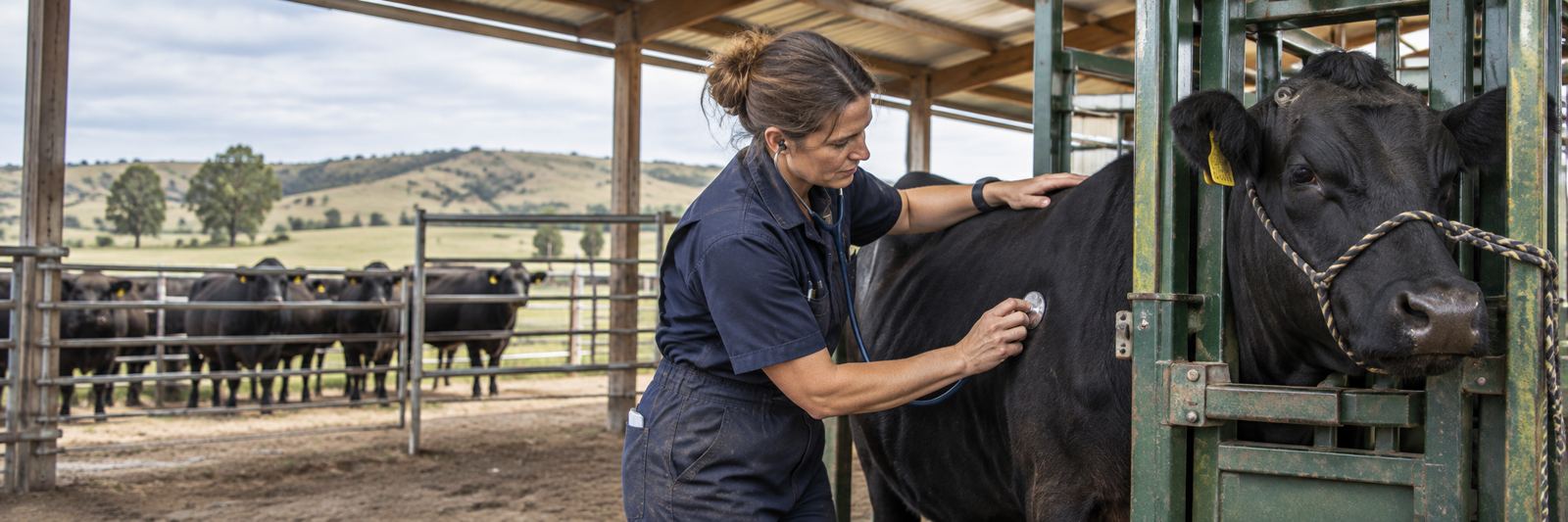
Every rancher wants one number: what does it cost per cow per year to keep the herd healthy? The honest answer is that it depends on your region, your vet's prices, your herd's history and how many things went wrong. Anyone who gives you a single exact figure is selling something, or hasn't seen your vet bill.
What you can do is build your own number, and it's not hard. Herd health costs fall into a few predictable buckets, and most of the money goes to two or three of them. Once you know which, you can budget with a straight face and spot where money is leaking.
Prices for vaccines, drugs, labor and vet calls change often, so this article doesn't quote dollar amounts as fact. It gives you the structure to plug in your own quotes. Think of it as a spreadsheet with the numbers left blank, because the numbers are the part that go stale.
The cost buckets
| Bucket | What's in it | How it behaves |
|---|---|---|
| Vaccines | Respiratory, reproductive, clostridial, scours, and others per your vet's plan | Fairly predictable per head; varies with herd status and product choice |
| Parasite control | Dewormers, fly and lice products, fecal egg counts | Moderate; swings with climate, product choice, and how much you test first |
| Routine vet work | Pregnancy checks, bull breeding soundness exams, herd consultations, tests | Mostly scheduled; a good place to ask for group pricing |
| Treatments and emergencies | Antibiotics, calving help, c-sections, pinkeye, foot rot, vet farm calls | The wild card. A few bad weeks can outweigh everything else |
| Supplies and equipment | Needles, syringes, ear tags, gloves, pullers, thermometers, tubes | Small per cow but adds up; replace in bulk |
| Testing and biosecurity | BVD-PI testing, trichomoniasis testing, quarantine time, Johne's tests | Varies by risk; often cheaper than the disease |
| Labor and time | Your hours and hired help at the chute | Often ignored, never free |
Where the money tends to go
For most cow-calf herds, the routine preventive costs, such as vaccines, parasite products and scheduled vet work, make up the steady core. They're predictable and can be shopped around. The large swings come from sick animals, calving trouble, and the occasional wreck.
Reproductive losses are also a big part of the true cost, even though they don't show up on the vet invoice. An open cow, a lost calf or a late calf costs you far more in lost revenue than most vaccines cost per dose. That's the logic behind most preventive programs: the shot isn't the expense, the empty pasture is.
How to build your own per-cow number
- Pull last season's receipts. Add up vet bills, drug purchases, vaccines, supplies and tests. Don't forget the feed store charges and the mail-order box that showed up in February.
- Divide by cows exposed. Use the number of cows you carried through the year. Divide again by the calves weaned if you also want a cost per calf.
- Split it into routine and emergency. Routine costs are budgetable. Emergencies need a reserve instead of a line item.
- Ask your vet for a written protocol and a price list. Most vets are glad to quote a package for a herd of your size. See building a working relationship with a large animal vet for how to make that conversation useful.
- Add the reserve. Many ranchers set aside an emergency amount per cow, or a lump sum for the herd, since a single bad calving season can wipe out the routine budget.
- Track it every season. A rolling record shows whether costs are creeping up, and what changed.
Once you've got your health number, drop it into a larger plan. How to build a cow-calf budget and what it costs to run a beef cow per year show where health sits next to feed, labor and interest.
What pushes costs up
- Small herds. Vet farm calls and fixed supplies get spread over fewer cows, so per-cow costs run higher.
- Buying cattle. Purchased animals bring unknown health histories. Quarantine, testing and extra treatments add up.
- No working facilities. Poor handling equipment means more labor, more injuries and sometimes more vet calls.
- Wet and humid climates. Parasites, foot problems and flies cost more to control on the Gulf Coast and in the Southeast than in the dry West.
- Wrong-time treatment. Treating late or not at all can turn a cheap fix into a vet-call fix.
- Calving trouble. First-calf heifers and poor bull selection create expensive calvings.
Your cattle don't check the budget before they get sick, either. A calf with pneumonia doesn't wait for payday, and the vet is less patient than the feed store about being paid.
Where you can save without cutting corners
The cheapest way to cut health costs is to prevent the thing that needs the expensive treatment. A few examples:
- Test before you treat. A fecal egg count costs less than a round of dewormer you didn't need. How to run a fecal egg count on your herd covers how to do it.
- Quarantine new animals. A proper quarantine routine is cheap compared with a purchased disease.
- Keep your own medical kit stocked. A well-planned cattle medical kit means fewer midnight runs to buy something at premium prices.
- Learn to give injections correctly. Wasted doses and abscesses cost real money; see how to give cattle injections the right way.
- Group vet work. Bundle pregnancy checks, bull exams and vaccinations into one visit when it makes sense. A farm call is a fixed cost whether the vet looks at one cow or fifty.
- Buy supplies in bulk, but watch expiration dates and storage. Vaccine that got warm in a truck cab is the most expensive vaccine you'll ever buy.
Where not to save
There's a difference between frugal and foolish. Skipping a vet call on a calf that's going downhill isn't saving money. Reusing needles on a whole herd isn't either, and neither is using the cheapest product with no idea what it's meant to cover. Cutting on core vaccines or on bull exams tends to cost more than it saves. When you aren't sure, ask. A phone call to your vet is cheaper than a wreck, and good vets would rather answer a dumb question than treat a dead calf.
Also be careful with antibiotics. Rules have tightened on what you can buy and use without a veterinarian. Read up on cattle antibiotics and VFD rules before stocking the shelf.
Is it worth it? A way to think about it
Compare your yearly health spend to what an open cow or a dead calf costs you. If one lost calf takes a large bite out of a whole herd's preventive budget, a program that prevents even a few losses can pay for itself. The numbers are specific to your market, so work them out with your own calf prices. Programs like preconditioning calves are worth running through the same math before you decide.
For regional cost-and-return budgets and herd management research, land-grant universities are the place to look. The University of Nebraska-Lincoln beef program publishes a steady stream of material, and your own state's extension office can point to budgets built on local prices.
Quick answers
What is a normal herd health budget per cow?
It varies widely by region, herd size, vet prices and how many problems you have. Instead of copying a figure from someone else, add up your own receipts and ask your vet for a written protocol and price list.
Do small herds spend more per cow on health?
Usually, yes. Fixed costs like vet farm calls and equipment spread over fewer animals, so the per-head number looks higher. Grouping jobs into one visit helps.
Should I budget extra for emergencies?
Yes. Routine costs are predictable, but calving trouble, pinkeye outbreaks or a sick purchase aren't. A reserve in the budget keeps one bad week from derailing the season.