Blackleg and Clostridial Diseases in Calves
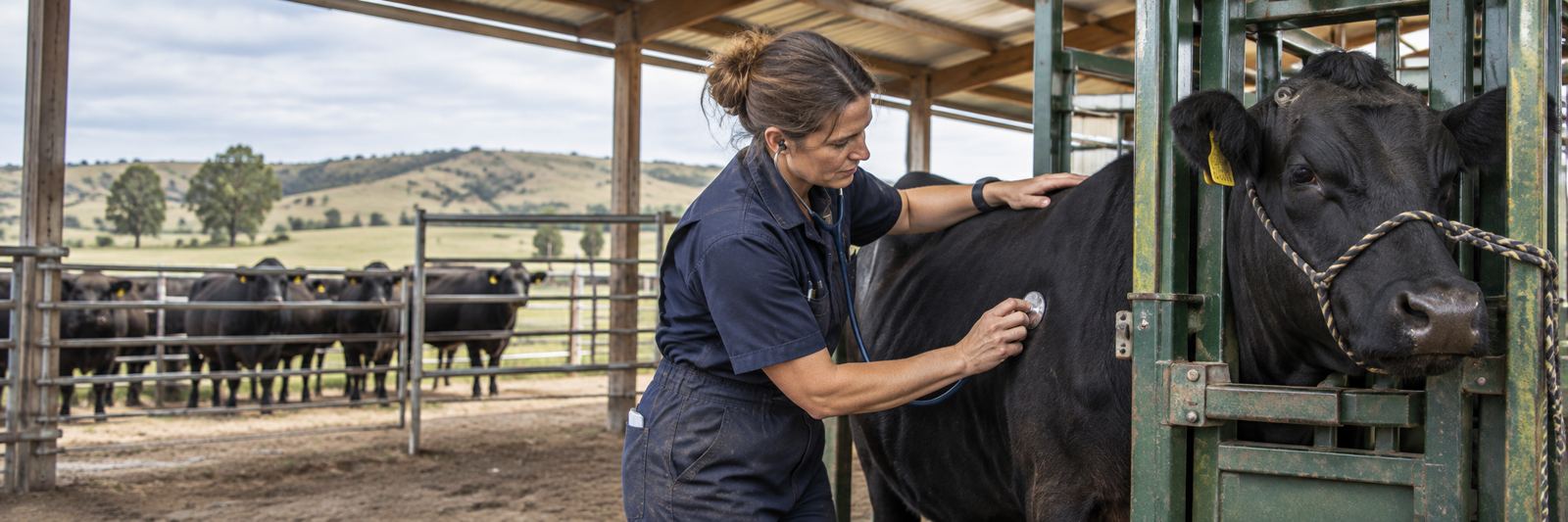
The best calf in the pen is often the one most likely to die of blackleg. Nobody's kidding; that's how the disease works. Fast-growing, well-fed cattle, usually from about six months to two years old, are the typical victims. You look at the pen in the evening and everything's fine. The next morning there's a calf on his side, bloated and stiff, and you won't ever know how he got there.
Blackleg and its relatives are called clostridial diseases, after the family of spore-forming bacteria that cause them. The spores live in soil for years, and cattle pick them up from forage, feed or wounds. They aren't contagious from animal to animal. Once a calf is sick, treatment rarely works. Vaccination is cheap, it's effective, and it's the only thing that really protects you.
That's why nearly every extension and veterinary program recommends a multi-valent clostridial vaccine, the "7-way" or "8-way" you hear about at the vet clinic, as a routine part of working calves.
What blackleg looks like
The cause is Clostridium chauvoei, which lives in the soil as spores and can lie dormant in muscle tissue until something triggers it. Bruising, injury or a change in oxygen supply can wake the bacteria up, and they produce toxins that kill muscle and then the animal.
Signs, when anyone sees them, include:
- Sudden lameness, often in one leg, usually the first clue
- Fever, depression and loss of appetite
- Swelling in the hip, shoulder, back, neck or chest that starts hot and painful and turns cold and numb
- Crackling under the skin when pressed, from gas in the tissue
- Rapid breathing
- Death within hours, usually within a couple of days
West Virginia University Extension's blackleg fact sheet notes that the first sign is often a dead animal, and that death can occur within 12 hours. Mortality is near total. Treatment with high doses of antibiotics early is possible in theory, but you usually find the animal after the window closed. Sick calves should get a vet's attention immediately, and carcasses should be handled according to your vet's and state's instructions to avoid spreading spores.
The other clostridial diseases
Blackleg is the headline, but several relatives live in the same soil and cause similar sudden deaths. The common vaccines are built to cover several at once.
| Disease | Organism | What it does |
|---|---|---|
| Blackleg | C. chauvoei | Muscle infection, swelling, sudden death |
| Malignant edema | C. septicum | Wound infection with spreading swelling, often after processing or injury |
| Black disease | C. novyi | Liver infection, often with liver damage from flukes |
| Enterotoxemia (overeating disease) | C. perfringens types C and D | Toxins from gut bacteria, often after a feed change or heavy intake |
| Red water | C. haemolyticum | Blood destruction and dark urine, a concern in some regions |
Both the 7-way and 8-way vaccines cover blackleg, malignant edema, black disease and the enterotoxemia types. The extra piece in an 8-way is protection against red water. According to the West Virginia fact sheet, red water isn't common there, so it depends on where you live. Ask your vet which clostridial species cause trouble in your county before paying for extra coverage you may not need. Products vary, and some include additional antigens such as tetanus, so check the label.
When to vaccinate calves
Calves get early protection from antibodies in colostrum. That protection fades over the first few months and can also interfere with the vaccine if it's given too early. So the timing of the first dose and the booster matter.
- First dose. The West Virginia sheet puts the first shot at around 60 to 90 days of age, or at first processing.
- Booster. A booster about three to four weeks later, or at weaning, is standard for most 7-way products. A few products are labeled as single-dose, but calves vaccinated before about three months of age generally need another dose at weaning or at four to six months.
- Replacement heifers and bulls. Keep them up to date and give boosters on schedule.
- Cows. Annual vaccination of the cow herd strengthens her immunity and passes antibodies to the next calf through colostrum.
The right timing depends on your calving season, your processing day, your region and the vaccine's label. Your vet can fit it into a routine, and the master schedule in a beef cattle vaccination schedule for cow-calf herds shows how this slots in with other shots. If you're deciding what else belongs in the program, which vaccines beef cows really need breaks it down by priority.
Cost and handling
The same fact sheet puts clostridial vaccine at roughly a dollar or two per head, plus labor. Compare that to the loss of one good weaned calf and the math isn't difficult. This is the cheapest insurance on most ranches.
Handling matters, though. Follow the label for dose, route and site, which for most clostridial vaccines is subcutaneous. Store vaccine cold and out of sunlight. Don't mix vaccines in one syringe unless the label says you can. Use clean, sharp needles and change them often. If you're new to this, the steps in how to give cattle injections the right way will save you lumps and abscesses. Some clostridial products can produce a knot at the injection site, and Beef Quality Assurance guidelines favor neck injections for that reason.
Processing day is also when most clostridial vaccine goes in. The checklist in a calf processing day checklist helps make sure nothing gets skipped when the crew is moving fast and the calves are not cooperating.
Mistakes to avoid
- Skipping the booster. One dose in a young calf doesn't build full protection for many products.
- Vaccinating only the calves. Cows with up-to-date vaccination pass more antibody through colostrum.
- Forgetting purchased cattle. A set of calves from the sale barn has an unknown history. Vaccinate and booster according to your vet's advice.
- Vaccine that sat in the truck. A warm cooler is a dead vaccine.
- Waiting for an outbreak. By the time you see the first death, the others may already be incubating.
- Assuming it's "just lightning." Sudden death on pasture gets blamed on lightning more often than lightning deserves. Ask your vet to open the calf.
Regional notes
Clostridial spores are everywhere, but risk shifts with the land. Blackleg shows up on pastures where soil has been disturbed by flooding, construction or tilling, and it tends to appear in certain fields over and over. Black disease follows liver flukes, which are a bigger concern in the Gulf Coast and Southeast. Overeating disease follows feed changes, which can happen anywhere from the Northern Plains to the Southeast. Talk with your vet or county agent about which of these matter in your area.
Quick answers
What is the difference between 7-way and 8-way vaccines?
Both cover blackleg, malignant edema, black disease and enterotoxemia types C and D. The 8-way adds protection against red water. Whether you need it depends on whether red water occurs in your area, so ask your vet.
Can I treat a calf with blackleg?
In most cases, no. The disease moves too fast, and calves are often found dead. If you spot an early case, call the vet right away, but prevention through vaccination is far more reliable than treatment.
Do adult cows need clostridial shots?
Many programs give adult cows an annual booster, which keeps their immunity up and passes antibodies to the calf through colostrum. Your vet can tell you how often fits your herd and region.