Cattle Lameness: A Quick Field Diagnosis Guide
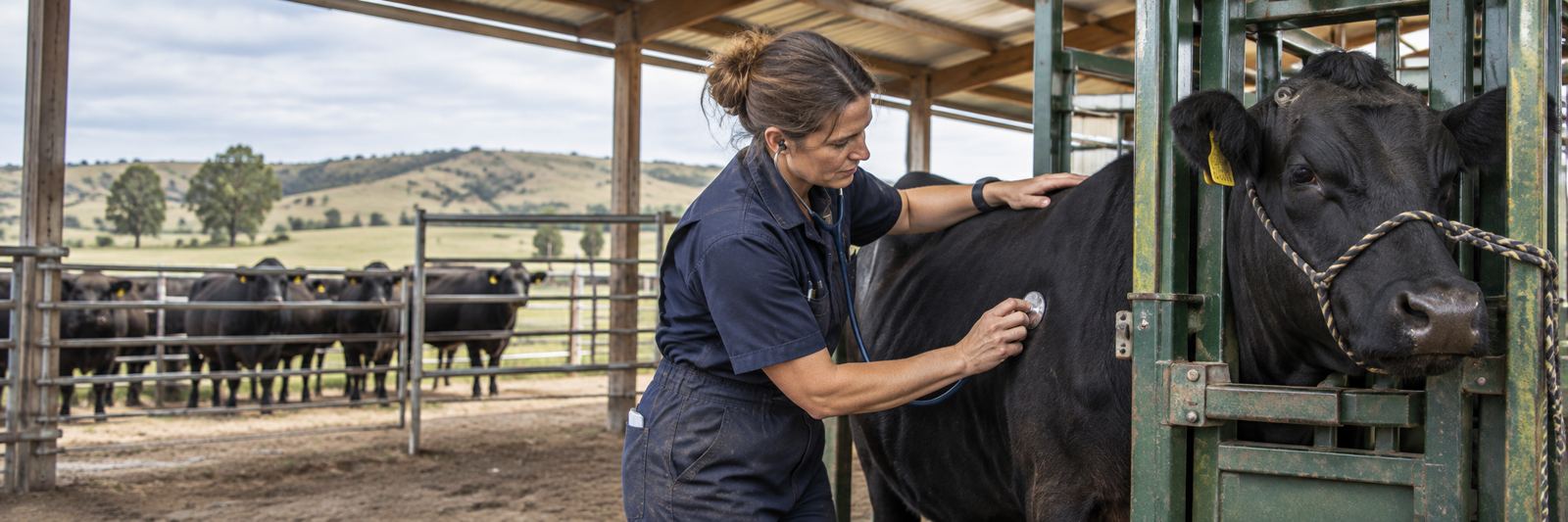
A cow that limps across the pasture has already made your afternoon plans for you. The goal isn't to diagnose her from the truck window. It's to work out three things quickly: which leg, which part of that leg, and whether this is a "treat it today" problem or a "call the vet before supper" problem.
Most lameness in beef cattle lives in the foot. Foot rot, abscesses, foreign objects and heel warts cover a big share of it, and they look different once you pick up the foot and compare both sides. The rest is joints, tendons and the occasional bull who landed wrong on a cow that wasn't interested.
Here's the order I'd work in, with the swelling pattern doing most of the talking. Cattle are good at hiding pain right up until they can't, so a cow that's visibly lame has usually been uncomfortable for a few days already.
Start from the fence, not the chute
Watch her walk before you put a rope on anything. Once she's in the squeeze chute, adrenaline masks a lot, and a cow in a headgate will stand on a bad foot like it's nothing. A minute or two of watching from a distance saves guessing later.
- Which leg? Front-leg lameness shows as a head bob when the sore leg hits the ground. Hind-leg lameness shows as a shortened stride and a dropped hip on the bad side.
- Toe-touching or no weight at all? That points to something deep or severe, and it moves the cow to the front of the line.
- One cow or several? One limping cow is usually an injury. Three limping cows in a wet lot is a pattern, and the pattern is probably infectious or related to ground conditions.
- Fever, off feed, hanging back from the herd? Lameness plus a sick animal suggests infection, not just a stone bruise.
Then get her restrained safely. A good working chute with a headgate that actually catches is worth more than any tool in the medicine box, because you can't examine a foot on a cow that's rearranging your ribs.
Read the swelling
Kansas State's extension beef team lays out a simple first question: is the swelling symmetrical or one-sided? According to K-State's guide to differentiating pasture lameness, swelling above the hoof that shows up evenly on both sides of the foot tends to point at foot rot or a foreign body, while one-sided swelling suggests a deeper problem such as a puncture, sole abscess or chronic infection.
| What you see | Likely suspect | First move |
|---|---|---|
| Even swelling above the hooves, crack between the claws, foul smell | Foot rot | Call your vet about treatment; early treatment matters |
| Sharp horizontal line across the lower leg | Wire, twine or bale wrap cutting in | Find it and remove it carefully |
| Swelling on one side, heat, pain when the sole is pressed | Sole abscess or puncture | Vet exam; it may need sedation to open and drain |
| Hind-leg limp, shifting weight, calf just shipped in | Toe tip necrosis | Hoof testers, vet-guided treatment |
| Walking on toes, no big swelling, red wart-like patch near the heel | Digital dermatitis (heel warts) | Topical treatment as your vet directs |
| Several swollen joints on a young calf | Joint infection, often after a navel or respiratory problem | Vet visit the same day |
That table is a starting point, not a verdict. Foot rot and an abscess can look similar to a tired eye, and the treatment differs, which is why the difference between foot rot and a hoof abscess is worth getting right before you load a syringe.
Pick up the foot
This is the part everyone puts off, and it's where the answer usually sits. Clean the foot with a brush or a hose if you have one. Then look at it like you're trying to find a lost earring.
- Compare the sore foot to its twin on the other side. Swelling you can't see in isolation jumps out next to a normal foot.
- Spread the claws and look at the skin between them for cracks, raw areas and smell. Foot rot has a smell you won't forget.
- Check the heel bulbs and dewclaw area for red, raw or wart-like growths.
- Look at the sole for a dark spot, a puncture or a rock wedged in.
- Press with hoof testers if you have them. A cow that flinches at one spot just told you where to look.
- Run a hand up the leg, feeling for heat and swelling in the pastern, fetlock, hock or knee.
If you find wire or twine wrapped tight, cut it free, clean the area and then call your vet about the damage underneath. A band of old baling twine that has been there a week can sink into the tissue until you can barely see it.
What causes it, and where
The cause leans on the country you're in. In the Southeast and Gulf Coast, wet ground and mud around gates and tanks give foot rot an easy start. On the Southern Plains, dry, hard ground with rocks and stubble leans toward punctures and sole injuries, and a sudden rain can change the picture fast. Northern Plains operations see plenty of winter injuries on frozen, rutted ground, plus ice-related hock and stifle trouble. In the Mountain West, rocky range and long walks to water add stone bruises and worn feet.
A few other common causes are worth knowing:
- Heel warts. Often come in with purchased cattle. Look at the feet of anything new before it joins the herd.
- Structure. Straight-legged, long-toed or toe-in cattle wear and break down faster. Bulls especially. A look at bull feet and leg structure before you buy saves you a limping herd sire later.
- Injury from handling. Slick concrete, bad alley footing and a gate that never latches are an orthopedic problem waiting to happen.
- Joints. In bulls, a torn cruciate ligament after breeding is a recognized cause of hind-leg lameness. In calves, swollen joints are a sign to call the vet, not wait.
If you like your cattle problems with a little poetry, this farm.FM piece of cowboy poetry on unruly livestock will keep you company, and it's a reminder that a cow's version of "walking it off" tends to run longer than yours.
When to stop playing doctor
Oklahoma State veterinary faculty put it plainly in their guidance on when to call the veterinarian: treat lameness as urgent if a bone looks broken, the skin is broken, or the animal only touches its toe to the ground or won't bear weight. Other lameness should still be looked at within a day or two, and a suspected fracture shouldn't be moved or splinted before the vet arrives.
Call sooner rather than later if:
- Swelling is one-sided or involves a joint.
- You can't find the cause after a careful foot exam.
- She's off feed, running a fever or isolating herself.
- She isn't better in a couple of days of whatever your vet recommended.
For the rest of the red-flag list, the rundown on when to call the vet for a sick cow is worth bookmarking. Don't hand out antibiotics just because the leg is swollen. The wrong drug on the wrong problem costs money and gives you false confidence.
Quick answers
Why is my cow limping but the foot looks normal?
The problem may be higher up, in a joint, tendon or the hip and stifle, or deep inside the hoof where you can't see it. Compare the legs, feel for heat and swelling, and call your vet if a careful exam turns up nothing.
Can lameness in cattle heal on its own?
A bruise or minor strain might settle in a few days. Infections like foot rot and abscesses generally don't, and delay can let the infection reach tendons, joints and bone. If she isn't clearly better in a day or two, get her evaluated.
Is lameness contagious in a herd?
Some causes are, including foot rot and heel warts. Injuries and structural problems aren't. If more than one animal is limping, look at shared ground, mud and recent additions to the herd.