Dewormer Resistance in Cattle Explained
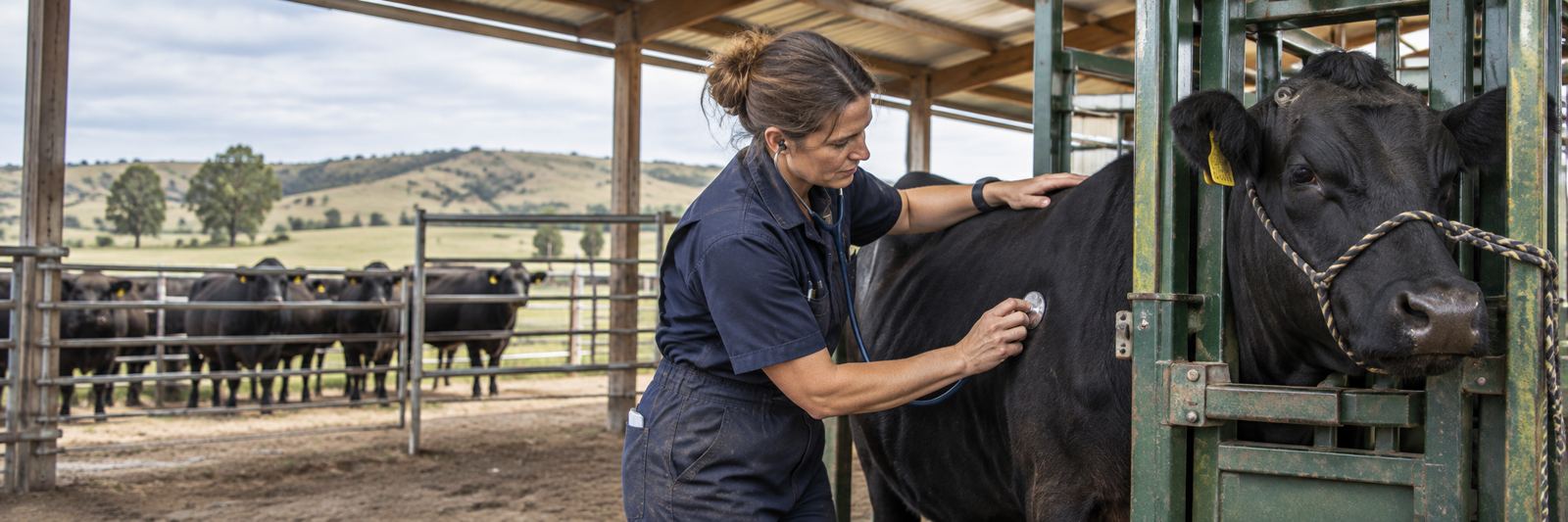
If your calves got a squirt down the back in the spring and still look like they've been living on gravel and good intentions by late summer, the dewormer may not be the problem. Or it may be exactly the problem. The only way to know is to count worm eggs before and after treatment, because guessing is how most of us got into this mess.
Resistance means the worms that survive a treatment are the ones that pass on the tough genes. Do that enough seasons in a row and the drug you've trusted for twenty years starts working about as well as a stern look. It's real in cattle, it's documented in several regions, and it's mostly man-made.
The good news is that you can measure it on your own place for the price of some sample bags and a lab fee, and you can slow it down with habits that cost almost nothing.
What resistance actually is (and isn't)
Every pasture holds a mix of worms. A few can shrug off a given drug even before you ever use it. When you treat the whole herd, the susceptible worms inside the animals die and the tough ones keep laying eggs. Those eggs land on pasture, and the next generation is a little harder to kill.
That's resistance: a change in the worm population, not in the cow. Your cattle don't "get used to" the wormer. The worms get used to the cattle getting it.
It isn't the same as a drug simply failing to work because of how it was given. A pour-on that ran off the back in a rainstorm, a dose guessed by eyeballing a 900-pound heifer that weighs 1,100, or a wormer cooked in the truck cab all summer can look like resistance. They're sloppy-handling problems, and they're fixable. Rule those out first.
How it happens on a normal ranch
Nobody sets out to build a resistant worm herd. It happens through routines that look perfectly sensible from the tailgate.
- Treating everybody on the calendar. Deworming every animal every spring and fall leaves almost no untreated worms on the ground to dilute the survivors.
- Using one drug class for years. If the pour-on has been the only tool for decades, the worms have had plenty of practice.
- Underdosing. Dosing to the average animal, or to the weight you remember from last fall, leaves the biggest animals with a partial dose. A partial dose is the best resistance recipe there is.
- Moving treated cattle straight onto clean pasture. The only worm eggs on that pasture will be the ones that survived the treatment. You've basically seeded it with the toughest ones.
- Treating adult cows that don't need it. Mature cows with decent immunity usually carry light loads. Dosing them is mostly a ritual.
What the testing shows
An Oklahoma State presentation on anthelmintic resistance in Oklahoma beef cattle tested 16 herd sample sets using fecal egg count reduction testing. Thirteen of the 16 showed less than a 90 percent reduction, which points toward resistance. In the same herds, ivermectin did poorly where it had been used for years while fenbendazole still worked. The authors were careful to call it "apparent" resistance and noted the sample was small, so treat it as a warning flare and not a verdict on your county.
The takeaway isn't "ivermectin is dead." It's that results vary from ranch to ranch, which is exactly why you test your own herd instead of trusting the neighbor's opinion. The neighbor, by the way, has an opinion on everything including your fence.
How to test whether your wormer works
The standard tool is a fecal egg count reduction test. The idea is simple: count eggs in manure on the day you treat, count again after the drug has had time to work, and see how far the number dropped. The University of Maryland's fact sheet on the fecal egg count reduction test lays out the details. Roughly, you pull fresh samples from at least 15 to 20 animals in the group, then sample the same animals again 10 to 21 days later, depending on the drug class.
| Egg count reduction | What it suggests |
|---|---|
| Above 95% | Drug is working |
| 90 to 95% | Reduced efficacy, resistance suspected |
| Below 90% | Resistance likely |
| Below 70% | Drug is doing very little |
Those cut-offs come with caveats. If the starting egg counts were very low, the math gets shaky, since there's not much to reduce. The animals also have to be treated properly for the test to mean anything, so weigh them or at least dose to the heaviest one. If you haven't tracked down how to collect the samples, here's how to run a fecal egg count on your herd, and your vet can handle the lab side.
What to change if the numbers look bad
Stop deworming by the calendar
Pick the groups that actually carry worms: calves and young stock, typically under about 16 months. Test a few animals, treat when the counts say so, and give the mature cows a rest unless the test says otherwise. A rancher who only treats the animals that need it will spend less and select for resistance far more slowly. The full routine for deworming beef cattle covers timing by region.
Leave some animals untreated
Extension specialists describe this as leaving a refuge: a share of healthy, thrifty animals in a high-risk group stays untreated so susceptible worms stay in circulation. The Maryland sheet suggests leaving the best-performing 10 to 15 percent. The Oklahoma presenters were frank that the best method for cattle isn't settled, so talk it over with your vet before you start picking favorites.
Dose by weight, apply it right
A scale pays for itself in correct dosing alone. If you're still deciding, the case for a scale on a small place is easier than most people think. And read the label on the pour-on: some are meant to go down the topline, not splashed on a shoulder while a calf is trying to climb the alley wall. Whether a pour-on or an injectable fits your herd is a separate question, covered in pour-on vs injectable dewormers for cattle.
Consider a combination, with your vet
Some programs use two drugs from different classes at the same time, which is generally considered more resistance-friendly than rotating one at a time. It also costs more and has withdrawal considerations. Make that call with your veterinarian, who can match products to your cattle, your region and your last test result.
Rest the ground
Overstocked, overgrazed pasture is a worm nursery. Moving cattle before they graze short and giving paddocks several weeks of rest helps break the cycle. If you aren't set up for it yet, starting rotational grazing on a small ranch is a good place to begin.
Mistakes to avoid
- Switching products without testing first, then calling it a program.
- Assuming the newest product is the best product. Tested efficacy beats the price tag.
- Testing once and never again. Repeating the test every few years keeps you honest.
- Buying cattle and turning them straight onto your pasture. Treat and hold new arrivals, and ask your vet what to use.
- Treating the whole herd because one calf looks rough. A rough calf can have pneumonia, lice, coccidia or just bad luck.
Quick answers
Can worms become resistant to every dewormer?
Resistance to more than one drug class has been documented in cattle, which is why testing matters more than brand loyalty. It doesn't mean nothing works, only that you shouldn't assume. Test before you spend.
How often should I test my herd for resistance?
Extension guidance suggests repeating a fecal egg count reduction test every few years, and sooner if cattle are thin or scouring after treatment. Test again whenever you change products or management.
Is a fecal egg count enough to decide whether to deworm?
It's a strong piece of evidence, not the whole case. Body condition, age, pasture history and other illnesses matter too, so use the count alongside what you see and what your vet recommends.