Lumpy Jaw and Wooden Tongue in Cattle
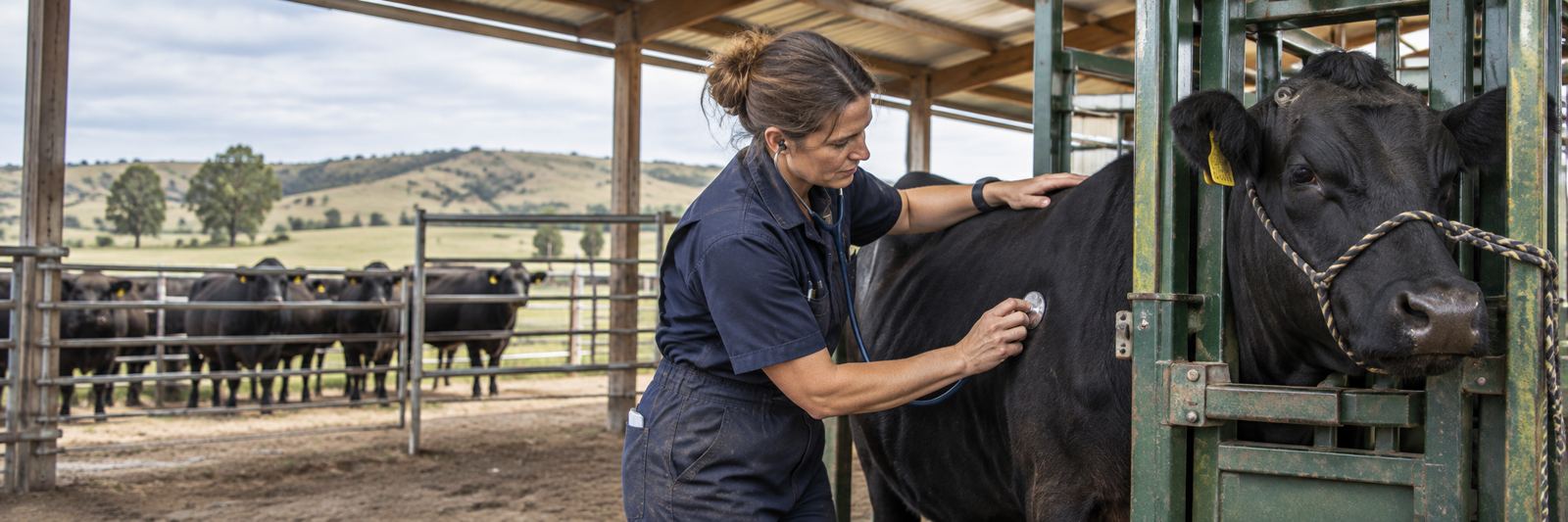
A cow with a hard knob on her jaw is not a mystery that solves itself. She's usually got one of two related infections: lumpy jaw, which settles into the bone, or wooden tongue, which hits the soft tissue of the tongue. They share a cause, a lot of overlapping signs and a habit of showing up when feed turns coarse and stemmy. They do not share the same outlook.
The quick way to tell them apart is speed. Wooden tongue tends to come on fast, with a swollen, painful tongue and a cow that drools and can't eat. Lumpy jaw builds slowly over months, as a firm, fixed lump on the jawbone. Both need a veterinarian's eye, since several other problems, like a grass-seed abscess or a stick lodged in the mouth, look similar.
Here's how to recognize each, what treatment can and can't do, and what to change so you aren't looking at another swollen face next season.
What causes them
Both organisms live in the mouth and rumen of normal cattle, and they behave themselves until something breaks the lining of the mouth. According to New South Wales Department of Primary Industries, wooden tongue is caused by Actinobacillus lignieresii, and lumpy jaw by Actinomyces bovis. They get in through cuts and scrapes made by coarse, dry, stalky feed, grass seeds, thorns and scrub. Teeth coming in on young animals can also break the gum and open the door.
Dry times raise the risk, because grazing gets rougher and cattle eat whatever's left. The Merck Veterinary Manual also notes that several cases in one herd reflect shared exposure to coarse feed rather than a disease spreading from cow to cow. That's useful to know, because it tells you where to look for the fix.
Signs of each disease
Lumpy jaw
- A hard, immovable swelling on the upper or lower jaw, often near the middle cheek teeth
- Slow growth over months, sometimes reaching the size of a tennis ball
- A sore that breaks open and drains thick, gritty yellow pus
- Painful chewing, dropping feed, slow weight loss
- Loose teeth or a face that looks lopsided
- Noisy breathing if the swelling pushes into the nasal passages
Cattle with lumpy jaw can hang on for a long time, which is part of why it's frustrating. The lump grows, the cow slides downhill, and you convince yourself she's doing okay because she's still eating.
Wooden tongue
- A sudden swollen, hard, painful tongue that may stick out of the mouth
- Heavy drooling and refusal to eat or drink
- Rapid loss of condition
- Nodules or ulcers on the sides of the tongue
- Swollen lymph nodes and abscesses under the jaw
In chronic cases the tongue can become hard, shrunken and hard to move. A cow with a tongue like that can't eat properly, so she's not just uncomfortable, she's in trouble.
Side by side
| Lumpy jaw | Wooden tongue | |
|---|---|---|
| Tissue affected | Bone of the jaw | Tongue and soft tissue |
| Onset | Slow, over weeks to months | Fairly sudden |
| Typical sign | Hard lump on the jawbone | Hard, painful, swollen tongue and drooling |
| Lymph nodes | Usually not involved | Often swollen and abscessed |
| Response to treatment | Often poor, especially once bone is involved | Often good if caught early |
What treatment can do
Early treatment gives better results for both diseases, so don't wait for the swelling to double. Treatment is veterinary work, and it often includes iodine therapy and antibiotics, which come with dose rules and withdrawal times that your vet has to set.
Wooden tongue generally responds well to iodine therapy given by a vet, and some antibiotics are also effective, though relapses can happen. Lumpy jaw is tougher. Sodium iodide can control the bacteria, according to the Merck Veterinary Manual, and antibiotics and surgical cleaning are often needed too, because the infected tissue shields bacteria from drugs. Even when the infection is controlled, the bone changes are permanent, and the deformity won't shrink much.
That's why treatment of lumpy jaw is often ineffective in practice, and why many producers choose early culling while the cow is still in good condition. If she can't chew, she can't hold weight, and she can't raise a calf. Culling criteria for open, old and cranky cows and when to cull a cow can help you think it through. Ask your vet whether she's fit to haul and what the buyer will accept, since rules and plant policies vary.
Protecting the rest of the herd
- Separate affected animals, especially any with draining sores, and keep them from sharing feed and water with the rest.
- Clean and disinfect feeders and troughs they've used.
- Look at the feed. Coarse, stemmy hay, awns, foxtail or thorny plants in the pasture are common culprits. Test and inspect your hay, and read how to test hay and read the lab report to see what you're really feeding.
- Adjust grazing in dry spells. When pasture gets short and rough, cattle chew more of the wrong stuff. A solid drought feeding plan gives them something softer than a mouthful of stickers.
- Watch for new cases. Check mouths and jaws when cattle go through the chute.
- Keep records. Note which pasture or hay lot the case came from.
For another set of eyes on the diagnosis, the New South Wales DPI page on lumpy jaw and wooden tongue has clear descriptions of both. It's Australian, but the bacteria aren't picky about the country. For the veterinary details of treatment, the Merck Veterinary Manual's page on actinomycosis in cattle is a good reference to bring to your vet visit.
When to call the vet
Call when you see a jaw swelling, a drooling cow with a swollen tongue, trouble chewing or any cow that's dropping feed and losing weight. A cow that can't eat or drink needs help fast. A quick exam helps rule out other causes of swelling, which is the reason to get a firm diagnosis before you decide what to do. If she's visibly thin and off feed too, when to call the vet for a sick cow can help you decide how fast to move.
Nobody enjoys a vet bill for one cow's face, but it's smaller than the one that comes from a whole group chewing the same thorny hay. A cow can't tell you that her jaw hurts. She can only stop eating, which is a poor way to deliver news.
Quick answers
Is lumpy jaw contagious to other cattle?
Not in the usual sense. The bacteria live in normal mouths, and several cases in a herd usually mean shared exposure to rough feed. Still, separate cattle with draining sores and clean shared troughs.
Can lumpy jaw be cured?
The infection can sometimes be controlled, especially when caught early, but the bone damage is permanent. Many producers cull affected cows while they're still in good shape.
How is wooden tongue different from lumpy jaw?
Wooden tongue attacks the soft tissue and tongue, comes on suddenly and often responds to early treatment. Lumpy jaw invades the jawbone slowly and is much harder to treat.