Video Auctions for Calves and How They Work
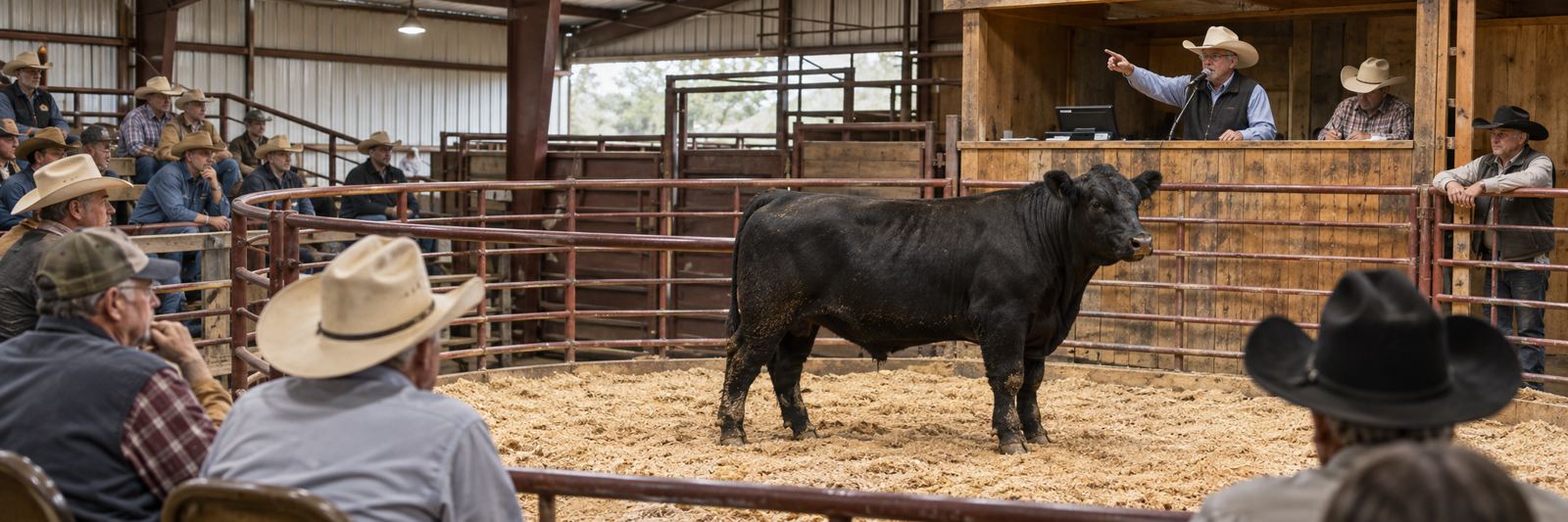
At a video auction, your calves never leave the pasture until the buyer's truck shows up. Someone films them, writes a description, and buyers bid from wherever they happen to be, often on a screen in a different state. It's the only kind of sale where your cattle can be famous before they've ever seen a trailer.
It works well for uniform loads of calves and for ranchers who can plan a few months out. It works poorly for a dozen mixed-up calves and a seller who'd rather not read a contract. Here's the path from enrollment to payday, and what to weigh before you sign up.
How the process runs
- You call a video auction company. Most have field representatives who work your area. They'll talk through what you have, when you'll be ready, and which sale fits.
- A rep visits and films the cattle. They shoot video of the calves in a pen or pasture and gather the facts: breed type, sex, frame and muscle, average weight, weight range, flesh, health program, feeding, and how the cattle will be weighed. The University of Tennessee Extension's overview of marketing feeder cattle via video auction describes this sequence and notes that cattle generally need to be consigned at least two weeks before the sale.
- The company builds a catalog and a video library. Buyers get it before the sale and can watch the clips and read the descriptions at their leisure.
- The sale happens. Buyers bid through the company. You can set a minimum, and the same source notes sellers have a "no sale" option if the price doesn't suit.
- Delivery. The buyer picks up at your place or at a load-out point during a delivery window, which can run from a few days to a few months depending on the contract.
- Payment. The company pays you after delivery under the terms of the sale. Ask up front how and when.
The description is your sales pitch
Since buyers can't walk your pens, the written description carries a lot of weight, and the video does the rest. It states how the calves will be weighed, for instance penned in the morning, hauled to certified scales and weighed with a stated shrink. Be accurate. If you say the calves are 550 pounds and they weigh 520, the slide will punish you, and the buyer will remember. Buyers who get what the description promised come back. Buyers who don't tell their friends, and buyers have a lot of friends.
Weight, shrink and the slide
Video sales usually list an expected average weight and weight range, a shrink, and a slide, which is the price adjustment that applies if the actual weight lands above or below the estimate. The Tennessee paper's example lists a slide of a few dollars per hundredweight, applied on the up side only. Whether you get an up-only slide, a two-way slide or no allowance depends on the sale. The mechanics are covered in price slides explained for feeder calf sellers, and it's worth reading before you sign a consignment form.
What video auctions do well
- Big buyer pool. Many buyers see your cattle, not just the ones in the seats at the sale barn.
- Less stress on calves. They stay home until sold, which can reduce shrink, injuries and the disease exposure of commingling at a market.
- You set the terms. Weight, shrink, delivery window and minimum price are yours to propose.
- Lower marketing fees. The Tennessee overview says fees for video sales are generally lower than live auction fees, though it doesn't give amounts, so ask for the actual commission.
- Value for known management. A buyer who sees a documented health program may pay for it.
That same extension piece looked at prices in Tennessee and found video auction prices beat live auction prices in nearly every month for several weight classes. It also cautioned that those differences can't be credited to the venue alone, since lot size, management and cattle quality play a part. Use that as a reason to look into it, not a promise.
Where they fall short
- Load size. The sales favor uniform loads, around 48,000 to 50,000 pounds. If you have 30 calves, you likely don't have a load on your own. Teaming up with neighbors is one answer, covered in how small herds can pool calves to fill a truckload.
- Time lag. You consign weeks ahead, and the market can move between consignment and delivery. The price you sell at might be higher or lower than what the barn pays on delivery day.
- Estimation risk. Weight and condition get judged from video, so mistakes in your description cost you.
- More management. Buyers who pay premiums want health programs and documentation. That's added time and cost for you.
- Contract complexity. There's paperwork, and the terms matter.
Who should consider one
| Situation | Video auction fit |
|---|---|
| Truckload or close to it of uniform calves | Strong fit |
| Preconditioned, vaccinated, documented calves | Strong fit, since buyers pay attention to health programs |
| Small, mixed set of calves | Poor fit alone, possible with pooling |
| Need cash by a specific date | Check delivery and payment timing carefully |
| Want to see the market and decide the same day | Live auction fits better |
Programs that verify the calves' health history or origin can help here. See source and age verification programs for calves and whether preconditioning pays at the sale barn, since the same records that bring a premium at a barn can also carry weight on video.
Before you consign: a checklist
- Ask for the commission and any other fees in writing.
- Find out who pays for freight and how the weighing is done.
- Know the shrink and slide before consigning, not after.
- Ask about the delivery window and what happens if the buyer is late or you are.
- Confirm how and when you'll be paid.
- Get your calf count and weights as close as you can. Don't promise 100 head if you might only have 90.
- Ask other ranchers in your area who've sold this way. They'll tell you things the brochure won't.
The wider question of whether any sale away from the barn pays is picked up in does selling cattle online work.
Quick answers
How many calves do I need to sell on video?
Truckload lots, roughly 48,000 to 50,000 pounds, bring the most interest. Some companies accept smaller groups, and pooling with neighbors can fill the gap, so call a rep and ask.
When do I get paid on a video auction sale?
Typically after the cattle are delivered and weighed, under the terms the company gives you. Ask about timing and any deposit before consigning.
Can I refuse a bid on a video auction?
Usually you can set a minimum or choose "no sale" if the price falls short. Check how your company handles it and whether any fees apply.