How to Pick a Livestock Market You Trust
Most ranchers pick their sale barn the way they pick a church or a feed store: it's where Dad went. That works fine until the barn changes hands, the buyer list shrinks, or a market three counties over starts paying noticeably more for calves like yours. Loyalty is a good quality. It just shouldn't be your only data. Dad also drove that old truck with no heater, and nobody's defending that.
A market you can trust has enough buyers to make bidding competitive, a record of paying sellers on time, honest weights, clear fees and a location you can reach without burning the profit in diesel. You can check most of that with a few phone calls and one or two visits on sale day.
Here's what to look at, in the order that tends to matter.
Start with who's in the seats
The buyer base is the whole point of an auction. A pen of calves is worth what the people in the stands, and the folks on the phone, are willing to pay for it. A barn with a dozen active buyers will price calves differently than one with three.
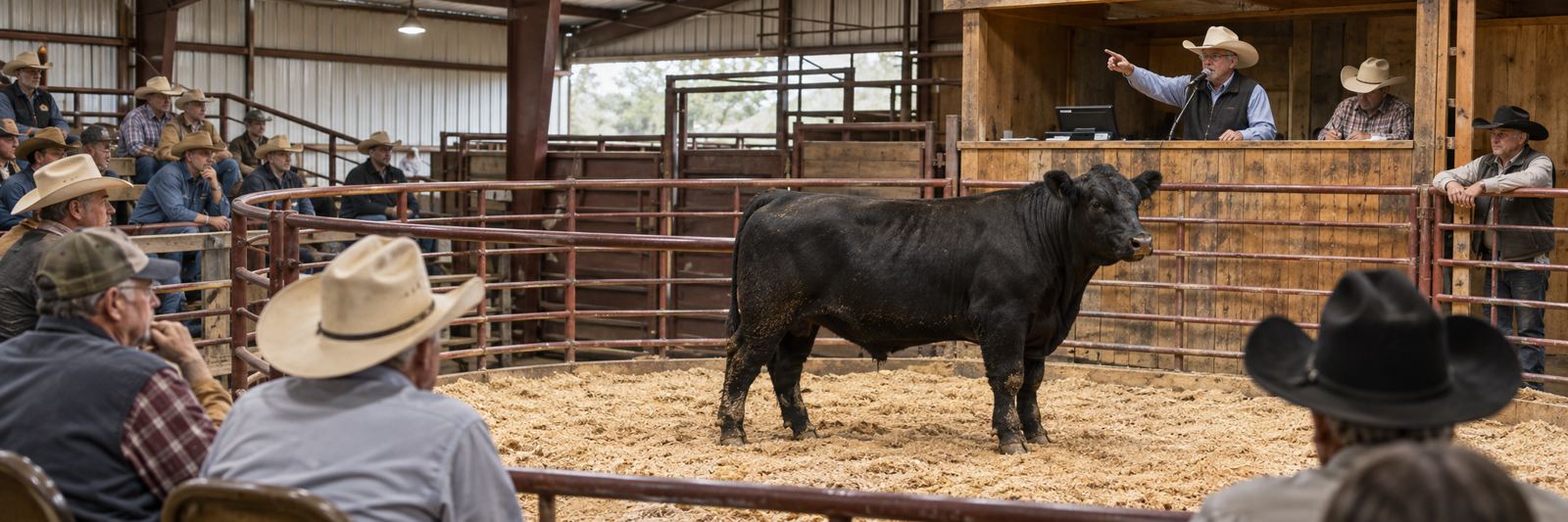
Go sit in the stands for a sale. Watch how many bidders compete on a pen of calves like yours. Notice whether the same buyer takes everything at a flat price, or whether the bidding moves. Look for order buyers, stocker operators, backgrounders and feedlot representatives, and ask which of them regularly buy your type: weaned or unweaned, steers or heifers, light or heavy, English or Brahman-influenced. A barn famous for heavy yearlings can be a rough place for fall-born calves.
Ask the manager what classes sell best there and when. Your own timing matters too, so see how an auction works if you haven't spent much time around one.
Check the reputation like a detective
Reputation is made of boring things: weights that match the scale, checks that clear, fair handling of cattle and a manager who returns calls. Ask around. Neighbors, your vet, your extension agent and the folks at the feed store all know which barn has trouble and which one is straight. Sellers who've been around for a while remember every payment hiccup.
Questions worth asking:
- How fast do sellers get paid after the sale, and how is payment made?
- Is the market licensed and bonded, and is it a market agency regulated under the Packers and Stockyards Act?
- Are scales checked and certified, and can you watch your cattle weigh?
- How does the barn handle disputes, like a calf that sold as sound and arrived lame?
- What are commissions, yardage and other charges? See sale barn fees explained.
If a manager gets prickly over reasonable questions, that's an answer in itself. Good barns are used to questions and answer them without a lawyer in the room.
Location and the true cost of getting there
A barn that pays a bit more but is a long way off may net less than one in town. Freight, shrink and your time all count. Running the numbers using your own hauling costs shows whether the extra miles pay or just feel productive. Long hauls also stress calves, and shrink takes real money off the check. For more on that, see shrink and pencil shrink.
Distance matters in another way. If you consign often, you'll want a barn you can reach on short notice when plans change, because the day the weather turns and the cattle need to move is rarely the day you wanted to drive three hours.
Compare more than price
Anybody who tells you their barn "always" tops the market has never sat through a bad Monday. Don't judge a barn on a single sale. Prices swing with weather, supply and the whims of the futures market. Instead, compare the market reports over several weeks. USDA Market News publishes auction results for many sale barns, so you can see how a barn's prices stack up against the regional average, and using USDA Market News walks through where to find them.
Keep your own scorecard. After each sale, write down the date, class of cattle, weights, price, fees and what you netted after freight. A rancher who's kept three or four seasons of numbers knows more about the local market than any ad on the radio.
Special sales, video sales and other options
Your regular barn isn't the only door. Some markets host graded sales, special calf sales, or sales built around health programs, where uniform lots from known sources can attract extra buyers. Video sales sell calves ahead of delivery to buyers across a wide area. If your calves fit a program, a special sale can make a sale barn look much better. You can learn more in video auctions for calves.
And if you want to hear what a really chaotic sale looks like in verse, this farm.FM cowboy poem about an auction gone wild is a good reminder of why you want to know what you're walking into before the bidding starts.
A quick trust checklist
- Visit on sale day and count the bidders.
- Ask neighbors and your vet who they trust and why.
- Get fees in writing and learn how and when you get paid.
- Confirm the barn is licensed and bonded and ask about its scales.
- Compare net price across barns for similar cattle over time.
- Consign a small test lot before you send the whole crop.
That last one is underrated. Sending a few head to a new barn tells you plenty about how it treats sellers without betting the whole check on a hunch.
For background on how the federal rules protect sellers, the USDA Agricultural Marketing Service explains how market agencies selling on commission are regulated.
Regional notes
In the Southern Plains and Southeast, weekly sales draw steady stocker and backgrounder crowds, so you may have several barns within reach and a real choice. In the Northern Plains, the fall run packs sale barns for a few weeks, and getting a slot matters. In the West, long distances mean fewer choices, and video or private sales often fill the gap. Your own area decides which of these questions matter most.
Quick answers
How do I know if a sale barn is reputable?
Ask other sellers, check that it's licensed and bonded, and look at how quickly and cleanly it pays. A straight answer to a direct question is a good sign.
Should I use the closest sale barn?
Often, yes, because freight and shrink are real costs. But compare net returns, since a farther barn with more buyers sometimes wins even after hauling.
Can I sell at more than one sale barn?
Absolutely. Many ranchers spread cattle between markets, or send a small test lot to a new one, and the competition keeps everyone honest.