How to Sell Calves at Auction, Private Treaty or Video
You've got a set of calves weaned or nearly so, a trailer that holds about as many as you've got, and three or four ways to turn them into money. Which one is right depends on how many head you have, how uniform they are, how far you are from a good sale barn, and how much marketing you're willing to do yourself.
The short version: the local auction is the easy default for small and mixed lots, private treaty rewards ranchers with a reputation and a bit of salesmanship, and video or tele-auctions favor uniform loads of calves with documented health programs. None of them is always best. Here's how to choose.
Sale barn auction
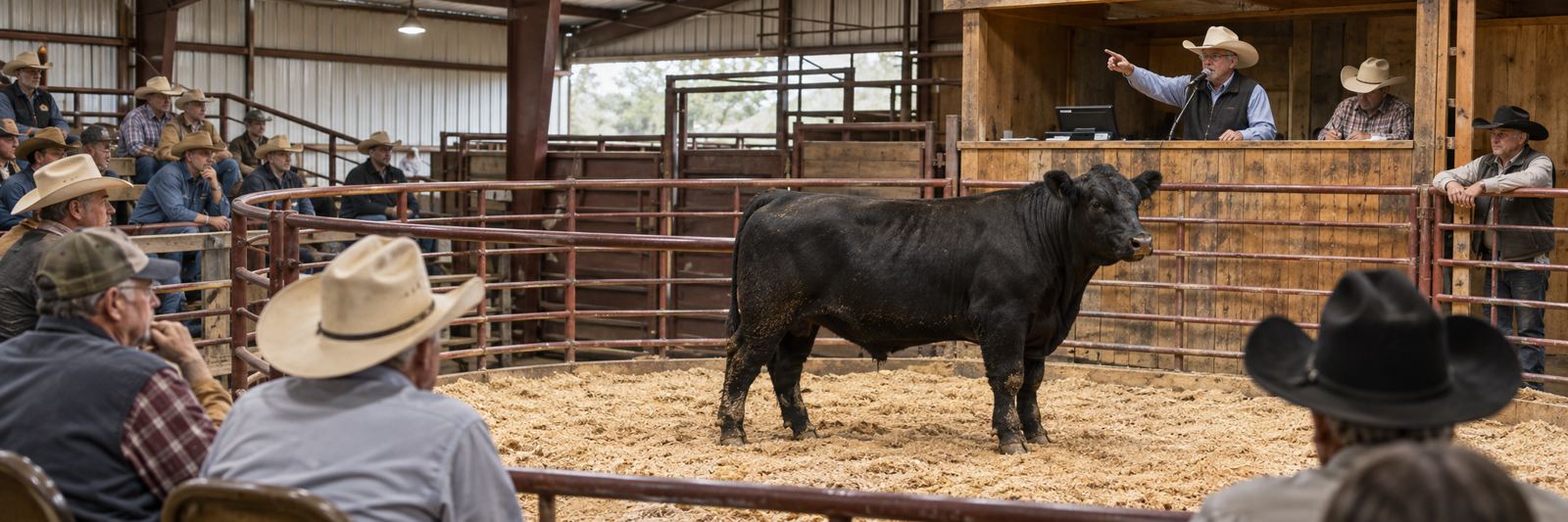
Most calves in the country still move through livestock auction markets, and for good reason. Mississippi State University Extension lists the strengths: competitive bidding, prompt payment, open prices, and no minimum number of head. You don't have to be a marketing expert, and you can sell two calves or two hundred.
The downsides are real, too. You have little control over price on sale day, calves get handled and hauled more, there's stress and shrink, and mixing with other herds raises disease risk. Overhead and buyer numbers vary a lot between barns. Fees add up, so read sale barn fees, commissions and yardage explained before you haul. If you're new to the process, what a sale barn is and how an auction works explains the sale day sequence.
Best for: small herds, mixed-sex or mixed-size lots, ranchers near a busy market, anyone who needs cash quickly.
Private treaty
In a private treaty sale, you and the buyer agree on a price directly, often at your place. Mississippi State's summary points to benefits: you control the process, there are no commission or hauling costs to a sale yard, calves go straight off the farm, and buyers can see the operation. Repeat buyers who trust your cattle can become your best market.
The trade-offs: you need marketing skill and time, there's no guarantee that a visit becomes a sale, price discovery is weak so it's easy to under- or oversell, and you carry the payment risk. Know your buyer, agree on weights and shrink terms in advance, and get paid before the trailer leaves, or arrange payment through a trusted method. Our guide to selling calves private treaty to a stocker buyer goes through how to price, weigh and write it up.
Some states also have brand inspection and movement paperwork rules. Check before you load. Brand inspection and paperwork when selling cattle explains what to expect.
Best for: ranchers with a good reputation, uniform calves, a few repeat buyers and the patience to negotiate.
Video and tele-auction sales
Video and internet auctions let buyers bid on lots from afar. Tele-auctions, sometimes called board sales, work on descriptions and the sale agent's reputation. Mississippi State lists the benefits: large volume attracts buyers, cattle can ship straight from your place to the buyer, which means less shrink, stress and disease exposure, and lots from several ranchers can be combined to fill a truckload. Documented preconditioning and vaccination can earn a better price in these sales.
The costs: marketing fees and often a commitment weeks or months ahead. Backing out can mean forfeiting a nomination fee or being restricted on future sales. Buyers bid on what they see and read, so video quality and honest descriptions matter. If your calves don't match the description, you'll hear about it, and so will every buyer after that. See video auctions for calves and how they work for the mechanics.
Best for: sellers with a truckload of uniform calves, or who can pool with neighbors, and who are willing to follow a vaccination and weaning protocol.
Comparison at a glance
| Channel | Lot size | Price control | Handling and shrink | Effort |
|---|---|---|---|---|
| Sale barn | Any size | Low | More hauling and mixing | Low |
| Private treaty | Flexible | Moderate, weak price discovery | Minimal | High |
| Tele-auction or video | Often a partial or full load | Moderate, set ahead of delivery | Low, direct shipping | Moderate, commitment needed |
Shrink, price slides and why they matter
Calves lose weight between the pasture and the scale, and what the scale says is what you're paid on. Mississippi State notes that calves can lose a good deal of weight overnight, so how and when they're weighed matters. Many direct and board sales use a set "pencil shrink," a fixed deduction from the weight. Price slides then adjust the price per hundredweight when the load comes in heavier or lighter than the agreed weight. Heavier calves usually bring a lower price per hundred, so the slide keeps the deal fair. Our articles on shrink and pencil shrink and price slides spell this out with examples.
Prepare the calves, whichever way you sell
- Wean early enough. Many premium programs want calves weaned a month or more before sale. Check what your buyer expects.
- Vaccinate and document it. Keep records of products and dates. See preconditioning calves: is it worth the cost to decide whether the extra weeks pay.
- Sort for uniformity. Buyers pay for matched lots. A load of look-alikes beats a mixed bag at the same average weight.
- Castrate and dehorn well ahead of time. Open wounds at sale time cost you money.
- Handle quietly and keep calves fed and watered before loading. A calm calf holds more weight and sells better.
If you're running a small herd, our guide on marketing 10 to 30 calves covers pooling with neighbors to get a truckload.
Don't forget the checkoff
When you sell at a sale barn, the barn usually collects the beef checkoff for you. On private sales, the seller is generally responsible for remitting it, and Mississippi State's publication notes the one-dollar-per-head assessment. Your state beef council can tell you how it works where you ranch.
How to decide
Ask yourself three questions. How many head do I have, and how uniform are they? What's my nearest competitive market, and how far is it? And how much time and appetite do I have for marketing? If you have a handful of calves and a good barn down the road, go to the barn. If you have a load of uniform, vaccinated calves, look at video or tele-auctions. If you have a reputation and repeat buyers, private treaty may beat both.
There's a reason ranchers have been trading cattle by handshake and song for generations. For a laugh on the subject of selling, take a look at this farm.FM bull salesman song, then go back to your spreadsheet and your sale barn's fee schedule.
For a more detailed look at each channel, read the Mississippi State University Extension publication Marketing Feeder Calves, and talk to your lender or extension agent before committing to a contract.