Basis in Cattle Markets: A Plain-English Guide
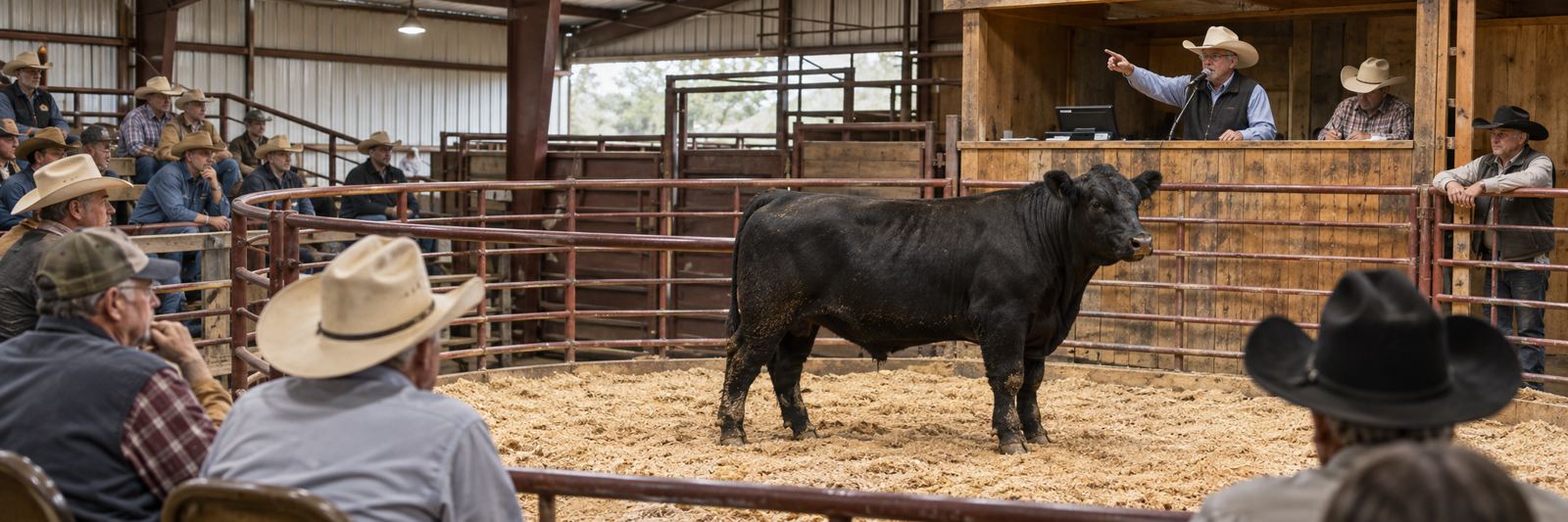
Basis is the difference between what calves actually bring at your sale barn and what the futures market says cattle are worth. That's it. Cash price minus futures price. If your local steers bring 300 dollars per hundredweight and the nearby feeder futures are at 280, your basis is plus 20.
The word makes it sound like something a banker invented to discourage questions. It's really just a bookkeeping habit that lets you estimate what you'll get from a price you can see on a screen. Once you know your usual basis, a futures quote turns into a local price estimate.
And yes, it can be negative. Not every discrepancy is a tragedy. Some of them are just Tuesday.
The formula
South Dakota State University Extension puts it simply in its page on feeder cattle basis: basis is the cash price minus a futures price. It's usually figured monthly, using the local cash price for that month and the nearby futures contract, meaning the one closest to expiring.
Feeder cattle futures trade in January, March, April, May, August, September, October and November, so for the summer months, the cash price is typically compared to the August contract. That detail catches people off guard when they go looking for a July contract that doesn't exist.
Why basis exists
Basis exists because the futures contract and your calves are not the same thing. The feeder cattle contract reflects a particular type of animal, steers in a medium-to-heavy feeder weight range traded around the plains states. Your calves differ in weight, sex, location, lot size and quality, and every one of those differences moves the basis.
Weight
Lighter cattle usually carry a bigger positive basis than cattle near the contract weight, because they're priced higher per pound. SDSU's work on basis for lighter weight feeder cattle shows that basis for light steers can be many times larger than for heavier cattle, and it can grow in tight-supply markets. For how weight slides prices, see how calf weight affects price per hundredweight.
Location
Distance to feedlots and local supply matter. SDSU notes basis has been consistently higher in northern states than in southern ones in its data, and local supply and trucking costs can shift it. A rancher 300 miles from the nearest feedlot gets paid differently than one next door to a big yard.
Season
Cash prices tend to be lower in the early months of the year and higher from midsummer into fall, and basis follows its own seasonal pattern, strongest in some months and weakest in others. In the South Dakota numbers SDSU publishes, the weakest month and strongest months are several dollars apart.
Quality and lot size
A big, uniform, healthy lot of black steers brings a stronger basis than a handful of mixed calves. This is the same list of traits covered in what buyers look for in a load of feeder calves.
How to track your own basis
- Pick one class of calves. Say, 500 to 600 pound steers. Don't mix classes in one log, or the numbers get fuzzy.
- Find a reliable cash price. Use your local sale barn's reports, or the USDA market news reports for your area. Using USDA Market News reports shows where to find them.
- Record the nearby futures price on the same day. Same day matters, since futures move all day long.
- Subtract. Cash minus futures equals basis. Write it down.
- Do it weekly or monthly, and keep going. One data point is a story. Five years of data is a pattern.
- Average by month. Compare this month's basis to the average for the same month in previous years.
A free spreadsheet works fine for this. So does a notebook in the truck, which is where the best ranch records have always lived, usually stained with coffee.
Using basis to plan
Because basis tends to be fairly stable for a given month and class of cattle, you can add your expected basis to a futures price to estimate your cash price. If the October futures are at 280 and your usual October basis for those calves is plus 20, you'd plan on about 300. That's the heart of price planning, and it's why basis knowledge pairs well with tools like cattle futures.
It also tells you when something's off. If basis suddenly blows out wider than usual, buyers are paying a premium for tight supplies. If it narrows, supplies may be heavy or local demand weak. That can be a signal to sell, to hold or to look at a different market.
Basis and risk tools
Basis shows up in more places than you'd expect. Hedgers care about it because a hedge locks in the futures price but not the basis. Insurance products like Livestock Risk Protection pay based on an index, not your local price, so a basis difference can mean your payment doesn't match your actual loss. Knowing your typical basis tells you how well a tool fits your calves.
The University of Georgia has published an extension bulletin on understanding and using cattle basis in managing price risk that goes deeper for those who want the Southeastern view.
Mistakes to avoid
- Using basis from another region. A Dakota number won't help a Georgia rancher.
- Comparing a futures price to a different weight class without adjusting.
- Using one great week as the "normal."
- Forgetting that expiring contracts jump around, so use the nearby contract consistently.
- Assuming past basis will repeat. It's a guide, not a guarantee.
Regional patterns differ. Northern Plains producers often see stronger basis than Southern Plains producers, while the Southeast and Gulf Coast can have wider swings from smaller lots, heat discounts and Brahman influence. The point isn't to memorize a table. It's to build your own.
Quick answers
What is a good basis for feeder calves?
There's no universal number. It depends on weight, location, season and lot quality, so compare today's basis to your own history for the same month and class of cattle. A "good" basis is one that's stronger than your average.
Is basis the same as a price slide?
No. A price slide adjusts the price for weight differences within a contract or sale. Basis compares cash price to futures. They're related, since lighter cattle bring a stronger basis, but they're different tools.
Where do I find futures prices for free?
Many financial and ag news sites show delayed futures quotes, and the CME Group website does as well. Pick one source and use it consistently so your basis records are comparable.