Junior Showmanship, 4-H & FFA Steers
Show Cattle Fitting Basics: Tools and Adhesives
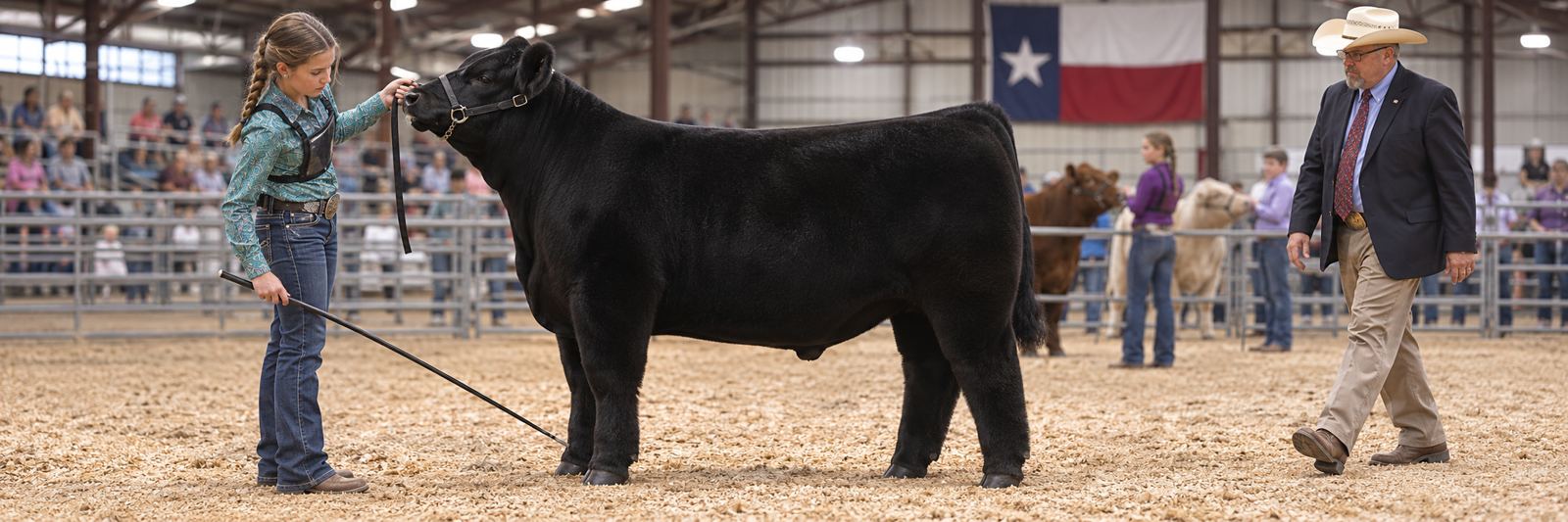
Fitting is the work of shaping a calf's hair so the animal looks as clean and correct as he can. For a beginner, the toolkit comes down to a few brushes and combs, a blower, clippers, one or two adhesives, a finishing product and a pair of sharp scissors. You can build the whole thing slowly, and you don't need everything on day one.
Walk down the aisle at any big show and you'll see tack boxes that look like hardware stores. Ignore the bragging rights. A new exhibitor who knows how to use six tools well beats one who owns forty and uses them as decoration.
The Starter Toolkit
Here's a reasonable beginner list, in roughly the order you'll need things:
- Rice root brush. A stiff-bristled brush for daily grooming and for training hair.
- Scotch comb. A metal comb for lifting hair and working in adhesive, usually with a fine row of teeth.
- Plastic or fluffer comb. A wider comb that lifts and fluffs.
- Sharp scissors. For tidying and cutting through adhesive. Dull scissors are just expensive butter knives.
- Blower for drying and setting hair. See blowing and drying a show steer's hair.
- Clippers. Covered in clipping a show steer for beginners.
- Adhesive, conditioner and finishing spray. Discussed below.
The brand names change and so do the arguments about them. Ask your ag teacher what the barn uses, and borrow before you buy. Plenty of juniors discover they love one brush and ignore the other three.
Brushing Is Boring and It Works
Daily brushing is the habit behind a good coat. The NC State guide for youth beef cattle exhibitors recommends brushing or combing forward and slightly up, with the hair wet first, and doing it every day, ideally at feeding time. It also notes that breeds with Brahman influence are typically brushed straight down for a sleek look, while long-haired breeds are brushed up, and tells exhibitors to check the breed association's standards.
That daily routine stimulates the skin, trains the hair and gives you a chance to look over your steer for scabs, rubs and other changes. It also teaches the calf that people touching him is normal. Do it while he eats, and he'll tolerate more than you expect. Cattle forgive almost anything if there's feed in front of them.
Adhesives: What They Are and What They Do
Adhesive is a sticky spray used to set hair in a shape while you comb it. It's the single product beginners get most confused about, so here's the general picture. The same NC State guide describes three common types:
| Type | Feel | Typical use |
|---|---|---|
| Standard or leg adhesive | Heavy, slow to dry | Legs and general use. If you buy only one, this is the usual pick. |
| Tail adhesive | Heavy, dries quickly | Setting the tail head and building the tail bush, sometimes leg hair. |
| Body adhesive | Light, slow to dry | Setting body hair while still letting you comb through it. |
Use it in small sections, comb it up as you spray, and keep the finish natural. The guide's own advice is not to glob it on. A coat that looks like a helmet won't impress anyone, and judges can tell the difference between fitted and frosted.
Always read the product label, and check your show's rules about what products and fitting methods are allowed. Some shows have specific rules about what can be sprayed or applied, and you're responsible for following them. When in doubt, ask the show office before you spray, not after you've won your class.
Conditioners, Finishing Sprays and Foam
These are the polish on the work:
- Oil-based conditioner or finishing product. Applied after the hair is combed up, it adds sheen and manages flyaways.
- Show foam. Used on show day to tame stubborn spots, like cowlicks. The NC State guide says to save it for show day.
- Daily training sprays. Some products are made for everyday use, others for show day only. The label tells you which. Reading labels is the oldest piece of advice in the barn, and the most ignored.
After the show, use an adhesive remover or a thorough wash to get the product out of the hair and protect the skin. Leftover buildup can make a coat look dull and feel itchy, and it makes next month's wash harder. For a full wash routine, washing and conditioning a show steer's hair coat goes step by step.
A Basic Fitting Order
- Wash and dry the calf thoroughly.
- Clip where needed, well ahead of show time for a clean finish.
- Comb the legs, hindquarters and tail head up with the scotch comb, spraying adhesive in small sections.
- Shape the legs and tidy edges with clippers and scissors.
- Comb the body up and forward, then add conditioner or finishing product.
- Step back. Look from the side, front and rear. Fix one thing at a time.
Take your time. A beginner can spend a couple of hours on this and that's normal. The calf will spend the whole time wondering what he did.
What to Buy First and What Can Wait
Start with brushes, a comb, scissors and one general-purpose adhesive. Wait on specialty tools until you know what your calf's hair needs. A shared barn blower beats a personal one for your first season, and an experienced exhibitor will often let you try a product before you buy it. The show box checklist helps you build a box that doesn't end up as a closet of unused sprays.
And remember the point. A calf's coat should look like a calf's coat, only on its best day. Fitting is never a substitute for good feeding, good handling and a calm animal. Your ag teacher or extension agent can show you how it all fits together in person, and your show rule book decides what's allowed.
Quick answers
What do I need to start fitting a show steer?
A rice root brush, a scotch comb, sharp scissors, a blower, clippers and one general-purpose adhesive cover the basics. Borrow or share expensive items before you buy.
What is adhesive used for in fitting cattle?
It's a sticky spray that sets hair in shape while you comb it, mostly on the legs, tail head and sometimes the body. Use it sparingly so the finish looks natural, and follow your show's rules.
How often should I brush my show calf?
Daily brushing is the common recommendation, often at feeding time. It trains the hair, keeps the skin healthy and helps the calf get used to being handled.