Junior Showmanship, 4-H & FFA Steers
Show Season Gear and Show Box Checklist
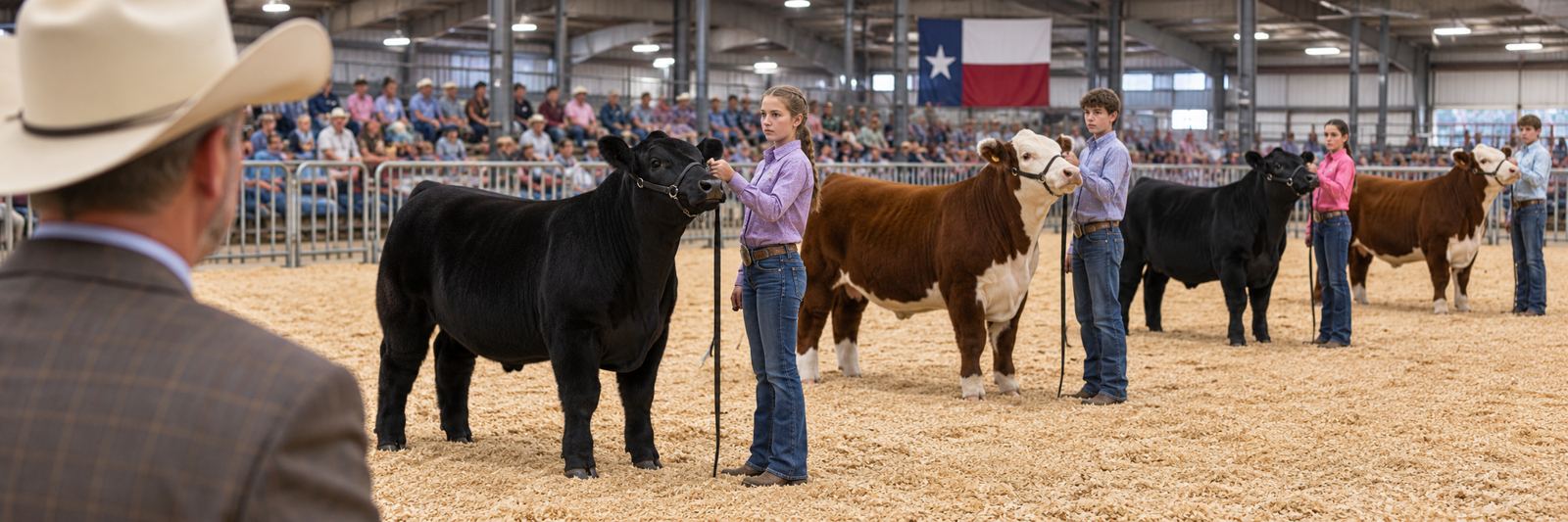
Every veteran show family owns at least one show box that looks like a small hardware store, and every one of them started with a single halter. You do not need the whole store. You need the stuff that keeps a steer clean, safe and calm, plus the paperwork that gets you through the gate.
Build the kit in layers. Gear for daily care comes first, wash rack gear second, ring gear third and nice-to-haves last. If you're not sure whether something is needed, ask someone in your club who has been doing this a while. They've probably got three spares.
Before you buy, check your show's rule book and ask your ag teacher or extension agent what's allowed. Some products and tools are restricted at certain shows, and a kit that gets you disqualified is a poor investment.
The first layer: daily barn care
This is the gear you'll use every day, long before the first show.
- Halters, at least two. A good rope or nylon halter that fits properly, plus a spare. Never leave a halter on a steer unsupervised, because they can catch on things.
- Lead ropes. A couple of sturdy ones, including a short one for tying.
- Feed pans, buckets and a scoop. One scoop, labeled. The family member who uses the wrong scoop will be reminded.
- Water buckets or a tank, plus a scrub brush that only touches the water bucket.
- Pitchfork, shovel and wheelbarrow. The least glamorous items in the box and the most used.
- Brush and comb. A rice-root or similar brush and a comb for daily grooming.
- Fly control, in a form your vet or leader recommends and that your show allows.
- Weight tape or access to a scale. Planning to hit your target weight depends on getting real numbers.
Utah State's first-time market steer guide lists common supplies like a halter, show stick, clippers, a trimming chute, a comb and shampoo or dish soap, and recommends owning your own clippers. That's a good short list to start with and a reminder that the basics go a long way.
The second layer: the wash rack
- Hose with an adjustable nozzle. Plus a plan for where the water goes.
- Cattle shampoo and conditioner, or whatever products your leader suggests.
- Wash brush and a scrub brush.
- Sweat scraper. Gets the water off so he can dry.
- Towels, lots of them. They multiply in the wash, and you'll still be short.
- A blower, if your program uses one. Blowers are loud, so introduce the sound to the steer gradually. Blowing and drying a show steer's hair covers the technique.
- A drain or a plan for runoff, and non-slip footing. Wet concrete is hazardous for people and cattle.
Technique matters as much as gear here. Washing and conditioning a show steer's hair coat is a good place to learn the routine before you invest in more products.
The third layer: fitting and the ring
- Clippers and blades. If you plan to clip at home, sturdy clippers and a few extra blades help. Clipping a show steer for beginners explains how to start.
- Show stick. Used to scratch and position the steer, never to hit him.
- Show halter, clean and in good shape.
- Brush and comb for last-minute touch-ups.
- Hair products and adhesives. Optional, and the rules about what you can use vary by show. Fitting basics, tools and adhesives goes over what beginners really need. Read the rule book before you buy anything for the coat.
- A fitting stand or tie-out, if your show provides space for one.
- Show clothes. A clean, pressed shirt, jeans without holes, boots with a good grip and a belt. Your program may have a dress code.
- Number holder or armband, pins and a spare.
The paperwork and personal bag
- Entry confirmations and health papers. In one folder, and a copy in your phone.
- Identification records. The weigh-in checklist is a good model for what to have ready.
- Pen, tape and zip ties. Zip ties fix more problems at a show than any other single item.
- Sunscreen, a hat and a water bottle. For you, not the steer.
- Snacks. Because someone is going to be hungry at ten at night.
- Phone charger and a power strip, if the barn allows them.
- Change of clothes and spare socks. Barn floors win every argument with clean socks.
The barn first-aid kit
Keep a simple kit in your show box, built with your veterinarian's advice. Typical contents include clean towels, gauze, vet wrap, a clean bucket and a thermometer, plus your vet's phone number written on the lid. Talk to your vet about what else makes sense for your animals and your area, and don't add medications on your own. Know the show's rules on treating animals at the grounds, and tell the show vet or superintendent if an animal looks sick.
A few tips for stocking the box
- Use a sturdy box or tote with a lid. Wheels are worth it. Dragging a loaded box across gravel is not a good time.
- Label it. Your name and phone number, in marker. Show barns have a way of mixing up identical boxes.
- Pack it by job. Wash gear in one bin, ring gear in another, paperwork in a folder.
- Buy used. Fitting gear that's in good shape is often available from experienced exhibitors.
- Add things as you find you need them. A new exhibitor who bought everything at once will own a lot of gear he doesn't use.
- Do a test pack a week before. The night before is too late to find out the clippers have no blades.
If you're hauling, trailer prep, stops and stress adds a few items for the truck. And for the morning of the show, a show day morning routine tells you what to do with all that gear once you get there.
Mistakes to avoid
- Buying a full fitting kit before the steer has learned to stand tied.
- Skipping a spare halter.
- Forgetting a way to carry water, feed and a scoop.
- Showing up with clippers that haven't been tested.
- Packing products you've never used on this steer. Try them at home first.
- Leaving the gear in a heap. A dirty box leads to a dirty steer.
Quick answers
What do I really need in my first show box?
A halter and spare, lead rope, brush and comb, show stick, feed and water buckets, towels, shampoo and a folder with all your paperwork. Add clippers, blowers and fitting products later as your skills and your show require.
Should I buy new or used show gear?
Used is usually fine for clippers, stands, boxes and brushes, if they're in good working order. Buy safety items like halters and ropes in good condition, and replace anything frayed or damaged.
Are there products I'm not allowed to use at a show?
Yes, rules vary by show. Read your rule book and ask your ag teacher or extension agent before using any product on your steer's coat or skin, and never use anything the rules don't allow.