Junior Showmanship, 4-H & FFA Steers
Where to Buy a Show Calf and What to Ask the Breeder
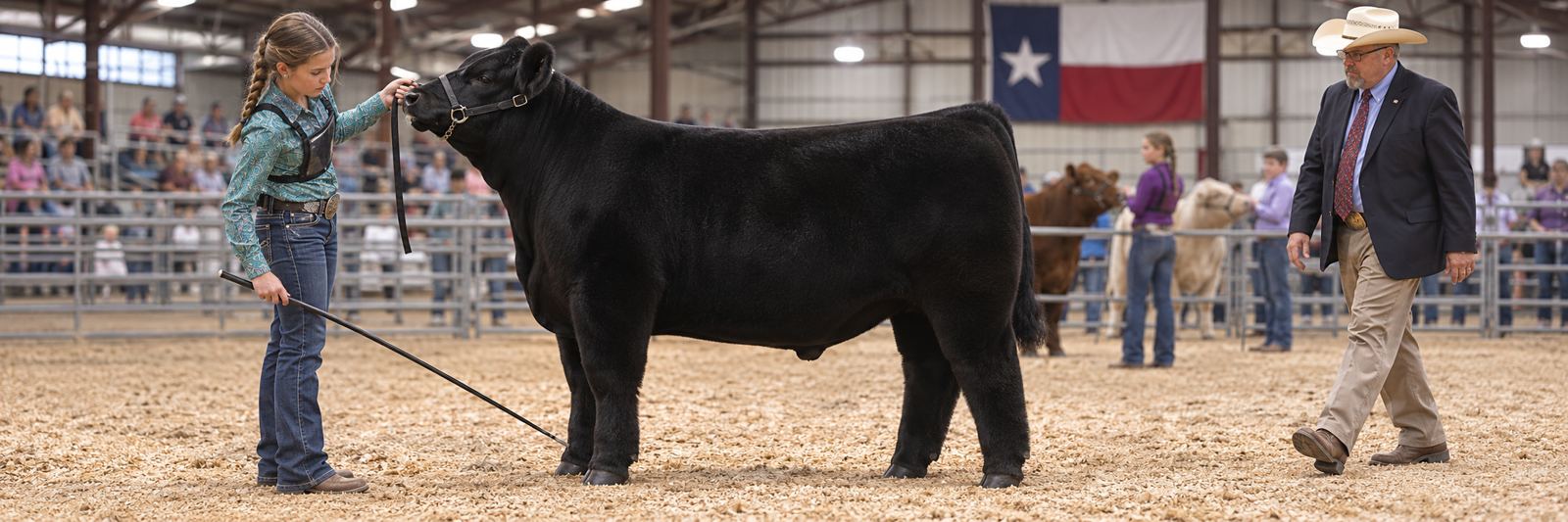
You can buy a show calf from a breeder's farm, a consignment or private-treaty sale, a youth-focused calf sale or a local rancher who raises calves that fit. For a first project, the best source is usually someone your ag teacher or extension agent already knows and trusts. The seller matters almost as much as the calf, because a good breeder will answer your questions, stand behind the animal and still take your call in March.
Parents tend to get nervous about this part, and with reason. You're about to hand over real money for a young animal you can't take for a test drive. The calf can't tell you about his past, and the seller has every reason to say nice things. So you need a list of questions and a little patience.
Where families find show calves
Breeders who raise show prospects
Some ranches raise calves specifically for youth projects. They know what the show rules require, they can tell you about the calf's mother and sire, and many offer help with feeding and training. This is often the most beginner-friendly route, though you'll pay for the service and the genetics. Breed association websites usually list members, and programs like the National Junior Hereford Association are a good example of how a breed organization connects youth with breeders and resources.
Sales and auctions
Many regions hold calf sales aimed at show exhibitors, sometimes as private-treaty events, sometimes as auctions. They give you a lot of calves to compare in one place, but the pace is quick and the sales ring is not a place for a beginner to make a snap decision. Go once without bidding, just to watch. Take an experienced person with you when you do buy.
Local ranchers and neighbors
A cow-calf operator down the road may have a calf that fits your needs, and you can see the mother, the pasture and how the herd is handled. The catch is that a commercial calf may not have the paperwork, tagging or weights your show requires. If this route interests you, talk to your ag teacher first and be sure you can meet the rules on ID, ownership dates and any DNA sampling. Those are covered in ear tags, tattoos and show calf ID rules explained and show calf DNA sampling and validation explained.
Ag teachers, 4-H leaders and other exhibitors
The cheapest research in the world is asking people who have done it. Experienced exhibitors know which breeders raise sound calves and which ones don't return phone calls. A seasoned 4-H leader knows which sale barns are worth the drive. That kind of local knowledge is worth more than anything you'll read online, including this.
Online and video listings
Photos and video can help you narrow down, but cameras are generous, and a well-lit calf standing on a mat can hide a lot. Never buy a calf sight unseen if you can avoid it. If you're buying from a distance, ask your ag teacher or extension agent to help with the evaluation, and get a clear record of the animal's age, health and weights.
Questions to ask the breeder
Keep this list on your phone and write down the answers. A good breeder won't be annoyed.
- How old is the calf, and what's his birth date? Age matters for show eligibility and growth.
- Who are the sire and dam? Can you see the mother or photos of her?
- What's his current weight, and how was it taken? Scale weight is better than a guess.
- Has he been weaned, and when? A calf weaned well ahead of the sale usually handles the move better.
- What vaccinations and health care has he had? Ask for the records and talk to your veterinarian about what he still needs.
- Has he been halter broke or handled? A calf that already leads saves you weeks, as described in halter breaking a show calf step by step.
- Is he tagged, registered or DNA sampled? Find out what your show requires and whether the seller can help you meet it.
- What has he been eating? Switching feed suddenly stresses a calf, so ask what he's on and how to transition.
- Is there any known health or structural issue? Ask directly, and watch how they answer.
- Do you offer any guarantee or return policy? Some breeders do, some don't. Get it in writing either way.
- Can I contact you for questions after the sale? A good breeder says yes before you finish asking.
Red flags to walk away from
- The seller won't tell you the calf's age or won't let you see the animal handled.
- The calf has a cough, runny nose, loose manure or a dull, sunken look.
- There's pressure to decide right now. A calf worth buying is worth a night's sleep.
- The paperwork doesn't match, or the seller can't explain it.
- Stories that sound too good, like a "guaranteed champion." Nobody guarantees a champion. Even the judge can't promise that, and he gets paid to have opinions.
- A price that's wildly different from similar calves with no explanation.
Before you pay
Do a final check. Look at the calf in daylight, walk him on a firm surface and look at his feet. Confirm the paperwork and write down the terms of the sale, including price, date, what's included and any guarantee. Ask for a bill of sale. If possible, have your veterinarian look him over or at least talk to your veterinarian about what the new calf will need once he arrives. Plan the trailer ride too: a clean trailer, a driver who won't take every corner like a rally course and a quiet place to unload.
If you're still sorting out what a good calf looks like, how to pick a show steer for your first 4-H project covers the basics. The calendar matters too, so see when to buy a show steer for fall or spring shows before you commit to a date. For an extension view on selection and purchase, Clemson's youth livestock beef projects publication is a handy reference that notes spending more doesn't automatically buy a better experience.
Quick answers
How much should I spend on my first show calf?
Prices swing a lot by region, breed and quality, so ask your ag teacher or extension agent what's typical locally. A higher price doesn't guarantee a better project, and a sound, quiet calf that fits your show's rules is usually the smarter buy for a first-timer.
Is it okay to buy a show calf from an auction?
It can be, but it's harder for beginners because things move fast and the calf's history is often unclear. Go with an experienced person, check the rules for tags and ownership, and don't be afraid to pass on every calf that day.
Should I get a vet to check the calf before I buy?
It's a good idea if the sale terms allow it, or at the very least talk to your veterinarian right after purchase. A vet can spot health problems and help you set up a vaccination and parasite plan suited to your area.