Junior Showmanship, 4-H & FFA Steers
How to Pick a Show Steer for Your First 4-H Project
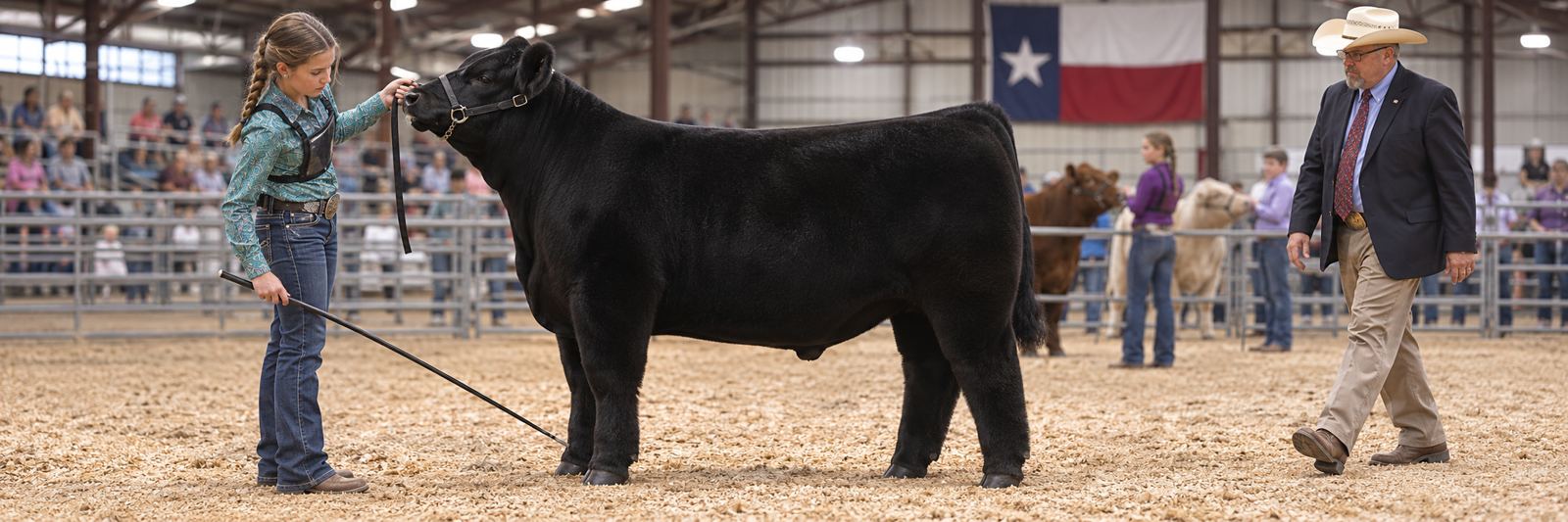
The best first show steer isn't the flashiest calf in the pen. It's a sound, quiet, correctly sized calf that fits your fair's rules and your family's barn. If you can find one that also looks good walking away, great, but soundness and temperament carry a beginner a lot further than a pretty hair coat.
Most first-timers fall for color or fluff. That's natural. A calf with a fresh wash and a great topline in a seller's photo looks like a champion, and your brain starts picking out a name before you've checked his feet. Slow down. You're going to spend months with this animal twice a day, and the one you pick will either teach you patience or teach you vocabulary your grandmother wouldn't approve of.
Here's a plain way to choose, in the order that matters.
Read the rule book before you look at a single calf
Every fair and show writes its own requirements, and they differ from county to county and state to state. Before you shop, find out the following from your fair's rule book, your ag teacher or your county extension agent:
- The ownership and tagging deadline, meaning how early the calf has to be in your name and officially identified.
- Whether DNA sampling or validation is required for your show.
- Minimum and maximum weigh-in weights, or any age and weight limits for the market class.
- Whether the show is steers only, steers and heifers in separate classes, or breed-specific.
- Any breed or percentage rules that limit what can be entered.
A calf that doesn't fit the rules is a very expensive pet. Ask the question first and the shopping gets simpler, because half the pens in the sale barn are suddenly off the list.
Structure comes first
You don't need a judge's eye to catch the big problems. Stand back about ten or fifteen feet, then walk around the calf and look at him from the side, the front and the rear. Extension programs that teach youth selection, like this Michigan State University Extension piece on calf selection, put correct structure at the top of the list for the same reason: a calf that can't move well can't be shown well.
Feet and legs
Watch him walk on firm ground, away from you and back toward you. You want a free, even stride with legs that travel straight, not a calf that paddles, swings a leg out or takes short, stiff steps. Pasterns, the part of the leg above the hoof, should have some spring, neither upright and stubby nor so weak that the ankle sinks. Hooves should be even, with no obvious cracks or long, curled toes. A calf that's sore in front or behind gets harder to train and harder to feed, and the vet bill tends to grow faster than the calf does.
Frame, depth and topline
Look for a calf with some length of body, a level top and a rib cage that has room for feed. Depth of body, the distance from the back to the bottom of the chest and flank, tells you he'll have capacity to grow. A calf that looks like a wheelbarrow, narrow and short in the middle, rarely fills out in the way you hope.
Muscle and bone
Muscle shows over the loin, in the stifle area on the rear leg and across the shoulder. You're looking for a calf that looks thick and full through the rear when you view him from behind, not flat and pinched. Bone should be strong enough for the frame, but huge, heavy bone on a young calf can mean he'll grow up coarse. Ask your ag teacher or extension agent to look at your top two or three; a second set of eyes saves arguments at home.
Temperament is half the project
A calf that wants to flatten you at the first halter attempt isn't a bargain at any price. Ask to see him moved around the pen and caught. A good first-project calf is curious, steps away when you approach but settles quickly, and doesn't try to climb the panels. Too wild is a safety problem for a young exhibitor. Too dull and drowsy might be a health problem, so check that he's bright-eyed with a clean nose, a good appetite and no cough.
Ask how much handling he's had. A calf that's already been walked on a halter will save you weeks, and you'll be glad of every one of them. If you need a plan for what comes after, halter breaking step by step walks through the routine.
Age and size
Show steers are typically purchased as weaned calves, often somewhere in the range of a few hundred pounds up to around seven hundred, depending on the breed, the type of calf and the show date. The right size for a show date depends on your show's weight limits and how fast your calf grows. A calf that's too big at weigh-in may be disqualified or forced into a heavier class. One that's too light may not make the minimum. If you're not sure, ask the breeder how similar calves from the same cow family finished and match that against your show's range. When to buy for a fall or spring show lays out the calendar.
Compare your candidates side by side
| What to check | Good sign | Warning sign |
|---|---|---|
| Walk | Long, even stride, straight legs | Limping, stiff or crossing legs |
| Body | Deep ribs, level top, good length | Short, narrow, shallow body |
| Muscle | Full rear and loin, thick shoulder | Flat, pinched rear view |
| Attitude | Curious, settles after a minute | Bolts, charges or won't eat |
| Health | Bright eyes, clean nose, no cough | Runny nose, rough coat, droopy ears |
| Paperwork | Clear ownership and ID records | Vague answers about age or source |
Mistakes first-timers make
- Buying on color or hair. Hair grows. A crooked leg doesn't un-crook.
- Buying the biggest calf. Big on day one often means overweight on show day.
- Skipping the ID and age questions. You'll want the details documented before you pay.
- Going alone. Bring a parent, an ag teacher or an experienced exhibitor. The neighbor with opinions doesn't count, though he'll offer them anyway.
- Ignoring costs. The purchase price is only the first bill. Feed, bedding, entry fees and equipment follow, which is covered in what it really costs to raise a show steer.
If you want help narrowing down structure in a pen of similar calves, what to look for in a prospect show calf goes deeper. And if you're still deciding on the type of project, market steer or heifer is worth a read first. A good extension resource to keep on your phone is the Texas A&M AgriLife Extension page on managing beef cattle for show, which covers what comes after the purchase.
Quick answers
What size steer should I buy for my first show?
It depends on your show's weight limits and the date of the show, so start with the rule book and work backward. Ask the breeder or your ag teacher how calves of that type usually gain and pick one that should land inside your range with a little room to spare.
Is it better to buy a steer or a heifer for a first project?
Both can work. A market steer is often simpler for a beginner because there's no breeding or udder to think about, but your fair's classes, your goals and your barn matter more than any general rule.
Should I ask a judge or ag teacher to help me pick?
Yes, ask your ag teacher, extension agent or an experienced exhibitor. Show them your top few calves and listen to the reasons for their pick, because that's how you learn to see structure yourself.