Junior Showmanship, 4-H & FFA Steers
4-H and FFA Livestock Project Eligibility Rules
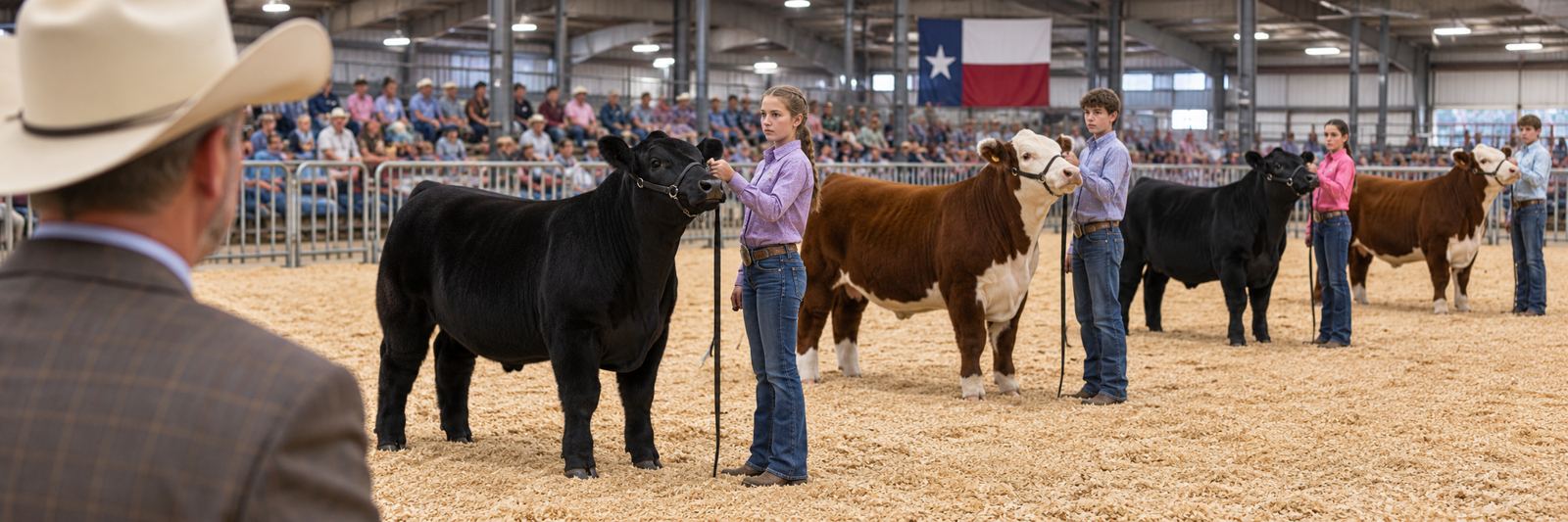
Before anyone buys a calf, someone in the family should read the eligibility rules. Not skim them. Read them, with a highlighter. Eligibility problems rarely show up when you sign up. They show up in May, with a steer in the barn and a form that says he can't go.
The short version is that eligibility usually comes down to four things: who the exhibitor is, whether the exhibitor is properly enrolled, how long the animal has been owned and where it has lived. Every one of those can be set by the show, the county, the state or the school district, and they don't always agree.
So treat this as a map of the questions to ask. Your answers come from the rule book, your ag teacher and your county extension agent.
Who is eligible to show
4-H members
4-H programs run through county and state extension offices, and each state sets its own age ranges and enrollment steps. Many programs use a cutoff date to decide a member's age for the season, and most require the member to be officially enrolled, often through an online system, by a deadline. Being in the club on paper isn't the same as being enrolled for the project. Ask which one counts at your fair.
FFA members
FFA exhibitors are typically members of a chapter, and most programs expect the student to be enrolled in agricultural education at the school. Some shows also set grade limits or age limits, and some separate FFA and 4-H divisions while others combine them. If you're in both, confirm which one you're entering under and whether the same animal can be entered in more than one place. The answer is sometimes yes and sometimes a firm no.
Age and grade
Junior divisions almost always have age or grade limits on both ends. A few shows have separate beginner or novice classes. If your child is right at a cutoff, ask the show office how the date is counted. A birthday that falls two days after the deadline is a long conversation nobody wants to have in the parking lot.
Ownership deadlines
Many shows require that the exhibitor owns and cares for the animal for a set period before the show. The idea is to make sure the junior raised the project and didn't just borrow one for the day. The deadline is often tied to a calendar date, not a number of days, and it's very common to set it months before the show.
The examples show how varied this is. A Colorado State extension page for one county lists a market steer ownership date early in the year, a weigh-in not long after and an online identification deadline in the spring. The University of Nebraska 4-H exhibitor handbook lists a nomination date for market beef in its identification and nomination deadlines. Neither calendar matches the other, and your own might not match either one.
What does "owned" mean? Usually it means the animal is in your name or your family's, on paper, by the deadline. Some programs ask for a bill of sale, a registration transfer or a signed form. A handshake with the breeder won't satisfy the clipboard. And if you bought a calf for a spring show, the clock may already be ticking before school starts, which is one reason to read when to buy a show steer for fall or spring shows before you shop.
Residency and where the animal lives
Eligibility can also depend on where the exhibitor lives and where the project is kept. Some county fairs require that the exhibitor lives in the county or attends a school in it. State-level shows often have a path that goes through the county fair or a qualifying event first. And some programs require the animal to be housed at a particular location, or at least reported there.
If your steer will be kept at a friend's place, a school barn or a boarding facility, ask whether that's allowed and how it should be documented. Programs differ on what counts as the exhibitor's care, and a steer that sits at a relative's farm two counties away can raise questions. School barns have their own rules. An ag teacher's guide to running a school show barn gets into how they work from the teacher's side.
Who actually does the work
Almost every program says the exhibitor has to be the one feeding, handling, training and caring for the animal, with parents helping but not taking over. Some ask exhibitors to sign a statement to that effect. That's not just a rule to check off. It's part of the lesson. Parents help most when they hold the rope, not when they hold the show stick.
Paperwork you'll probably need
- Enrollment confirmation for 4-H or FFA, as your program requires.
- Entry forms signed by the exhibitor and a parent or guardian.
- Proof of ownership, such as a bill of sale or registration transfer, if asked.
- Animal identification that matches your entry. Show calf ear tag and ID rules cover this part.
- DNA or validation records, if your program uses them. Texas and several other states run formal validation programs with their own deadlines.
- Quality assurance certification, since many shows now require exhibitors to complete a youth beef quality assurance course. Check yours.
- Record book or project report, for programs that tie it to eligibility or awards.
Some of that is more paperwork than most adults expect from a kid's livestock project. Rodeo folks know the feeling, and this farm.FM story about bull riding regulations is a fair warning that the paperwork can be tougher than the animal. Keep it all in one folder and you'll stay ahead of it.
A quick pre-purchase checklist
- Get the current rule book for your county fair and any major shows you hope to attend.
- Write down every deadline: enrollment, ownership, tagging, DNA, entry, weigh-in.
- Ask your ag teacher or extension agent what the local and state shows require.
- Confirm age, grade and residency rules for the exhibitor.
- Decide where the animal will live and whether it's allowed there.
- Only then, go shopping.
Mistakes to avoid
- Buying a calf before checking the ownership deadline.
- Assuming the rules are the same as the neighboring county's or the previous season's. Rule books get rewritten.
- Forgetting to enroll in 4-H or the FFA chapter before the deadline.
- Signing forms without reading them.
- Letting a parent do the chores to save time.
Quick answers
Can I show in both 4-H and FFA with the same steer?
Sometimes, but it depends on the show. Some allow it, some limit you to one program per animal, and some have separate divisions. Ask the show office and your ag teacher before you enter.
What does ownership deadline mean?
It's the date by which the animal must be in the exhibitor's name or care to be eligible. It's usually set well before the show, so find it before you buy.
Where can I find the official eligibility rules?
Start with the show's rule book, then ask your county extension office or ag teacher. State 4-H and FFA program websites also post requirements, and your county office can tell you which ones apply to your fair.