Junior Showmanship, 4-H & FFA Steers
Foot Trimming and Lameness in Show Cattle
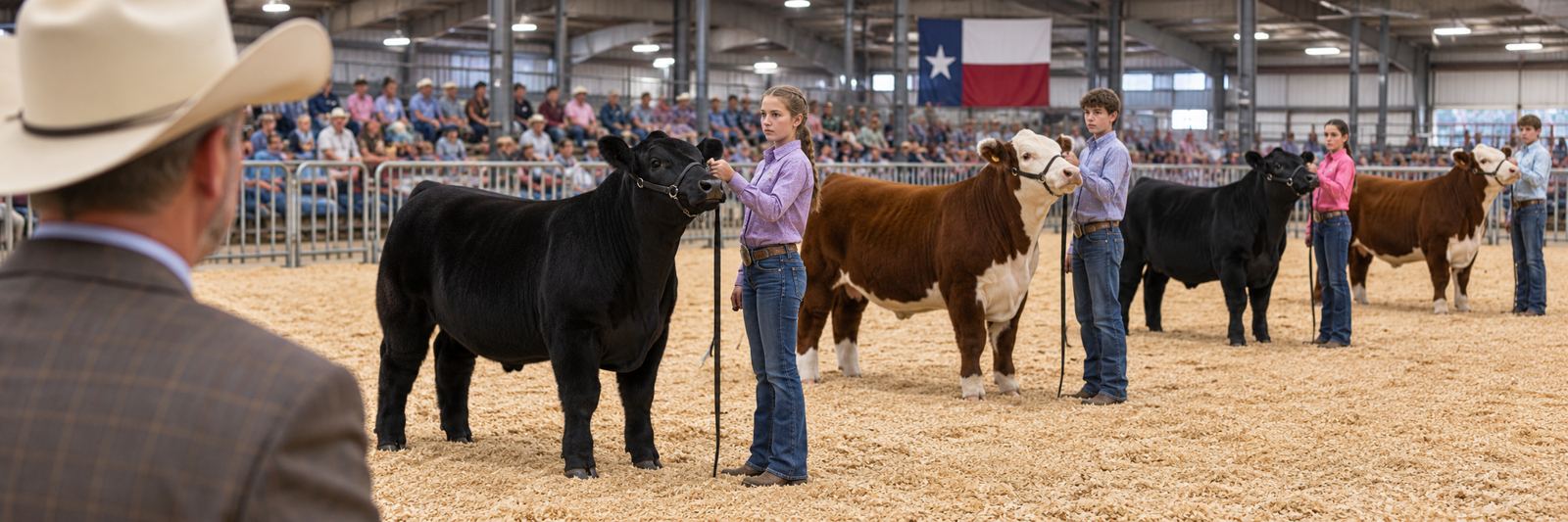
You can have the best hair job in the county, a halter that fits and a steer that walks like he is on a leash, and none of it matters if he is walking on a sore foot. Cattle are good at hiding pain. By the time a steer is clearly limping, the problem has usually been brewing for a while.
Here is the short version. A trim is a maintenance job for feet that have grown out of balance, and many show steers do fine with an occasional look and a trim from someone who knows what they are doing. Lameness is something else. Swelling, heat, a foul smell, a steer who will not put weight on a foot, or one who limps and does not get better in a day or so is a veterinarian problem, not a project for the pocketknife in your show box.
Ask your ag teacher or vet who in your area does hoof work. Good hands with a squeeze chute and the right tools are worth more than any video you watch.
Why feet matter so much for a show steer
Show steers carry a lot of weight on a small footprint. They also stand on hard concrete, wet pens and trailer floors, and they spend time tied up with their feet set in positions that are not how a steer would normally stand. All of that works on the feet.
A steer with sore or unbalanced feet will shift his weight, drag his toes, refuse to stand square and look stiff in the ring. Judges notice. More important, he is hurting, and a sore steer eats less and loses ground in his weight program. Setting a steer up correctly in the ring depends on sound feet, so it is worth reading how to set a steer's feet for the show ring with healthy feet in mind.
Does he need a trim?
Hooves grow all the time. Wear from the ground normally keeps them balanced, but steers that live on soft bedding or a small lot may not wear them enough. Look for:
- Toes that look long and curl upward or forward
- A heel that seems low, or a foot that looks flat and long
- Pasterns that look straight or sunken when he stands
- Uneven wear, with one foot clearly different from the others
- Difficulty standing square, or a stance that does not improve
A veterinarian or an experienced hoof trimmer can tell whether a trim will help. In most cases, trimming a heavy steer safely needs proper restraint, often a tilt table or a good chute with leg handling, which is not a backyard job. The South Dakota State University publication on treating lameness in cattle points out that trimming usually requires a tilt table to hold the animal and the limbs, and that wrong treatment can waste time and make a condition worse. A kid with hoof nippers and a good attitude is not the same as someone with the right equipment.
A few rules for trimming
- Do not trim for looks only. The goal is balance and comfort.
- Do not cut deep. Taking too much can leave a steer sore for days, which is a terrible thing to do right before a show.
- Schedule trimming well ahead of the show, giving the feet time to settle.
- Keep the pen clean and dry afterward.
- Ask your show whether any hoof products or treatments are allowed. Some rules allow treatments that only affect the hoof's appearance, and others have their own limits.
Spotting lameness early
The sooner you catch it, the easier it is to fix. Walk your steer on firm, level ground every day and watch from the side and from behind. Check the following:
- Head bobbing, which can show up when he steps on a sore front foot
- Short strides, or a steer that holds one foot off the ground
- Reluctance to walk, turn or lie down
- Swelling above the hoof, between the toes or in the lower leg
- Heat in the foot or a strong pulse when you put a hand on the lower leg
- Smelly or draining sores between the toes
- Lying down more than usual and eating less
Some of these overlap, so a diagnosis matters. The SDSU publication says swelling above the hoof along with a foul-smelling, draining sore between the toes points toward foot rot, and it adds that getting at least a preliminary diagnosis before treatment is important. If you want a head start on what a vet will be looking for, a quick field diagnosis guide to lameness and a comparison of foot rot versus hoof abscess help you describe what you see. For more detail on one common cause, read foot rot in cattle: signs and treatment.
When to call the vet
Call your veterinarian soon if you see any of the following:
- He will not put weight on a foot or leg
- Swelling, heat or pain that is getting worse
- A wound, a foul smell or drainage from the foot
- A fever, droopy look or poor appetite along with limping
- Lameness that does not improve in a day or two, or that comes back
- A sudden limp after a fall, a slip in the trailer or a gate incident
Tell the vet when the limp began, which foot it seems to be, what the steer has been doing, and whether any treatments have already been given. Take a short phone video of him walking. A vet can learn a lot from thirty seconds of footage, and it saves the steer a trip.
Please also call your vet before giving any medicine for pain or swelling. The SDSU material says veterinary input is needed before anti-inflammatory drugs, and some are required to be vet-directed. Many show rule books also restrict pain relievers and anti-inflammatories in the days before showing and require treatments to be disclosed. A medicine that masks pain in a steer you plan to show raises both a welfare and an ethics question. Read drug and residue rules for show cattle and talk to your vet before anything goes in the steer.
What to do while you wait
- Move him to a clean pen with deep, dry bedding such as straw or sand
- Keep him away from other cattle if the problem might be infectious
- Make sure feed and water are easy to reach so he does not have to walk far
- Limit walking, washing and practice until the vet says it is okay
- Do not poke, dig or cut at a swollen foot
A steer that cannot show is a disappointment, but it is not a failure. Your job is to protect the animal. If the vet says to pull him, pull him, and be proud that you made the right call.
Prevention that costs almost nothing
- Keep pens clean and dry. Muddy, manure-packed lots are a foot rot invitation.
- Check feet when you wash him and when you tie him up
- Pick out rocks, mud and debris, and fix the broken board that keeps catching hooves
- Pay attention to flooring in trailers and wash racks. Slick concrete and a nervous steer are a bad pair.
- Avoid heavy loading, sharp turning and horseplay on slippery ground
Quick answers
How often should a show steer's feet be trimmed?
It depends on how fast his feet grow, how much he wears them and how they look. Some steers need little attention while others need it regularly, so ask your vet or an experienced trimmer to look and give a schedule.
Can I trim my steer's hooves myself?
It is best not to unless an experienced person is teaching you and you have proper restraint. A heavy steer is hard to hold, and a bad trim can cause lameness. Many families hire a trimmer.
Can a lame steer still be shown?
That depends on the cause, your vet's advice and your show's rules. A lame animal should not be shown if it is in pain, and treatments can affect eligibility. Ask your vet and your show officials early.