Junior Showmanship, 4-H & FFA Steers
Halter Breaking a Show Calf Step by Step
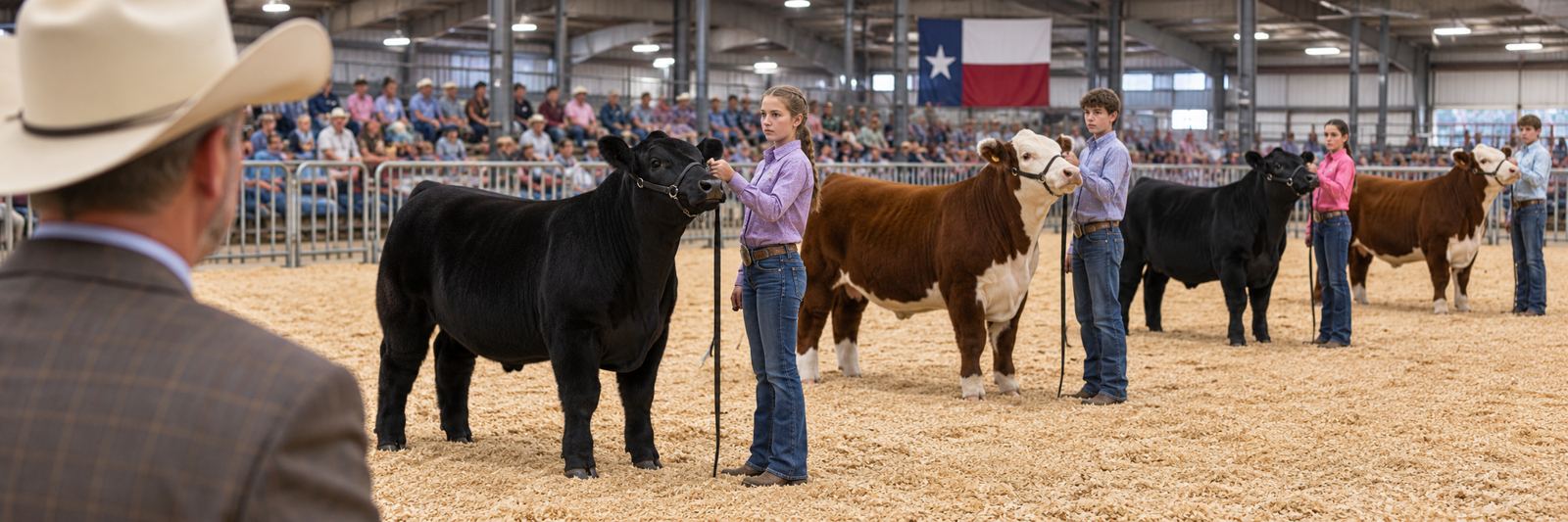
Halter breaking a show calf is mostly a lesson in patience, and the calf isn't the only one taking it. The routine is simple: let him settle, get him used to your touch, put the halter on, tie him safely, then teach him to lead by giving him slack when he does the right thing. Done calmly, it takes days to a couple of weeks. Done in a hurry, it takes longer and somebody gets hurt.
Your calf has never worn a halter. As far as he's concerned, you are a large, loud animal with a strange rope, and every instinct he has says to leave. Your job is to show him, slowly, that nothing bad happens. If you want proof that livestock have been outsmarting people for generations, this farm.FM cowboy poem about unruly livestock is good for a laugh before you head to the pen.
Before you start: safety first
Calves are strong, and a frightened one can pull a small exhibitor off his feet. Extension guidance, including the University of Georgia's halter training publication, stresses setup and safety. Their points include:
- Use a secure pen of adequate size, and keep another calf nearby so he's not isolated.
- Tie only to solid, well-secured steel panels or posts, never to something loose.
- Clear the walkway of hoses, tools and anything that could startle him.
- Have another person nearby to help, and keep young exhibitors away from loose calves in stressful situations. An adult should lead the early work.
- Stay calm. Yelling, jerking and forceful handling raise stress for both of you.
Ask your ag teacher or extension agent to be there for the first few sessions, and follow your local guidance on equipment.
Step 1: Let him settle in
When a calf arrives, resist the urge to start right away. Give him a day or two to eat, drink and look around. During this time, feed him, clean the pen and move slowly. He should see you as the person who brings food, not as a threat. Check that he's eating and drinking and call your veterinarian if he's off or sick.
Step 2: Get him used to your presence and touch
Once he settles, enter the pen calmly with a show stick or a long scratching tool. Let him see you and walk toward his shoulder rather than head-on. Use the stick to rub his back, belly and sides with slow, calm strokes. Do this for several short sessions, perhaps five to ten minutes a day, until he stops flinching. Don't corner him, and don't reach for his head if he's nervous. Let him come to you.
Step 3: Put the halter on
When he's comfortable with the stick, it's halter time. Make sure the halter fits properly, with the noseband snug but not tight and the strap sitting behind the ears. Slip it over his nose and behind his ears quietly, and tie the rope to a solid point right away. Some people use the show stick to guide the halter on, so your hands stay away from his head. If he fights, stay calm and let him work through it, staying out of range.
Step 4: Tie him correctly
Tying is where many calves learn the most, and where many accidents happen. Tie at about head height or higher, with only a little slack, and use a quick-release knot you can undo in an emergency. Per the Georgia guidance, tie to a solid panel or post and avoid so much slack that the calf could jump over a panel or tangle in the rope. Stay close enough to watch him and far enough to stay safe. The goal is a calf that stands without fighting the halter. A few sessions of 15 to 30 minutes work better than a long one, but let your calf's attitude decide.
Never leave a tied calf alone, particularly at first. He can flip, tangle or panic quickly.
Step 5: Start leading
Leading comes after he accepts tying. Pick a calm area, ideally inside a barn with exterior gates closed. Stand on his left side with the lead rope in your right hand, and ask him to step forward with gentle pressure. The moment he takes a step in the right direction, give slack. Pulling constantly teaches him nothing, while releasing pressure when he does it right teaches him everything. Keep sessions short, end on a good note and have a helper ready if he surges. For daily drills after the basics, move on to teaching a show calf to lead, tie and stand quietly.
Step 6: Take the halter off safely
Remove the halter only when he's standing quietly, not when he's fighting it, because he learns that fighting gets him free. Keep the lead rope in hand, release the pressure under the jaw and slide it off gently. Then reward him with a scratch and some feed.
What to do when things go wrong
He pulls back hard
Make sure the knot, rope and panel are secure and be ready to release if he's in trouble. Stay calm. Don't yank. Often he'll work it out and stand when he learns the rope won't give.
He won't move
Some calves plant their feet. Try asking from the side with a light tap on the hip or a small amount of steady pressure, then release when he steps. Don't drag him. If he's still stuck, ask an experienced helper to walk beside you.
He runs past you
Work in a small, enclosed space so he has fewer options, and keep the rope clear of your hands and legs. Never wrap the rope around your hand or body.
He's scared of the hair dryer or wash rack
Introduce these later and in small doses, and ease him in. For hair care and washing, see show cattle fitting basics after halter work is solid.
A rough pace
| Phase | Focus | Typical length |
|---|---|---|
| Settling | Eating, drinking, getting used to you | A day or two |
| Touch and stick work | Calm scratching without a halter | Several short sessions |
| Haltering and tying | Accepting the halter and standing tied | A few sessions to a week |
| Leading | Walking forward and stopping | Days to weeks |
Every calf is different, and older or larger calves are typically harder and riskier to train. If you're still picking a calf, ask the seller whether he's been handled, as described in where to buy a show calf and what to ask the breeder.
Quick answers
How long does it take to halter break a calf?
It varies a lot. Some calves settle in a few days, others take a couple of weeks or more. Keep sessions short and calm, and don't rush the steps.
Should I tie a calf the first day I get him?
Usually not. Give him a day or two to settle, then work up to the halter and tying with a solid setup and an experienced helper nearby.
What size halter does a show calf need?
It depends on the calf's head size, which changes as he grows. Ask your ag teacher or a local feed store to help fit it, and recheck the fit often.