Junior Showmanship, 4-H & FFA Steers
Texas Junior Livestock Show Season Explained
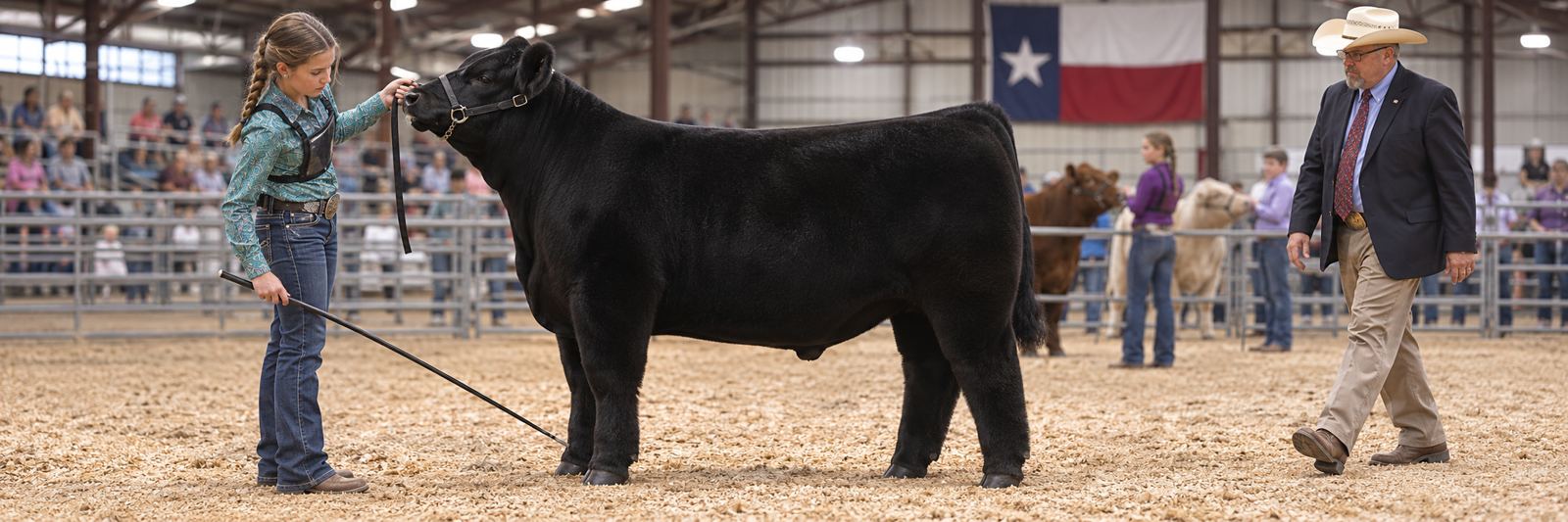
In Texas, the show season runs most of the year, and it starts before the first show. Validation and tagging happen in summer, county and fall shows come next, and the big spring majors tie it all together. Families new to the circuit often discover the calendar by missing a deadline, which is a lousy way to learn it.
Here's the big picture, then the details. Think of it as a staircase. County shows are the first step, where kids learn the routine close to home. Major shows are the top of the stairs, where the competition is stiffer and the paperwork is longer. And somewhere in the middle there's a trailer that needs new tires.
The basic rhythm of the season
| Phase | What's happening | What families need to do |
|---|---|---|
| Summer | Buying calves, tagging, DNA sampling and validation for major shows | Check the validation dates with your county Extension office or ag teacher, and don't miss the tagging window |
| Fall | Fall fairs and some county shows | Finish any required youth quality assurance training, complete entries and prep for hot-weather hauling |
| Winter | County junior livestock shows and early majors | Make weight goals, practice the routine and watch entry deadlines, since county deadlines run earlier than the show's posted ones |
| Early spring | Major stock shows and premium sales | Confirm paperwork, health requirements and the sale plan |
Dates change from one season to the next and vary by county, so use this as a map, not a calendar. Your county Extension office, ag teacher and the show's own website will have the real numbers.
County shows: the starting line
Most Texas juniors begin at a county junior livestock show. These are local, friendly and a great place to learn how a show day actually runs: weigh-in, check-in, the ring, the sale and the long drive home. They're also where you learn what you forgot to pack.
Tag-in dates matter here. According to Texas A&M AgriLife Extension's 4-H livestock show information page, animals not tagged on the county's set tag-in date generally aren't eligible, with an exception for steers already validated for the majors. That's a county example, so rules differ across Texas, but the lesson holds: your county's calendar comes first.
Validation: the step everyone forgets about
For the Texas major shows, the AgriLife page says all junior show projects must be validated. That means official identification and, for most animals, DNA sampling, done at set times in the summer. Miss it and you may not be eligible to show at a major, no matter how good the animal looks.
If this is new to you, read show calf DNA sampling and validation explained and ear tags, tattoos and show calf ID rules explained. Then call your county agent or ag teacher and ask what's required this season for your species and class.
Major shows: the big leagues
The Texas majors include Fort Worth, San Antonio, Houston, Rodeo Austin and San Angelo in the winter and spring, along with fall shows such as the State Fair of Texas. Each has its own rules, entry process, classes and sale. Some require extra documentation. The AgriLife page, for example, notes that entries typically run through the county Extension office or the ag teacher, that junior heifers and steers are often entered by the agent or ag teacher using a worksheet, and that late entries can bring an extra fee.
It also says youth quality assurance (Quality Counts in Texas 4-H) must be completed or updated for the State Fair of Texas and any spring major. Get it done early, because a computer glitch the night before the deadline is a family story nobody wants to tell.
Which show is right for your kid?
There's no single answer. A great county project can be a good fit for a county show only, and that's a perfectly fine way to run a season. Majors take more travel, time and money, and not every family wants that. Look at your budget, your animal and your child's goals, then pick the shows that fit. What it really costs to raise a show steer helps put numbers on the decision.
Weather and hauling
Texas summers are hard on show cattle, and fall shows can feel like a sauna with a corn dog stand. Heat management, shade and good airflow matter from the first day of the project. Keeping a show steer cool in Texas summer heat covers the basics, and hauling show cattle: trailer prep, stops and stress will save you grief on the long drives between shows.
Regional note: the season looks different outside Texas. Northern Plains and Midwestern fairs are heavily summer events, and Southeastern states have their own show circuits. In Texas, the winter and spring calendar plus the summer validation window are what set the pace.
A sample season at a glance
- Pick your project early. Many families shop for steers in the late spring or summer. See when to buy a show steer for fall or spring shows.
- Complete the validation and tagging. Mark the deadline on the fridge. Then take a picture of it so you can't claim you lost the date.
- Finish required training. Quality assurance courses are quick, and they're required for some shows.
- Enter your county show. Gather the paperwork, pay the fees and double-check the class.
- Start weight and conditioning goals. A realistic target, checked often, reduces panic later.
- Enter the majors you've chosen. Watch the deadlines and the required documents.
- Plan the sale. Buyer letters and thank-you notes take longer than anyone expects.
Common mistakes to avoid
- Waiting until the week of the show to ask about rules. The answers have been out there for months.
- Assuming every show uses the same rules. Ownership, ID and health requirements vary.
- Skipping the entry worksheet details. A missing Social Security number or a wrong class code can sink an entry.
- Underestimating the travel. Fuel, motels and meals add up fast during a long show weekend.
- Forgetting the paperwork for heifers. Registration papers and breeder declarations may be required, depending on the show.
Always follow the rule book for each show and confirm details with your county Extension agent or ag teacher. They've seen every kind of deadline disaster and can help you avoid the next one.
Quick answers
When does the Texas junior livestock show season start?
The paperwork side starts in the summer with tagging and validation, and the show side begins with fall fairs and county shows. The major shows are generally in the winter and spring. Confirm exact dates with your county Extension office or ag teacher.
Do I have to show at a major to have a good project?
No. Plenty of families raise great animals and show only at the county level. Majors require extra time, travel and cost, so choose based on your goals and budget.
What is validation, and why does it matter?
Validation is the official identification step for show animals, usually including tagging and DNA sampling, that many major shows require. If you miss it, you may not be eligible to enter. Check the dates early with your county agent or ag teacher.