Junior Showmanship, 4-H & FFA Steers
Building an FFA SAE Around a Beef Project
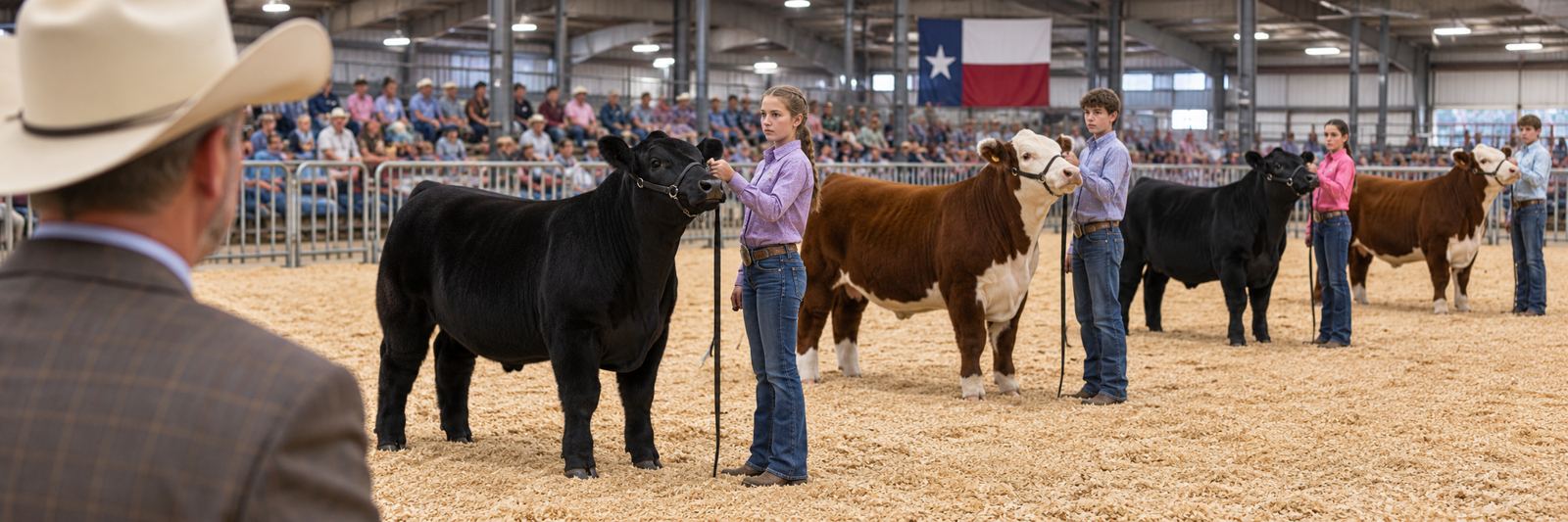
A steer in the barn is not automatically an SAE. A steer in the barn plus a plan, a budget, a set of records and an ag teacher who has signed off on all of it is. The animal is the fun part. The structure around him is what turns a barn chore into a supervised agricultural experience that can feed into awards, degrees and, someday, a resume.
If you're a student, the plan is simple: set goals, write a budget, keep honest records and update them as you go. If you're a teacher, it's the same plan with more calendar reminders. Either way, start with your own state's and school's SAE requirements, because they differ in details.
Where a beef project fits in the SAE framework
The National FFA SAE framework, often called SAE for All, starts with a foundational SAE that every agricultural education student completes. According to a student guide hosted by Penn State, the foundational piece covers career exploration and planning, employability skills, personal financial management, workplace safety and agricultural literacy. On top of that, students can build one or more immersion SAEs. The immersion categories are placement or internship, ownership or entrepreneurship, research, school-based enterprise and service learning.
A beef project usually lands in ownership, where a student owns and runs the project, or sometimes in research if there's an experimental design. Be careful with labels, though. The Texas FFA SAE page notes that raising and selling animals of any species counts as production agriculture and doesn't fit the agribusiness category under entrepreneurship. Your state may draw lines differently, so ask your ag teacher how your program classifies a steer or heifer project. The National FFA also keeps SAE lesson plans and resources for students and teachers.
Step by step
- Meet with your ag teacher first. Before you buy anything. Ask which SAE category fits, what the school's record requirements are and whether your chapter has a facility or boarding option.
- Write goals you can measure. "Learn about cattle" is nice. "Keep the steer's average daily gain between a target range and finish within the weight limit for my show" is better, because it can be checked.
- Make a budget. List the calf, feed, hay, health care, tags, entry fees, supplies and travel. A line-by-line look at show steer costs will help you spot what's usually forgotten.
- Plan the timeline. Mark purchase, tagging, weigh-ins, show dates and sale day. Eligibility and ownership deadlines usually set the first date.
- Review safety. Handling cattle is hazardous work. Go over safe handling, working around trailers and chutes and what to do when an animal is upset. Your SAE should include documented safety training.
- Start the records. Day one, not week six. More on that below.
- Check in regularly. Your teacher supervises the SAE, and the visits and reviews are part of the credit.
- Close it out. At the end of the project, finish your year-end summary, analyze the results and write down what you'd do differently.
What records to keep
The Texas FFA page lists a year-end SAE report and a record book program, naming the Agricultural Experience Tracker as one option. Your state may use that or something similar. Whatever tool you use, beef project records usually include:
- Time and tasks. Hours spent feeding, cleaning, halter training, washing and hauling, with dates.
- Money in and out. Every expense, with a receipt if possible, and any income such as premium money or sale proceeds.
- Animal records. Purchase date, birth date, tag number, weights, feed changes and veterinary care.
- Skills learned. Short notes on new skills, like using a scale, reading manure or setting feet.
- Photos and reflections. A before-and-after photo of the steer says more than a paragraph, and a few sentences about what went wrong teach more than a page about what went right.
If you want the details on making those records clean enough to compete, keeping a beef project record book goes through what to log and how to keep it neat. A steer will happily forget his feeding schedule. A record book can't afford to.
Make it more than a show animal
The best SAEs grow over time. A student who feeds one steer in the first year can add something the next, and a teacher who sees ambition will usually help find ways to stretch the project. A few ideas, depending on your program and your resources:
- Compare feeding approaches. With your teacher's guidance, track how different feed or management choices affect gain, and write up what you saw. Be careful to stay inside your show's rules and your veterinarian's advice.
- Add a breeding heifer. A heifer project brings in selection, records and long-term planning. Picking and showing a breeding heifer covers what that looks like.
- Teach someone else. A demonstration for a younger student or a community group fits well into service learning.
- Take on the sale. Writing thank-you notes and finding buyer support are real business skills.
- Work for a local producer. A placement SAE with a rancher gives you different experience than your own steer does.
Common problems
Parents doing too much
This is the big one. An SAE is meant to be student-led. A parent who feeds, washes and fills out the forms is doing the student's learning for them. Help, yes. Take over, no.
Records filled in at the last minute
Records written from memory a week before the deadline look like it. Spend five minutes a day, or ten minutes after every chore, and the year-end report writes itself. The alternative is a long weekend and a lot of guessing.
Mismatched categories
If you've listed a project under a category that doesn't fit, your teacher will probably catch it, usually at the worst time. Ask early, and keep your SAE plan in writing.
No plan for after the show
What happens when the steer goes to sale or to the next stage? What does the money do? Planning for the end of the project, including savings or reinvestment, is part of the financial management skills the SAE framework is trying to teach.
Mistakes to avoid
- Buying the calf before talking to your ag teacher.
- Letting the records sit in a shoebox until spring.
- Skipping safety training because "I've been around cattle my whole life." Cattle don't check your resume.
- Treating the SAE as a show-only project, with no learning goals.
- Forgetting to photograph the progress. A steer in January and a steer in April look very different, and you'll want proof.
Quick answers
Does a show steer count as an SAE?
It can, as long as it's planned, supervised by your ag teacher and documented with records. The category it fits under depends on your state and school, so ask your teacher.
What record book do FFA students use for an SAE?
Many states use the Agricultural Experience Tracker, and some have their own handbooks or record books. Your ag teacher will tell you which one your chapter uses.
Can I do an SAE if I can't keep a steer at home?
Yes. Many students board animals at a school facility or work placement-style at a local ranch. Ask your teacher what options exist and what the rules are for housing and care.