Junior Showmanship, 4-H & FFA Steers
What It Really Costs to Raise a Show Steer
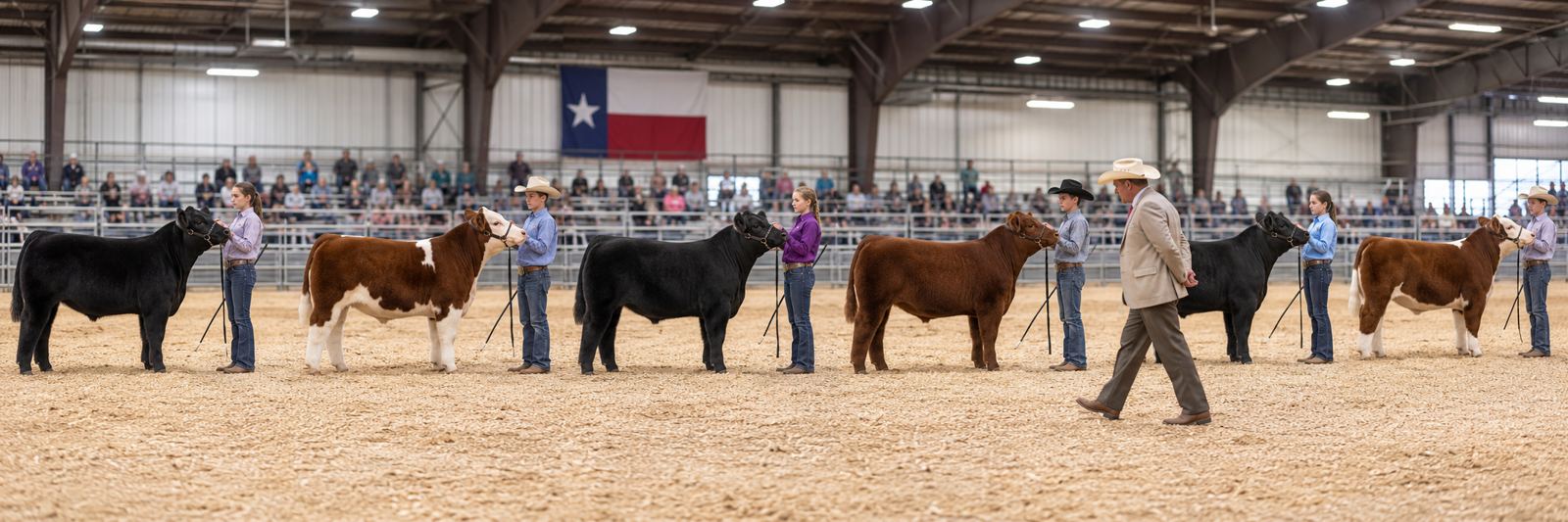
The calf isn't the expensive part. Families figure that out around the third trip to the feed store, when the receipt starts to look like a phone number. A show steer is a daily bill that lasts about as long as a school semester, and the way to survive it is to write the budget before you buy the animal.
Prices swing a lot from one region, breeder and season to the next, and feed and hay costs move with the weather and the markets. So this article won't hand you a single number and call it fact. It will give you every line that belongs in the budget and a way to estimate each one with local prices.
Start with the lines everyone forgets
Most families budget for the calf and the feed and miss everything else. Here's the full list, grouped so you can fill in your own local numbers.
| Budget line | What it includes | How to estimate |
|---|---|---|
| The calf | Purchase price, sales fees, hauling him home | Ask breeders and ag teachers for ranges, and set a ceiling before you shop |
| Feed | Grain mix, supplements your vet or leader approves | Pounds per day times days times price per pound |
| Hay and bedding | Hay, shavings or straw | Bales or pounds per week times local price |
| Health care | Vaccinations, deworming, fly control, vet visits, an emergency cushion | Ask your vet for a routine schedule, then add a reserve |
| Facilities | Pen rental or fencing, shade, fans, water tank, feeders | Depends on whether you use a school barn, a friend's place or your own |
| Show supplies | Halters, show stick, brushes, clippers, blower, adhesives, shampoo | Check the list in a show box checklist, then look for used gear |
| Registration and entries | 4-H or FFA enrollment, show entry fees, validation or DNA fees, tags | Read the entry book for each show |
| Travel | Fuel, trailer upkeep, lodging, meals, time off work | Count the miles to each show and the number of trips |
| Clothing | Show shirt, jeans, boots, belt | Often reusable from an older sibling or borrowed |
Estimating feed
Feed is the biggest steady cost, and it's also the easiest to estimate. Utah State's first-time market steer guide says growing show steers eat roughly two percent of their body weight per day. Texas A&M AgriLife's publication on managing beef cattle for show describes steers being fed for roughly nine months. Put those together with your local feed price and you've got the start of a budget.
Here's the formula: average pounds of feed per day, times the number of days on feed, times the price per pound. The practice numbers below are only an illustration, not a price quote.
- Say he eats an average of 20 pounds of grain mix a day.
- Say you feed him for 220 days.
- That's 4,400 pounds of feed.
- If a bag of your chosen feed works out to fifty cents a pound at your feed store, the feed total is about 2,200 dollars. If your feed is cheaper or more expensive, change that last number and the answer follows.
Do the same math for hay. A steer eating several pounds of hay a day adds up to a real stack by spring. Whatever local hay costs, the drought years push it up. Showing steers through drought, hay prices and feed costs covers the planning for lean seasons. A beginner feeding program will tell you what the steer should actually be eating, so your estimate isn't a guess.
Health care and the surprise fund
Routine health care is predictable. Ask your veterinarian what vaccines and parasite control make sense for your area and your calf. Emergencies aren't predictable, which is why a reserve matters. The Utah State guide suggests setting aside several hundred dollars for veterinary emergencies, and that's a reasonable starting idea for most families, though your local costs may differ.
A steer will not schedule his trouble for a weekday afternoon. He'll wait until Saturday night. If the family has no cushion at all, a sick steer becomes a financial crisis on top of an animal-care one, and that's the kind of problem a budget is supposed to prevent.
Where the money comes back
Some of the cost can be offset, but plan conservatively. Many junior shows have premium money for class placings. Some have a premium sale, where local businesses and individuals bid on animals. That money isn't guaranteed. It depends on the show, the sale, the local economy and how the animal places or sells, and most projects don't come out ahead, so don't count on it for the budget.
If you do take part in a sale, it's a chance to build relationships. Premium sale etiquette for exhibitors is worth a look, and so is asking local businesses to support your steer at the sale. A project that makes some money is nice. A project that teaches the junior to budget is better.
Ways to keep costs reasonable
- Set a ceiling on the calf. Don't shop above it. A pricey calf doesn't guarantee a better result, and a good learning experience doesn't need a premium animal.
- Buy used gear. Clippers, blowers and show boxes show up at swap meets and from families with older kids. Buy the safety-related items new or in good condition.
- Share with friends. Trailers, tools and travel can be split with another family, if the show rules and animal health practices allow it.
- Use a school or club barn, if your program has one, to save on housing.
- Don't pad the program with extras. Every supplement and gadget should have a reason, and anything medicated or unusual should be cleared with your vet, ag teacher and the show rule book.
- Track every dollar. Records show where the money went and what to cut next time.
Mistakes to avoid
- Budgeting for the calf and feed only.
- Skipping the vet reserve.
- Assuming the sale will cover everything.
- Letting costs pile up without a running total. The feed store loves a customer with no spreadsheet.
- Cutting corners on health care or water to save money. The steer pays for that one.
The best practice is to sit down as a family, with the ag teacher if possible, and decide before the purchase how much the project can cost and what happens if it goes over. Picking a show steer for your first 4-H project is a good companion read for that conversation.
Quick answers
What is the biggest cost of a show steer?
For most families, feed and hay over the whole project add up to more than any other single item, and the calf itself comes next. Travel, entries and supplies fill in the rest.
How do I estimate feed costs?
Multiply the pounds of feed per day by the number of days and the price per pound, and do the same for hay. Your ag teacher or extension agent can help with realistic daily amounts.
Will the premium sale pay for the project?
It might cover some or all of it, but it's not guaranteed and depends on your show, the local sale and how the animal places. Budget as if it won't, and treat sale money as a bonus.