Junior Showmanship, 4-H & FFA Steers
Showmanship vs Market Class: How the Judging Differs
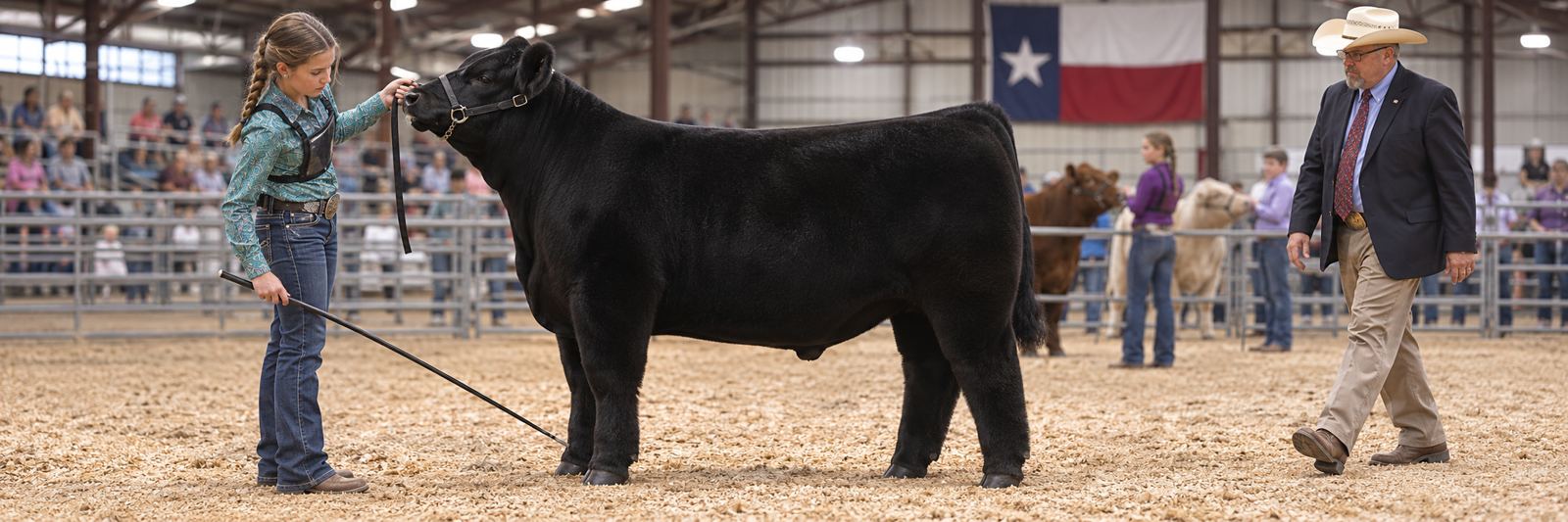
Here's the whole difference in one line: showmanship judges the kid, and the market class judges the steer. In showmanship, the animal is the tool and your handling is the product. In a market class, the steer is the product and you're the person who got him to the ring.
Families new to the show barn often mix these up, then wonder why a spectacular steer lost showmanship or why a polished showman's calf didn't place high in the class. Both results can be fair. They're different contests with different questions, and the steer, who has no idea which one he's in, will behave exactly the same in both, which is to say like he'd rather be at the feed bunk.
What Showmanship Measures
Showmanship is about the exhibitor's skill. Oklahoma State's extension fact sheet on beef showmanship describes it as presenting the animal at its best, drawing attention to its strengths and minimizing its weaknesses. Judges look at the following:
- How well you control and present the animal.
- Whether you set the feet correctly and keep the calf calm and set.
- Whether you stay aware of the judge and keep the judge's view clear.
- Your appearance, manners and sportsmanship.
- In many shows, how you answer questions.
Because it's about handling, in many shows the exhibitors in a showmanship class may be competing with animals of different types and quality. A calf that is average and well-trained can win. In some contests, exhibitors even trade animals or work with an unfamiliar animal, and the judge learns how well they adapt. Your own show's rules will say whether that applies. For the details of how scoring tends to go, see showmanship basics: what judges look for in a junior.
What a Market Class Measures
A market class judges the animal. The steer walks into the ring, and the judge evaluates him against the other steers in the class. The factors generally include muscling, structure, finish (the amount of fat cover), balance and how the animal looks and moves. What the judge values can vary by show and by region, and you'll hear different opinions in Texas, Iowa and Montana. Your ag teacher or county agent can describe what judges in your area tend to prefer.
Judges in a market class are typically not scoring your handling, although a calm, well-set calf will certainly look better than one that's wandering around. Think of handling as a way to let the steer show well, not a scoring category. A steer that spends the class trying to leave the ring doesn't help his own case, and no judge has ever scored a calf higher for dragging his kid across the dirt.
Side-by-Side Comparison
| Showmanship | Market class | |
|---|---|---|
| Who is judged | The exhibitor | The steer |
| What counts | Handling, control, ring awareness, appearance, manners | Muscling, structure, finish, balance, overall look |
| Role of the animal | A partner that you present | The product being evaluated |
| Can an average animal win? | Yes, with excellent handling | Rarely, since the steer is the point |
| Questions from judge | Often, depending on the show | Less often, depending on the show |
| Where it ties in | Skill, practice and sportsmanship | Selection, feeding and growth, and the sale |
Show formats change, and so do class names. Some shows have separate showmanship divisions by age, and many have market classes by weight or breed. Check your show's rule book and premium list.
Why You Need to Prepare for Both
A family with a steer project is entering two kinds of work at once. One is raising an animal, and the other is learning to present it. Those skills feed each other:
- A calf that's been halter broken and handled daily is easier to show in both classes. Halter breaking a show calf step by step is where that starts.
- A well-fed, healthy steer has the condition he needs to look good for the market judge. See the show steer feeding program for beginners.
- A junior who practices showmanship learns the calm, steady habits that make any calf look better.
It's also common to see a showmanship champion who's placed low in the market class, or the other way around. That's not a conflict. It's two judges looking at two different things on the same day.
Common Misunderstandings
- "The best steer wins showmanship." Not necessarily. The best handler does. Plenty of parents have learned this the hard way while holding a camera.
- "A good showman guarantees a good placing in market." Handling helps, but the market judge is evaluating the animal.
- "Showmanship is a consolation prize." It's a serious contest, and many juniors consider it the most meaningful thing they win.
- "You only need one or the other." Both matter, and each teaches different skills.
How the Two Connect to the Sale
At many junior shows, market class results can affect premium sale eligibility, and showmanship awards are often counted separately. Rules differ widely. Some shows sell only the top placings, some sell every exhibitor, and some link showmanship to extra recognition. Read your show's rules so you're not surprised. If you're planning ahead, junior livestock premium sale etiquette for exhibitors covers what happens when a steer reaches the sale ring.
Tips for Families
- Ask for the judging criteria in each class before the show. Many ag teachers and extension offices have score cards or guidance.
- Practice showmanship early. It takes longer to get good at than most kids expect.
- Talk about the results afterward. If a steer placed low but the junior handled well, say so. If the reverse is true, say that too.
- Keep the focus on the animal's well-being. No placing is worth a stressed calf.
- Be good sports. Congratulate the winners in both classes. The ring is smaller than it looks.
Quick answers
What's the difference between showmanship and a market class?
Showmanship judges the exhibitor's skill in presenting and controlling an animal. A market class judges the steer himself against the others in the class.
Can a poor steer win showmanship?
Yes, if the exhibitor handles him well, because showmanship rewards the handler's skill. The steer still needs to be well behaved and presented properly.
Do I have to enter both classes?
That depends on your show, and some require both. Check your rule book or ask your ag teacher or extension agent, since entry rules differ.