Junior Showmanship, 4-H & FFA Steers
How to Set a Steer's Feet for the Show Ring
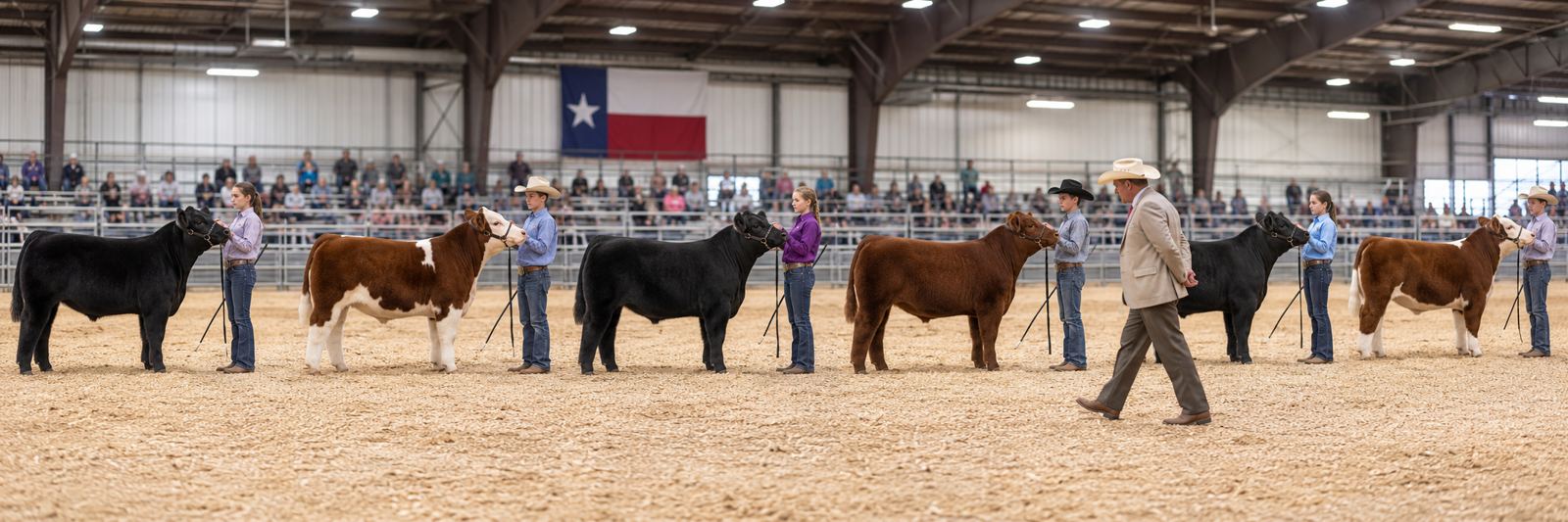
Setting a steer's feet means placing each foot so he stands balanced and looks his best from the side. In a side view, the rear feet are staggered, the front feet are square or only slightly staggered, and the head is up. You use three tools to do it: the halter, your own feet and the show stick. Used calmly, they let you reposition a calf without a struggle.
The first time you try to move a rear foot on a steer who doesn't want to move it, you'll learn that a calf has opinions about where his feet belong. He wants them exactly where he put them, thank you very much, and he'll lean on you if you push. Fortunately there's a better way than pushing, and it starts with understanding what you're trying to show the judge.
Why foot placement matters
A judge sees your steer from the side, and where the feet are changes how the animal looks. Feet placed under the body let the topline look level, the legs look straight and the muscling show up. Feet planted badly can make a good steer look short, tight or weak. Oklahoma State University Extension's beef showmanship fact sheet lists a clean, balanced presentation, correct foot placement and exhibitor control among the things judges evaluate.
The basic stance
In profile, head to tail
When the judge looks at the side of your steer, the OSU guidance is to stagger the rear feet heel to toe, and to set the front feet square or only slightly staggered. The animal should look balanced, with weight evenly carried and the legs reasonably under the body.
In a line-up, side by side
When cattle are lined up next to each other, you'll usually set all four feet under the body so each carries its share of weight. Your ag teacher or extension agent can show you how your local judges like it, because small preferences vary.
Step by step
- Stop him and let him settle. Don't set up a moving calf. Stop, wait a second and scratch his belly calmly.
- Check the front feet first. They should be square, and the leg should be straight under the shoulder. Use your foot, the halter or a gentle nudge to adjust.
- Set the rear feet. Move the near rear foot a bit forward or back to get the stagger. Remember that it's usually easier for him to step back than to reach forward, so if you're stuck, ask him to take a half step back and then stop.
- Check the topline. A weak back or steep rump can be helped with the show stick, covered below.
- Raise his head. Use the halter to bring his head to a natural, alert height. Not too high, not drooped.
- Re-check and re-set. Calves move. Plan on adjusting more than once, calmly.
Using the show stick
The show stick is a tool for scratching and gentle guidance. It's never for hitting, poking or punishing, and you should follow your show's rules about its use. The OSU fact sheet describes a few ways exhibitors use it:
- Slow, calm scratching on the belly or brisket settles the calf. Hard, fast scratching tends to make things worse.
- Light pressure at the soft area where the hoof splits moves a rear foot back. Light pressure under the dewclaw moves it forward.
- Gentle pressure at the navel or flank can help lift a weak topline, and light pressure on the rump can help lower a steep one.
- Placing the stick in front of his nose can help slow him down. Again, never striking.
Keep the stick pointed down, stay relaxed and let your voice stay quiet. If the calf is tense, scratch longer. If he's still resisting, take a break.
Where to stand
You'll want to keep your calf between you and the judge, stay out of the judge's line of sight and keep your back straight. When the judge walks around, shift position, step aside and look over your shoulder so the judge can see more of your steer. Keep an eye on the judge without staring. Showing is a balancing act of watching the judge, watching your calf and not tripping over your own boots.
Practice drills at home
- Stop and set. Lead, stop, set the feet, count to ten, then walk on. Repeat.
- Mirror practice. Set him up near a window, mirror or in a spot where a helper can tell you how he looks from the side.
- Helper as judge. Have a friend or parent walk around and give feedback.
- Tied practice. Once he stands well tied, practice setting feet while he's calm.
These drills build on teaching a show calf to lead, tie and stand quietly, so make sure that foundation is solid first. Short sessions are best. A tired calf gets sloppy and a frustrated kid gets worse.
Common mistakes
- Fighting the calf. If you push or pull hard, he'll lean. Use light cues and release.
- Setting the feet and then walking away. You've got to keep watching him. He'll shift when you look elsewhere.
- Over-scratching. It looks busy and can make him restless.
- Standing between the judge and the calf. The judge is there to see him, not you. A list of habits to avoid lives in common showmanship mistakes and how to fix them.
- Getting frustrated. The calf won't improve because you're annoyed, and neither will the judge's opinion.
How it connects to the rest of showmanship
Foot placement is a skill, not the whole picture. Judges also watch how you lead, how you stay in position and how you handle yourself. A calm, courteous exhibitor with a decent set-up usually beats a flashy one with a nervous calf. For the bigger picture, see showmanship basics: what judges look for in a junior, and keep in mind that market classes and showmanship are judged differently, as described in showmanship vs market class.
Quick answers
Which rear foot should be forward when setting a steer?
Judges generally like to see the rear feet staggered when viewed from the side, with the front feet square or only slightly staggered. Ask your ag teacher or a local judge which look they prefer, since small details vary.
How do I move a steer's foot without him leaning on me?
Use light pressure with the show stick or your foot and release as soon as he moves. It's also generally easier to move a rear foot back than forward, so plan your set-up accordingly.
How often should I practice setting feet?
A few short sessions a week, mixed in with leading and standing drills, work well for most calves. Keep sessions calm and quit before he gets bored or tired.