Junior Showmanship, 4-H & FFA Steers
Showmanship Basics: What Judges Look for in a Junior
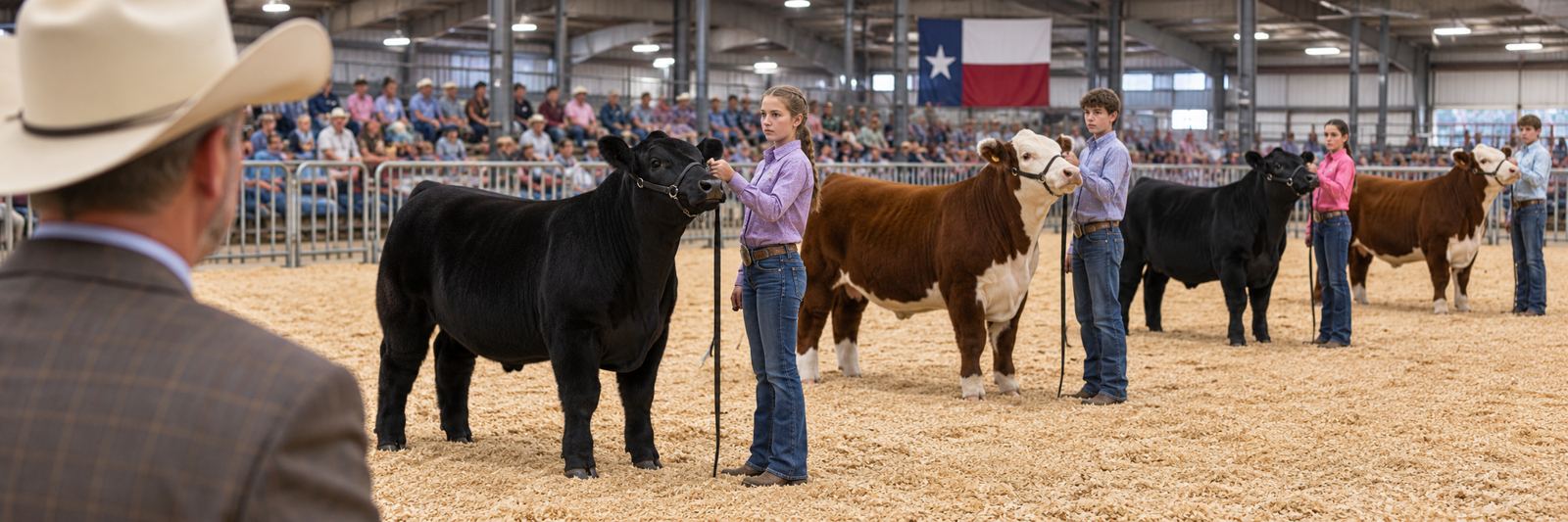
Showmanship judges are grading you, not the calf. They watch how well you present the animal, how calmly you control him, how aware you are of the judge and the ring, and how you look and act while doing it. Oklahoma State's extension fact sheet on beef showmanship defines it as the exhibitor's ability to present the animal at its best, drawing attention to its strengths and minimizing its weaknesses.
That definition also tells you something else. The work starts long before the show. A junior who spent months walking, brushing and setting up a calf shows up with a head start that no last-minute trick can match.
Scoring varies by show. Some use a score card with categories, some are scored by the judge's overall impression, and some have rules about what judges may ask. Read your own rule book and ask your ag teacher or extension agent how your show works. What follows are the things judges commonly watch.
1. How the Animal Looks and Behaves
Even though the calf isn't being judged on his merit, judges notice his presentation:
- A clean, well-groomed coat, with hair brushed and trimmed as appropriate for the breed and sex.
- A calm, cooperative animal that walks straight and stands where you place him.
- A proper head height that shows off a good side view and a graceful walk.
These come from the daily work, not from the show-day polish. If your calf still fights the halter, go back to teaching a show calf to lead, tie and stand quietly before you chase finer points.
2. Setting the Animal Up
The Oklahoma State fact sheet describes the target. From the side, the feet are set so the rear legs are staggered heel to toe, with the front feet square or less staggered than the rear. From the front or rear, all four feet sit under the animal, each carrying its share of weight. The topline and rump, which you can adjust with the show stick, should look straight.
Judges watch how you get there. A good showman moves the calf with small, quiet adjustments, then lets him find his own stance for a step or two instead of fighting him. Constant jabbing at a calf's belly shows the judge you're losing the argument. The deeper how-to is in how to set a steer's feet for the show ring.
3. Knowing Where the Judge Is
This one separates the experienced from the nervous. The judge should always have a clear view of your calf. That means:
- Don't stand between the judge and your animal.
- Keep an eye on where the judge is walking, without staring.
- Keep your calf set and calm when the judge looks at you, because that's when the judge is most likely to notice.
- Move when asked, and don't ignore the judge's signals.
- Avoid setting up in low spots or dark corners of the ring.
A University of Florida extension page on beef cattle showmanship adds: keep space between yourself and your animal, stay clear of other animals and the arena edge, make eye contact with the judge and stay calm. A smile helps, a natural one. A fixed grin that looks like a dental appointment is not the goal.
4. Control, Handling and Safety
Judges notice how you treat the animal. They're looking for firm, gentle, consistent handling. Behaviors that cost points, per the Oklahoma State sheet, include jerking the halter, shaking the lead, losing your temper with a restless animal, scratching hard or quickly with the show stick, wrapping the lead strap around your hand, letting the lead drag on the ground and carrying a comb with the teeth facing outward. Any of those is also a safety issue. Wrapping a lead around your hand around a 1,000-pound animal is a bad plan for reasons that have nothing to do with scoring.
The show stick is a tool for small, quiet touches. The UF page recommends holding it in your left hand with the prongs down, and not overusing it. Using it to hit or jab an animal is an ethics violation, not just a score deduction. For rules every junior should know, see ethics in the show ring.
5. Your Appearance and Attitude
Dress neatly. A tucked-in, sleeved shirt, jeans, a belt and leather boots are common, but your show's dress code comes first. What to wear in the showmanship ring has the details. Beyond clothes, judges notice:
- Courtesy and sportsmanship toward the judge, officials and other exhibitors.
- Arriving on time and in the correct class.
- Staying focused for the whole class, not only when you think the judge is looking.
- Taking the placing graciously, win or lose.
That last point is more important than most juniors believe. Judges are people, and people tend to remember the kid who shook hands and said thank you.
6. Answering Questions
Many shows include questions, and the Oklahoma State sheet lists the kinds of things a judge might ask: your animal's age, sire, dam, feeding program, weight gain and other basics. It also advises telling the judge if your animal kicks or dislikes being touched, which is a safety courtesy. If questions freeze you up, how to answer a judge's questions without freezing gives you a plan.
A Short Practice Plan
- Walk the calf daily until leading is boring for both of you.
- Practice setting up for a few minutes at a time, with a friend or parent playing the judge.
- Rehearse the ring. Walk the pattern, change sides, practice moving to a new spot calmly.
- Drill your facts. Know your calf's birth date, breed, sire, dam and feeding program.
- Ask for feedback. A fellow exhibitor or ag teacher can tell you what you don't see.
Ask the judge for feedback after the show if the show allows it. Some of them will tell you exactly what moved you up or down. Others will say you did fine, which is judge for "ask somebody else."
Quick answers
What do showmanship judges look for?
They look at how well you present and control the animal, set him up, stay aware of the judge's position, look and behave and answer questions. The animal's own quality isn't the focus in showmanship.
How is showmanship scored?
It depends on the show. Some use score cards and some go by overall impression, so check your rule book and ask your ag teacher or extension agent.
What's the biggest showmanship mistake?
Blocking the judge's view and ignoring the judge's position are two of the most common. Rough handling, overusing the show stick and arriving late also cost points.