Junior Showmanship, 4-H & FFA Steers
Market Steer or Heifer for a First Show Project?
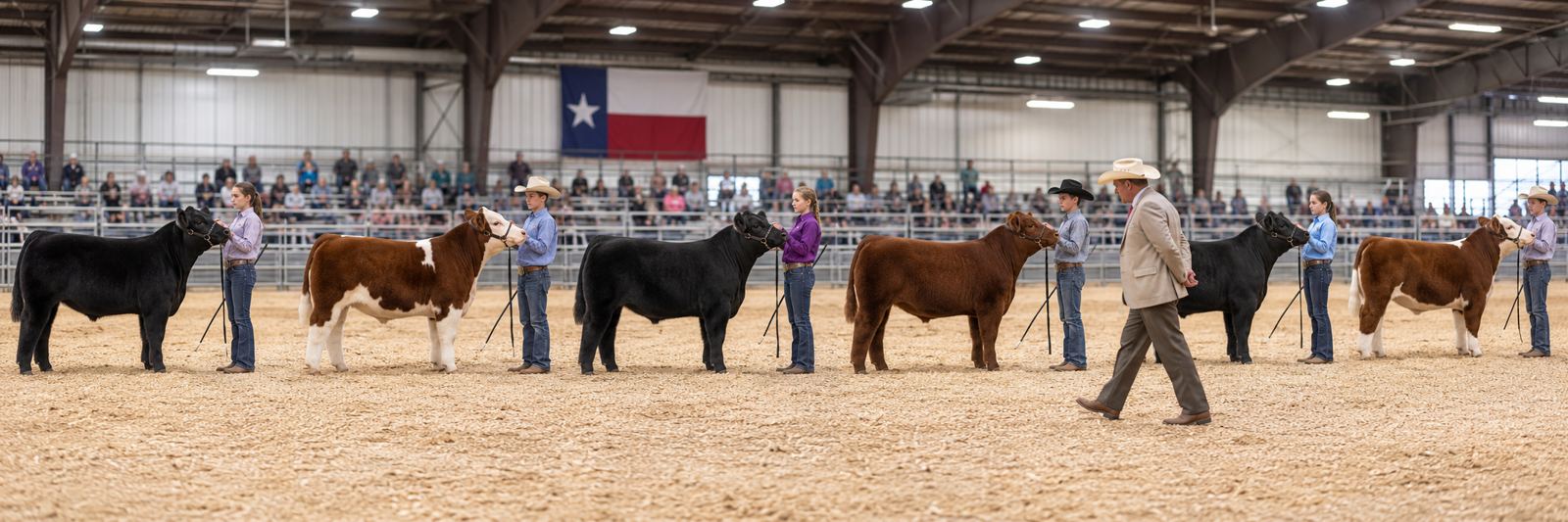
Pick a market steer if you want a project with a clear finish line: feed him, train him, show him and sell him at the fair. Pick a heifer if you want to learn about breeding, keep an animal long term and stay in the cattle business after the show season ends. Neither is better. They're different projects with different timelines, and your family's goals should make the call.
Somewhere in your county there's a kid who started with a steer and now runs a cow herd, and another kid who started with a heifer and swore off cattle by October. So the choice doesn't predict your future. It just shapes the next several months, and the kind of mess your barn will be in.
What a market steer project looks like
A market steer is raised to a target weight and exhibited in a market class, where the judge evaluates muscle, finish and overall type. The project usually ends at the fair or livestock show, often with a premium sale or a final sale at the end. That makes the timeline tidy, with a start, a feeding period, the show and then the handoff. Many 4-H and FFA programs build their record books, learning goals and awards around exactly this cycle.
For a beginner, a steer has some real advantages. There's no breeding decision, no pregnancy to manage and no udder to evaluate. The goal is simple to explain to a grandparent, which helps when you ask them for a ride to the feed store. The trade-off is that the project is a single run. When it ends, so does the work, and you'll have to buy a new calf for the next season.
What a heifer project looks like
A heifer project can mean a few different things. In a market heifer class the animal is fed for slaughter, just like a steer, if your show has that class. In a breeding heifer class, the animal is judged as a future cow and is usually kept after the show. Rules about which of these classes exist at your fair vary a lot, so check the rule book and ask your extension agent or ag teacher.
A breeding heifer comes with extra layers of learning: genetics, registration papers, herd health, breeding decisions and, eventually, a calf. The upside is a long-term project, a chance to build a record that grows over several years and a better understanding of what makes a cow productive. The downside is a longer commitment, more complexity and a heifer that needs a home after the show. If your family doesn't have pasture or a barn for her, that's a real hurdle. For more on this path, see picking and showing a breeding heifer project.
Side by side
| Question | Market steer | Heifer |
|---|---|---|
| Project length | Usually one show season | Can last years if kept as a breeding animal |
| Main learning | Feeding, growth, showmanship, marketing | Breeding, genetics, herd health, showmanship |
| Space needed | A pen and a place to wash and train | The same, plus long-term housing or pasture |
| Paperwork | Show entry, tagging, record book | All of that, plus registration and breed papers |
| Ending | Show and sale or handoff | Often kept, bred or sold as a breeding animal |
| Beginner friendliness | Often simpler | Rewarding but more to manage |
Questions to ask your family
Sit down at the kitchen table, before anyone visits a sale barn, and talk about the following:
- What do you want out of this? Ribbons, a buckle, a scholarship line on a résumé, a start on a herd? Each answer points in a slightly different direction.
- What does our fair offer? If the heifer classes are small or the market heifer class doesn't exist, that may decide it for you.
- What do we have for space? A steer needs a pen, shade and a hose. A breeding heifer needs all of that for a much longer stretch.
- How much time can we commit? Both need daily care, but a breeding animal keeps going after the fair ends. Cattle don't take weekends off, and neither do the people who own them.
- What's the budget? Costs vary by region, by animal quality and by how long you keep the project. Compare the full picture in what it really costs to raise a show steer before you commit.
Is a steer easier to show?
Not necessarily easier, just different. In the showmanship class, the judge is looking at you, not the animal, so any well-behaved calf can work. In the market ring, steers are judged on muscle and finish, and heifers in a breeding class are judged on structure, frame and femininity. Showmanship skills like leading, setting feet and keeping an eye on the judge carry over from one to the other, and the basics are the same whichever animal you choose. A good primer is showmanship basics: what judges look for in a junior.
Temperament and handling
Heifers and steers both vary. You'll hear the barn-aisle wisdom that steers are calmer and heifers are moodier, and then you'll meet the opposite example within the week. Pick the individual animal rather than the sex. A calm calf with good feet beats a nervous one with a better topline, as the guidance in how to pick a show steer for your first 4-H project explains.
A few regional notes
- Texas and the Southern Plains: Large county and major livestock shows have a strong market steer tradition, with premium sales a big part of the culture. Check the show's tagging dates early.
- Northern Plains and Midwest: Many fairs offer both market and breeding classes, and breed-specific junior shows are common.
- Southeast: Heifer shows, including junior heifer programs, are often popular, and some fairs have special classes for them.
- West: Rules can include different weight ranges, ownership dates and sale formats. Ask the county office before you buy.
Whichever you pick, spend time with your extension office or ag teacher. The University of Minnesota Extension has a helpful overview in its 4-H beef project page, which is a good example of how programs describe the different paths.
Quick answers
Is a steer or a heifer cheaper for a first project?
Prices depend on the animal, the region and the market, so there's no honest one-size answer. A breeding heifer usually carries more long-term costs, like housing, health care and breeding, while a steer's costs are concentrated in one feeding season.
Can I show a heifer in a market class?
Only if your show has a market heifer class, and not all of them do. Read the class list in your rule book or ask your extension agent before you buy.
Which is better for FFA record keeping?
Either can work for a supervised agricultural experience, as long as the records are complete and match your chapter's requirements. Talk to your ag teacher about what your chapter expects before you pick.