Junior Showmanship, 4-H & FFA Steers
Show Day Morning Routine for Cattle Exhibitors
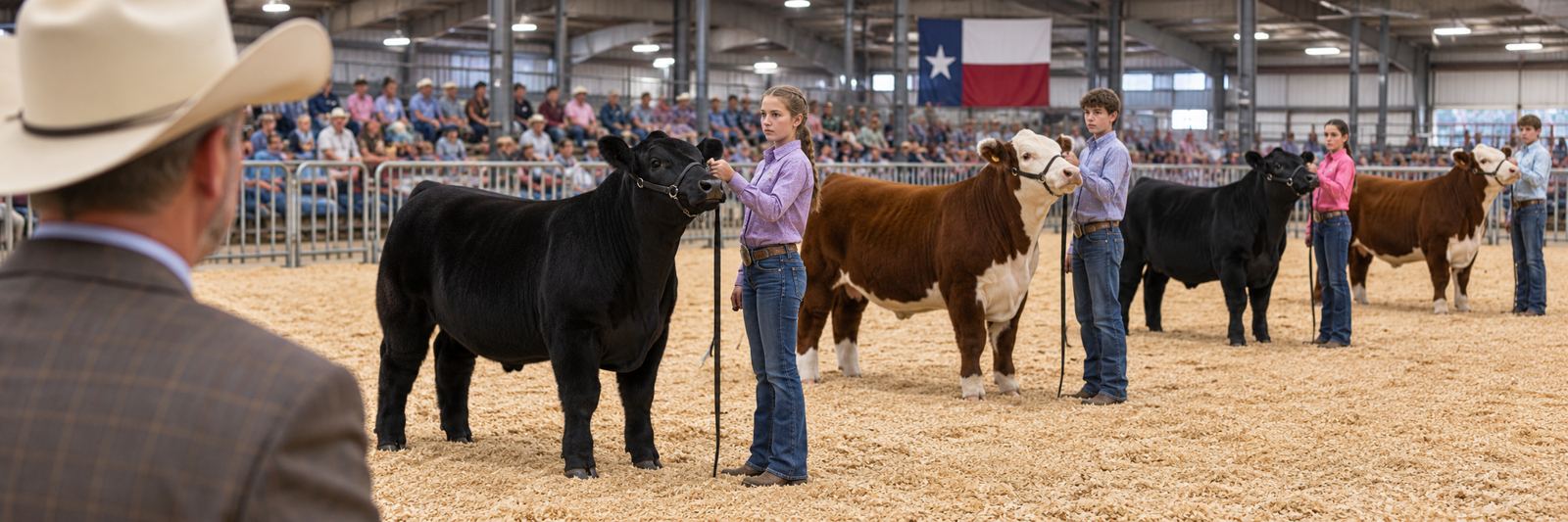
Show day goes smoothly when you build the schedule backward from your class time. Pick the time your class is expected to enter the ring, subtract the time you need to be ready at the gate, and then work back through dressing, fitting, feeding and chores. Pad every step. Something will take longer than planned, and it's usually the one involving a gate.
What follows is a sample plan using hours before your class. Slide it to match your show, and check your fair's rule book for check-in times, class schedules and anything unusual, like a required meeting or a barn that closes to vehicles at a certain hour.
The Night Before
The morning only works if the night did. Pack the show box and your clothes, lay out your boots, and read through the show season gear and show box checklist one more time. Confirm your entry paperwork, ear tag number and class. Many exhibitors wash the calf the evening before, bed him down on clean shavings and blow off dust the next morning, which is a common approach described by the NC State guide for youth beef cattle exhibitors.
Then sleep. A tired exhibitor forgets the show stick, and a tired exhibitor is also the one who finds out his belt is at home.
A Sample Timeline
These times count backward from the ring. Adjust everything to your own show.
| Time before class | What to do |
|---|---|
| 4 to 5 hours | Wake up, eat a real breakfast, check on the calf |
| 3 to 4 hours | Feed and water as planned, clean the pen |
| 2 to 3 hours | Brush, blow, fit and tidy the hair |
| 1 to 2 hours | Final touches, change into show clothes, check in |
| 45 to 60 minutes | Halter on, calf walking, head to staging |
| 15 to 30 minutes | In the holding area, calm and ready |
If your class is first thing in the morning, compress everything and start earlier. If it's in the afternoon, don't fill the dead time with fussing. Let the calf rest.
Hours 4 to 3: Feed, Water and Chores
Stick to your normal routine as much as possible. Cattle don't care that it's show day. They care that breakfast shows up when it always does. Follow the feeding and watering plan your mentor and your show rules call for, make sure the calf always has access to clean water as the show allows, and don't try a new feed or supplement on show day. Anything new on the biggest day is a bet you don't need to make. If you need a baseline for a normal day, the show steer feeding program for beginners covers it.
Clean the pen, pick up manure and put down fresh bedding. A clean calf in a dirty pen will become a dirty calf in about ten minutes.
Then have your own breakfast. A teenager who skipped it and is on the third lap around the barn will have a different opinion of the day than one who had eggs.
Hours 3 to 2: Brush, Blow and Fit
- Brush the coat and blow off any dust or shavings.
- Apply any products you plan to use, following their labels and your show's rules.
- Comb and shape the hair in small sections. This is not the time for a new technique. Do what you've practiced.
- Check the feet, tail and face for anything out of place.
- Tuck the calf somewhere quiet so he doesn't roll in his fresh work.
More on what each tool does is in show cattle fitting basics. The golden rule of show morning fitting is that you can't fix anything you don't have time to see.
Hours 2 to 1: Dress, Check In and Breathe
Put on your show clothes after the dirty work, not before. Boots, belt, tucked-in shirt, number if one's required, and a show stick and brush in your pocket or box. Check in at the show office or ring steward when it's expected, since some shows have a check-in window and some call classes by number. Don't assume. If your show uses a weigh-in or a health check on show day, handle that first. The weigh-in day checklist walks through that part.
Take a few minutes alone. Whatever you're feeling, almost everyone in that barn is feeling it too. If nerves are big, help for show ring nerves is worth reading before the day, not during it.
The Last Hour: Halter On and Walk
- Halter and lead. Put on a halter that fits, with the lead in your hand and not wrapped around it.
- Walk the calf. A short stroll to loosen him up and let him see the surroundings. Don't run him in the heat.
- Set up the feet once or twice so he remembers the routine. Setting a steer's feet should be easy by now.
- Go to staging early. Arriving late is a mistake that can cost you a class, and judges notice. Wait with your calf calmly.
- Last check. Hair, shirt, halter, number, show stick, calf.
Once you're in line, put your head down for a second and breathe. Then look up, find the judge and be ready to work.
Things That Go Wrong and Quick Fixes
- The calf is stressed or hot. Move him to shade and airflow, offer water and ask an adult for help. If he looks truly sick, get your veterinarian or the show vet right away.
- You forgot something. Ask a neighbor in the barn. Cattle people lend things, and they'll lend a comb before they'll admit they own spares.
- The class runs late. Keep the calf comfortable and don't re-fit everything. Brush off, check the halter and wait.
- The calf won't walk. Take a breath, slow down and walk him in a small circle. Don't jerk or yell.
The show is a long day for animals and kids alike. Whatever the placing, your job is to treat the calf right, follow the rules and be gracious. Sportsmanship in the show ring covers how.
Quick answers
When should I start getting ready on show day?
Count backward from your class time and allow several hours for chores, fitting, dressing and check-in. Early classes mean an earlier start, and extra time is cheaper than rushing.
Should I change my calf's feed on show day?
Stick to the normal routine unless your mentor and show rules say otherwise. New feeds and supplements on show day are an unnecessary risk.
What should I bring to the ring?
Your halter and lead, show stick, brush or comb, class number if required, and your entry paperwork. Keep the rest in your show box and follow your show's rules about what's allowed.