Junior Showmanship, 4-H & FFA Steers
How to Answer a Judge's Questions Without Freezing
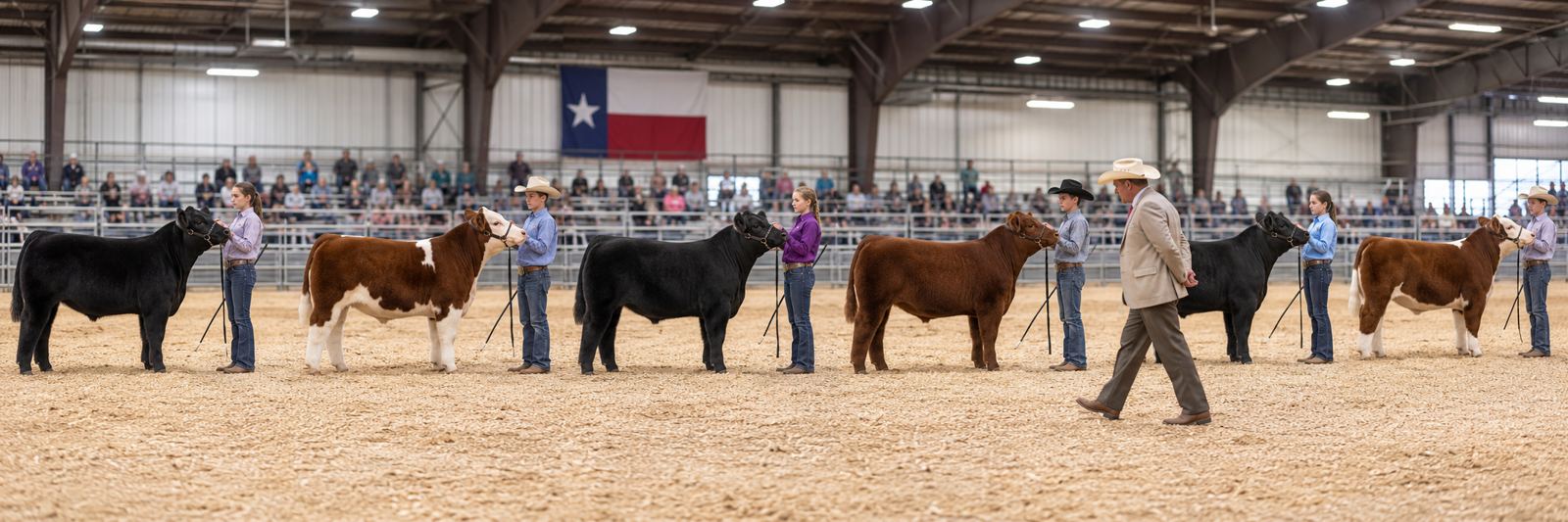
The judge walks up, stops a couple of feet from your steer, smiles, and says, "Tell me about your animal." Every fact you ever learned leaves your head at once, like cattle through a gate somebody forgot to chain. Your steer, meanwhile, picks that exact moment to look bored.
Here is the good news. Judges ask easy questions on purpose. They are not trying to trip you up; they want to hear that you know your animal, that you did the work, and that you learned something. A short, honest answer beats a long, fancy one every time, and almost every question you will get falls into a handful of types you can practice at the kitchen table.
The rest of this article gives you sample questions, a simple three-part way to answer anything, and a few barn-side drills so the words come out when your heart is pounding.
What the judge is really asking
Behind every question is one of three quiet questions: Did you raise this animal yourself? Do you understand what you are doing? Did this project teach you anything? If your answer shows those three things, you have done your job, even if you say "um" twice.
Questions are usually more relaxed than kids expect. A judge who asks what your steer eats is not grading you on a feed-science exam. They want to see that you know the routine because you were the one standing in the barn at six in the morning with the scoop.
Extension offices publish sample interview lists for just this reason. One example from Montana State Extension includes questions like what you fed, how much and how often, why you chose that animal, who cares for it, and what you learned. It also reminds exhibitors that judges cannot know what you learned unless you tell them. Read that last part twice.
Sample questions to practice
Rules and judging styles differ by show, and some shows only ask questions in showmanship while others fold them into interviews. Check your own rule book and ask your ag teacher or extension agent what to expect. In the meantime, practice with questions like these.
| Type of question | Examples | What to have ready |
|---|---|---|
| About your animal | What breed or cross is your steer? How old is he? What is his target weight? | Breed, rough age, current weight, and the weight you are aiming for |
| About feeding | What do you feed and how often? How do you know he is doing well? | Your actual routine, in the order you do it |
| About care | How do you keep him cool? What would you do if he stopped eating? | Water, shade, a fan, and "call my vet and tell my ag teacher" |
| About anatomy | Point out the loin, the pastern, the shoulder. Where is the poll? | Parts of the animal, touched with a calm hand |
| About you | Why did you pick this project? What was the hardest part? What did you learn? | One true story, not a speech |
Notice what is not on that list: trick questions. If a judge asks something you do not know, you are allowed to say so.
A three-part answer that works for almost anything
When your mind goes blank, fall back on this formula.
- Answer the question in one sentence. "He's a Maine-Anjou cross, and he's about nine months old." Do not warm up. Do not apologize first.
- Add one real detail. "I picked him because he was calm in the pen and moved off his hind legs." A detail proves you were there.
- Stop talking. This is the hard one. Silence feels like a mile of open pasture, but the judge is happy to fill it with the next question.
If you need a second to think, say "Let me think about that for a second." That is a perfectly good answer, and it sounds a lot better than staring at the ceiling of the arena. Take a breath, keep your eyes on the judge, and keep one hand on your animal. Your steer does not care that you are nervous, but he can feel it, so slow breathing helps both of you.
When you do not know the answer
Say it plainly: "I'm not sure, but I would ask my vet" or "I haven't learned that yet, but I'd like to." Judges respect honesty. What they do not respect is a confident guess that turns out to be wrong, like announcing your steer is on a "high-octane" ration. Making something up is also a small ethics problem, and showmanship is about more than hair spray.
Know your own project cold
The easiest way to stop freezing is to be able to say the answers in your sleep. Most of what a judge asks is stuff you already know if you kept records.
- Your steer's breed, birth date or approximate age, and where he came from
- His daily feed, how it changed, and why
- His starting weight, current weight and goal
- What you do each day: feeding, water, cleaning the pen, walking, brushing
- One thing that went wrong and what you did about it
A good project record book is basically a cheat sheet for this part, and a rough feeding plan that you wrote down yourself is far easier to explain than one you memorized from the back of a feed bag. If your target weight is part of the conversation, understanding how you plan to hit it will make that answer sound like you, not a parrot.
Practice that does not feel like homework
Nobody gets good at answering questions by reading about answering questions. A few easy drills help a lot.
- Chore-time quiz. A parent or older sibling asks one question while you scoop feed. Answer out loud. Doing it with an animal nearby makes it feel closer to the ring.
- Record yourself. Use a phone. You will cringe once, then fix the "like" habit by the third try.
- Trade with a friend. Take turns being the judge. The friend who asks your hardest questions is a keeper.
- Mock ring. Have somebody wear a ball cap and a stern expression and walk up to your steer in the barn aisle. Bonus points if the cat wanders through during question two. It will.
Practice answering while you are holding your show halter and standing in your show position, because that is the real situation. How your posture and attention fit with the verbal part is covered in what judges look for in a junior.
Mistakes to avoid
- Answering with one word. "Yes" and "no" are fine, but add a detail so the judge can see your thinking.
- Talking too long. If your answer takes longer than your steer takes to find the feed pan, trim it.
- Looking at your parent. The ring is your show. Answer for yourself, even if your mom is mouthing the words from the rail.
- Memorizing a speech. Judges can hear a recitation. Know your points, not your script.
- Letting the steer take over. Keep a calm hold on him while you talk, and glance at the judge's position so you can keep your animal set up.
If nerves are the real problem, you are not alone, and there are ways to handle the butterflies. Parents may find this piece on helping kids handle show ring pressure useful, too.
Quick answers
What if I blank out completely?
Take a breath and say, "Can you repeat the question, please?" That buys you a few seconds and nobody thinks less of you. If your mind is still empty, give your best honest answer, even if it is short.
Should I say "sir" and "ma'am"?
Good manners always help, and most judges appreciate them. Keep it natural, look them in the eye, and say thank you at the end, but do not overthink it. Local custom varies a bit by region and show.
Do judges ask questions in every class?
No. It depends on the show, the class and the judge, and some shows use interviews or skill tests instead. Check your rule book and ask your ag teacher or extension agent what your show does so nothing surprises you.