Junior Showmanship, 4-H & FFA Steers
Showing Steers Through Drought: Hay Prices and Feed Costs
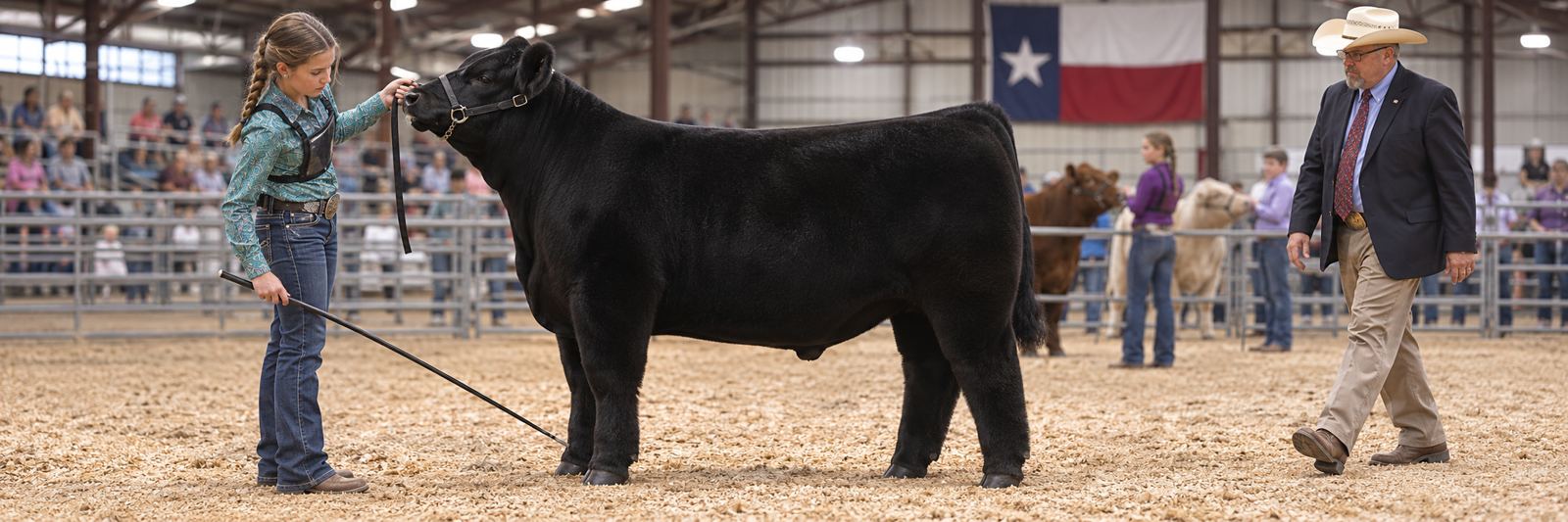
Drought hits a show project in two places at once: the feed bill goes up and the pasture goes away. The best response is to plan early, buy smart, track what the steer actually eats and talk to your ag teacher or extension agent before the budget turns into a crisis. Do not respond by feeding less and hoping he'll catch up.
If you're in West Texas, New Mexico, Oklahoma or Arizona, you already know the feeling. The hay that was cheap last time you looked is now sold out, the guy who always has a few extra bales has none, and every neighbor suddenly has opinions about alfalfa. Welcome to a dry year. It's survivable, and it's a pretty good lesson in how a real cattle operation runs.
Why drought changes the math
When rain fails, hay supplies tighten because fewer acres get cut and more ranchers are shopping for the same bales. Cattle producers also lean on purchased feed when pasture quits. Both pressures push prices and availability in the wrong direction at the same time, and a show family competing with commercial herds for hay is at a disadvantage.
The good news is that a show steer eats far less than a cow herd, so a family can usually manage the roughage side with planning. The bad news is that a steer's ration is more sensitive to quality than a cow's, and he can't just be turned out on dry grass and told to figure it out. An extension piece from the University of Georgia on drought management strategies for beef cattle notes that grains and by-products can often be cheaper per unit of energy than hay when hay is scarce. That's written for cow herds, but the principle helps a show family comparing options.
Step one: build a feed budget before you need it
Start with the basics. Estimate how much roughage and concentrate the steer will eat between now and show day, then price it. Your steer's feeding program is the backbone, so a show steer feeding program for beginners is a good place to start, and how to hit your steer's target weight by show day helps you work backward from the weight goal.
| Budget line | Drought effect | What to do |
|---|---|---|
| Hay or roughage | Prices and availability swing most | Lock in supply early, test it and have a backup |
| Show feed and supplements | Usually steady, though freight and ingredients can move | Price a few brands and ask about bulk or pickup |
| Water | Can become a bigger factor when wells and tanks run low | Check supply and quality before summer |
| Hauling and fuel | Longer trips to find hay | Share loads with other families |
| Vet and health | Stress and dust raise respiratory risk | Keep the barn clean, damp the dust and call the vet early |
Use ranges, not wishes. If a number swings, write the high end in your plan and be happily surprised later. For the whole picture, including things that don't show up on the feed ticket, see what it really costs to raise a show steer.
Step two: buy hay like a grown-up
- Buy early and in bulk if you can store it. A few bales in the barn beat a long drive in July.
- Buy by quality, not by looks. Green, leafy hay can still test poorly, and a dusty-looking bale can be fine. Buying hay by the ton, bale or quality explains how to compare apples to apples.
- Get a hay test. A lab report tells you what you're feeding. How to test hay and read the lab report walks through it.
- Be careful with drought-stressed forage. Stressed sorghum-type forages and some weeds can be a nitrate problem, and certain sorghums carry prussic acid risk. See nitrate poisoning in cattle feed and ask your vet or extension agent before feeding anything questionable.
- Don't buy moldy hay. Cheap and moldy costs more in the end.
Step three: consider the alternatives, carefully
The Georgia publication lists by-products such as soyhulls, cottonseed hulls and other fibrous feeds as options when hay is scarce, and notes that supplemental feed adds to production costs. For cow herds, that's one story. For a show steer, the ration has to support steady gain, health and condition, and it has to stay within your show's rules. Don't improvise.
Before you swap anything in the ration, run it by a nutritionist, your ag teacher, extension agent or vet. Make changes gradually, because cattle on a sudden diet shift can end up with digestive trouble. A steer with an upset rumen is no fun at 5 a.m., and a lot less fun at the vet's office.
Step four: protect the animal first
Cutting feed to save money is a shortcut that costs more later. An underfed steer is a slow gainer, a poor performer and a worry. Dust from dry pens can irritate lungs, and heat stress piles on top of that, so keep the barn damp, shaded and breezy. Keeping a show steer cool in Texas summer heat has ideas that work well on any hot, dry day.
Check water twice a day. A dry spell can strain wells, and an empty tank on a 100-degree afternoon is a problem you can't fix with a good attitude. For a broader plan, a drought feeding plan for a cow herd is a useful read, even if your project is one steer instead of fifty cows.
When to rethink the project
Sometimes the smart move is to adjust the plan rather than fight the weather. Talk with your ag teacher or extension agent about options like:
- Adjusting the target show or sale.
- Starting with a younger or lighter animal that needs less over the season.
- Pooling hay with another family or the school program.
- Finding a local hay broker or a feed store that will hold a few bales for you.
- Deciding, honestly, if this is the season to scale back. There's no shame in it.
Whatever you decide, the show rules still apply: don't use any feed additive, supplement or product your rule book doesn't allow, and don't try to take shortcuts on weight or condition. Follow your own fair's rule book and your Beef Quality Assurance training.
A few ways to save without shorting the steer
- Weigh feed with a scoop and a scale, not by feel. Wasted feed is wasted money.
- Store feed in sealed bins so mice and moisture don't get their share.
- Split bulk feed orders with another family.
- Keep careful records. They show you where the money went. Keeping a beef project record book that wins helps with that.
- Ask your sale committee or local businesses about sponsorship early. Feed stores sometimes help young exhibitors, and a friendly note goes a long way.
Quick answers
Should I feed my show steer less hay when prices go up?
No, not without guidance. Cutting roughage can cause digestive and health problems. Work with your ag teacher, extension agent or a nutritionist to find a safe, balanced alternative if hay is hard to find.
How do I know if hay is safe to feed in a drought?
Get it tested, and ask a vet or extension agent about nitrates and prussic acid, especially with sorghum-type forages and drought-stressed plants. Never feed moldy or questionable hay to a show steer.
Is it okay to skip a show season because of drought?
Yes. If feed or water supplies are too tight, scaling back is a responsible decision. Talk to your ag teacher or extension agent, and keep the animal's health first.