Junior Showmanship, 4-H & FFA Steers
A Parent's Guide to the 4-H and FFA Show Barn
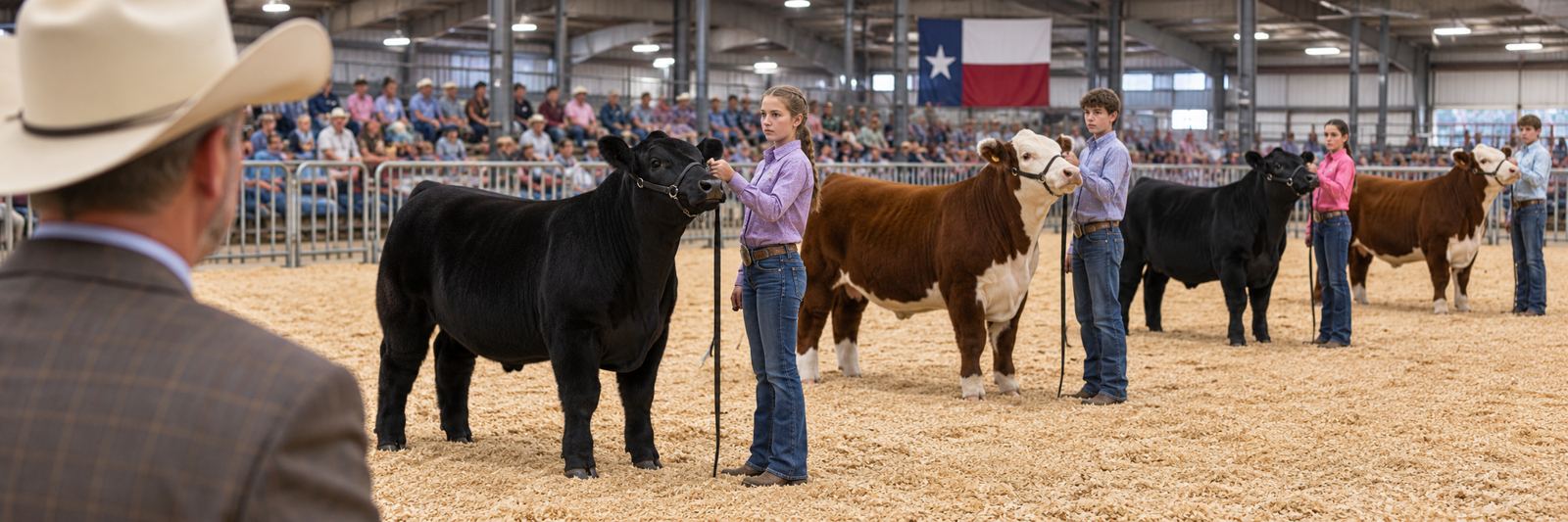
Your job in the show barn is to be the driver, the safety officer, the banker and the cheerleader. Their job is to feed the steer, walk the steer, wash the steer and learn from the steer. Every time you pick up a brush because it'd be faster, a little of the project leaves with it.
That's easy to say and hard to do. Watching a 13-year-old wrestle a halter at six in the morning while you stand there holding a thermos takes real restraint. You'll want to jump in. Most show parents do, at least once, and a seasoned barn mom will give you a look that says "I've been there."
What the project is really for
A steer or heifer is a teaching tool. The ribbon is a side effect. A Wisconsin Extension handout on dos and don'ts for 4-H parents says it plainly: the project is a teaching tool and your child matters more than the project. It also warns against completing your child's project for them, even if it would be faster or easier, and against letting the drive to win outweigh learning.
If you keep one idea from this article, make it that one. The kid who walks out of the barn knowing how to take care of a living animal, count money, handle a bad day and thank a stranger has already won something.
Who does what: a rough split
Ages and maturity matter, so adjust this for your family. A first-year ten-year-old needs more hands than a high school senior with four seasons behind them.
| Task | Kid does | Parent does |
|---|---|---|
| Daily feeding, water, pen cleaning | Everything they safely can | Checks that it's happening, helps with heavy bags |
| Halter work and practice | Leads, sets feet, practices daily | Spots, stays out of the animal's way, offers encouragement |
| Washing, rinsing, clipping | Learns the routine | Helps with the first few sessions, then backs off |
| Rule book and deadlines | Reads it, asks questions | Double-checks entry dates, signatures and fees |
| Hauling and heavy lifting | Helps load supplies | Drives, backs the trailer, lifts |
| Money | Tracks costs in the record book | Pays bills, signs forms, sets the budget |
| Ring and sale day | Shows the animal, talks to buyers | Stays on the rail and keeps quiet |
| Health concerns | Reports anything odd right away | Calls the vet and the ag teacher or extension agent |
Safety comes first, and it's your job
A show steer outweighs your living room couch, and he has no idea you're the one in charge. Cattle have a flight zone and blind spots, and a Cornell small farms article on staying safe around beef cattle reminds handlers to approach where the animal can see you, keep voices low and never run or chase. It also warns that even gentle animals can turn aggressive, so stay alert with animals you know well.
- Closed-toe boots for everyone, no exceptions, including the sibling who "is just watching."
- Never wrap a lead rope around a hand or wrist.
- Keep little kids out of the pen and away from the back end of any animal.
- Know where the exits are in any pen or alley before you step in.
- Watch for wet floors, loose cords and fans that look like they were wired during a tornado.
Younger kids need an adult within arm's reach. Older kids still need an adult within earshot.
The barn has its own manners
Show barns run on an unwritten code. Learn it early and you'll save your kid some embarrassment.
- Don't touch other people's animals or gear without asking. That includes the nice clippers.
- Keep aisles clear. A parked wheelbarrow in the walkway is the show barn version of blocking the driveway.
- Clean up after yourself. A pen that looks worse leaving than arriving reflects on the whole family.
- Keep your opinions off the rail. You don't know what the judge saw, and the judge doesn't want a coach. Besides, the kid on the other end of the lead rope can hear you.
- Talk to officials respectfully. If you have a concern, bring it to the ag teacher, extension agent or show superintendent through the proper channel in your rule book.
Where to step back
You'll know it's time to loosen your grip when your child can do a task safely and mostly right, even if the finish is messy. Their version of "right" might not match yours. The halter might be on crooked. The feed might be measured with more confidence than accuracy. That's the learning.
Stepping back doesn't mean stepping away. Ask questions instead of giving orders: "What do you think he needs today?" "What would you do differently?" A University of California blog on supporting youth emotional health in 4-H competition encourages letting young people problem-solve, praising effort and learning over ribbons, and planning ahead for hard moments like losing or saying goodbye to an animal at the sale.
If you ever doubt your parenting, remember there's a farm.FM story about a farmer's teen who joins a vegan cult and gets disowned over a kale baptism. Your kid hauling a bucket of feed to a steer at dawn is looking pretty good by comparison.
Money, time and what to budget for
Project costs creep. Feed, bedding, entry fees, tags, vet visits, gear and fuel all add up, and the real total tends to surprise first-year families. A good starting point is what it really costs to raise a show steer. Plan for time too: daily chores, practice sessions, club meetings, weigh-ins and the long weekend at the fair. Put the key dates on the fridge calendar and the entry paperwork in one folder where it can be found.
Plan the gear as a family as well. A show season gear and show box checklist keeps you from buying a third pair of the same clippers, and the weigh-in day checklist for junior livestock shows saves a lot of frantic phone calls in the parking lot.
Handling nerves, theirs and yours
You'll be nervous. Your kid will be nervous. The steer will pretend he isn't, then step on somebody's foot. Parents who stay calm give kids permission to stay calm. If the butterflies are the main problem, helping kids handle show ring nerves goes deeper, and the same goes for modeling grace after a rough class, which sportsmanship in the show ring covers well.
For anything related to rules, drug and residue guidelines, or animal health, follow your own fair's rule book, and ask your ag teacher or extension agent. Never try to shortcut a rule to give your kid an edge.
Quick answers
How much should I help my child with their show steer?
Help with anything unsafe or too heavy for them, and help them learn the rest. If the task is feeding, rinsing, walking or recording, let them do it, even imperfectly. Step in right away for any health or safety concern.
Do I need cattle experience to be a good show parent?
No. Plenty of great show parents started with zero experience and learned alongside their kids. Lean on your ag teacher, extension agent, club leaders and the families in the barn, who are usually generous with advice and spare zip ties.
What should I wear and bring to the barn?
Closed-toe boots, clothes you can ruin, a hat, sunscreen, a water jug and a folding chair. Bring a trash bag for the muddy clothes and a phone charger, since cell service near the barn is usually as reliable as the weather forecast.