Junior Showmanship, 4-H & FFA Steers
Show Steer Feeding Program for Beginners
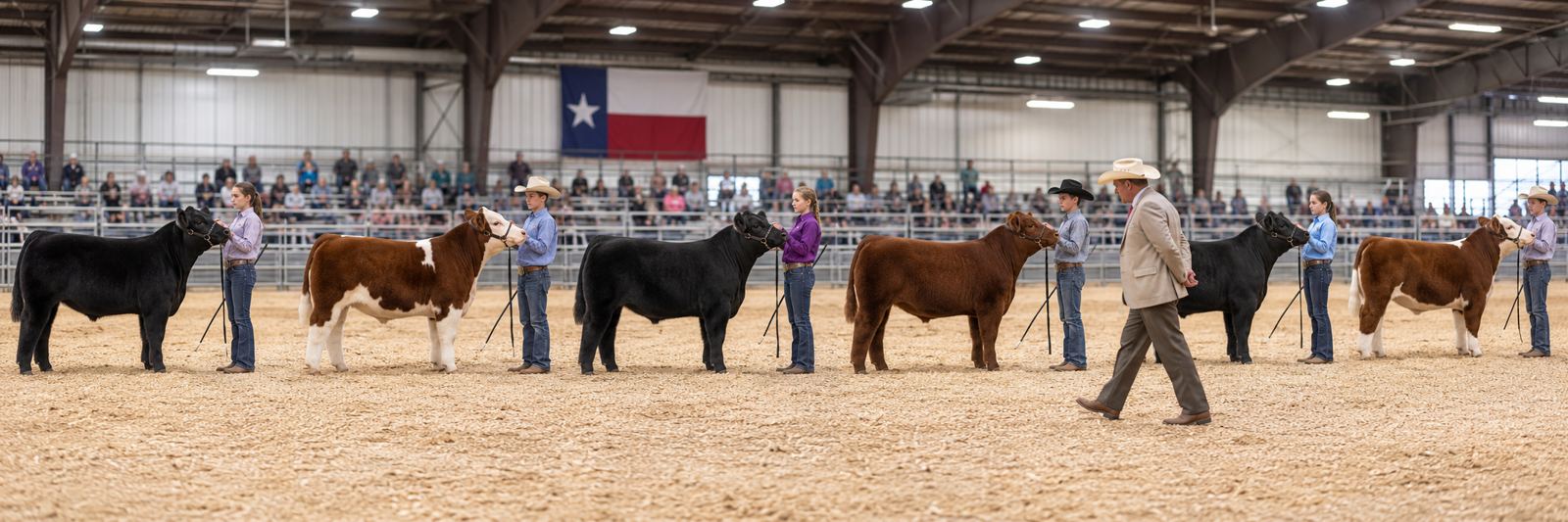
A show steer isn't hard to feed. He's hard to feed on time, every time, including the Saturday after homecoming when you'd rather be asleep. Most of a good feeding program is just showing up at the same hours with the same feed and clean water, and letting a very routine-loving animal do his job.
If you're new, the short version is this: plenty of good hay, fresh water that never runs dry, grain added slowly, two feedings a day about twelve hours apart, and a scale or tape to tell you whether it's working. Everything below is that sentence with the details filled in.
One warning before the details. Your fair, your breeder, your ag teacher and your county extension agent all know things about your steer and your show that I don't. Treat this as a framework and let those people fill in the numbers.
Start with hay and water, not grain
Grain gets the attention, but hay and water carry the program. Hay keeps the rumen working and is your main protection against digestive upset. Texas A&M AgriLife's guidance on managing beef cattle for show says that if digestive trouble shows up, the fix is to add hay and cut back concentrate, never to remove hay altogether. Good, clean, leafy hay that smells like a field and not like a basement is worth paying for.
Water matters just as much. A steer that doesn't drink doesn't eat, and a steer that doesn't eat doesn't gain. Scrub the bucket or tank often, and check it in cold weather when it freezes and in summer when it turns into soup. If your steer goes through a lot of water and the tank is empty every time you walk up, you've found your first problem and it's a fixable one.
Step feed up slowly
The most common beginner mistake is excitement. The steer looks thin, the grain looks like the answer, and suddenly he's getting a lot more than his rumen is ready for. Cattle can't be rushed here. Their gut bacteria need days to adjust to each change in feed.
Extension programs usually describe a progression of rations: a starter that's high in roughage for the first few weeks after you bring him home, a grower for the middle stretch, and a higher-energy finisher closer to show time. The shift from one to the next is gradual, often over several weeks, not an overnight swap. Your breeder can tell you what the calf was eating before he got to you, and that's where you begin.
A sample step-up routine
- Days one through three. Long-stem hay free choice, fresh water, and let him settle in. Keep him on whatever the breeder was feeding if you can get some of it.
- The first week. Add a small amount of his feed twice a day, a little at a time. A common starting point in extension guidance is concentrate at roughly half a percent of body weight, though your agent may suggest something different for your calf.
- Weeks two and three. Raise the amount in small steps every few days, watching manure and appetite. If he leaves feed in the bunk, hold where you are or back up a step.
- From there. Adjust based on his weight, his condition and what the scale says, not on what the steer in the next pen is eating.
Utah State's guide for first-time market steer exhibitors gives a rule of thumb that growing show steers eat in the neighborhood of two percent of body weight per day. Treat that as a rough ballpark. Appetite varies from one animal to the next, and the ration you're feeding changes how much he'll take.
Feed twice a day, the same way
Cattle run on a clock. Twice a day, roughly twelve hours apart, is the standard recommendation, and University of Nebraska extension points out that irregular feeding gets riskier as the diet gets richer in energy. The same extension writer also notes that once-a-day feeding can lead to a steer gorging when the bucket finally shows up.
Skipped a feeding? Don't double up the next one to make up for it. Feed the regular amount at the regular time and call the vet if he seems off. The steer will forgive you. His rumen won't if you give it two meals in one.
If your family travels or has a busy week, write the plan down: who feeds, what amount, and where the scoop lives. A steer with three people feeding him three ways will have an opinion about it. Nebraska's advice to parents on feeding a market steer suggests the young exhibitor arrange the coverage and weigh out feed ahead of time.
Read the bunk and the manure
You don't need a lab to tell how the program is going. The steer will tell you, usually loudly and at the feed bucket.
| What you see | What it may mean | What to do |
|---|---|---|
| Rushes the bunk, licks it clean | May be ready for a little more feed | Increase in a small step, not a big one |
| Leaves feed behind | Too much, stale feed, or something is off | Remove leftovers, check water, hold or back up a step |
| Firm, layered patties | Ration is probably in balance | Keep doing what you're doing |
| Loose, watery manure | Too much energy or a recent change | Add hay, hold the grain, call your vet if it lasts |
| Dry, hard droppings | Not enough feed or water | Check water first, then intake |
| Standing off, no interest in feed | Could be illness or heat | Take his temperature if you've been shown how, and call your vet or agent |
Texas A&M calls manure the best guide to intake, and that's one of the less glamorous truths of this hobby. You'll learn to read a patty the way some people read a menu.
If he does stop eating, what to do when a show steer goes off feed walks through the first checks. In the heat, keeping a show steer cool matters as much as the feed does, because a hot steer eats less and gains less.
Keep the feed bucket honest
A few habits keep a beginner program out of trouble.
- Pick one feed and stay with it. Frequent changes upset the stomach and slow gains. If you have to switch, mix the old and new over several days.
- Use feed made for cattle. Feeds made for other animals can contain things that are dangerous to cattle.
- Store feed dry and covered. Moldy feed is a problem, and so are the raccoons that hold a feed room meeting at night.
- Ask before adding anything. Supplements, additives and anything medicated go past your veterinarian, your ag teacher and your show's rule book first. Read how drug and residue rules work for show cattle before you put anything in the bucket that didn't come with the feed.
- Weigh him. Feeding by guess is feeding by hope. A scale, or a weight tape if that's what you have, tells you whether the plan is working. Planning gain around show-day weight shows how to use those numbers.
And the part nobody likes hearing: a feeding program costs real money, and the grocery bill for a steer can surprise a family. A line-by-line look at what a show steer costs helps you plan before the feed store does it for you.
Mistakes to avoid
- Raising grain fast because he looks thin or because another exhibitor is feeding more.
- Feeding once a day, or at whatever time someone remembers.
- Letting water run low or freeze over.
- Cutting hay to make room for grain.
- Skipping the scale and trusting your eyes. Hair and a fresh haircut both lie.
- Making changes right before a show. If the program is working, leave it alone.
Quick answers
How many times a day should I feed a show steer?
Twice a day, about twelve hours apart, at the same times every day including weekends. Regular timing keeps the rumen steady, especially as the diet gets richer.
How much should a show steer eat?
It depends on his size, his ration and his appetite. A common rough guide is around two percent of body weight per day, but your breeder, ag teacher or extension agent can fit the amount to your calf and your show.
Can I change his feed whenever I want?
No. Every change should be gradual, mixed in over several days, and it's best to avoid changes close to show time. If something is wrong, adding hay and slowing down the grain is the usual first move, and your veterinarian should hear about anything that lasts.