Southeast Calf Marketing With Tele-Auctions and Graded Sales
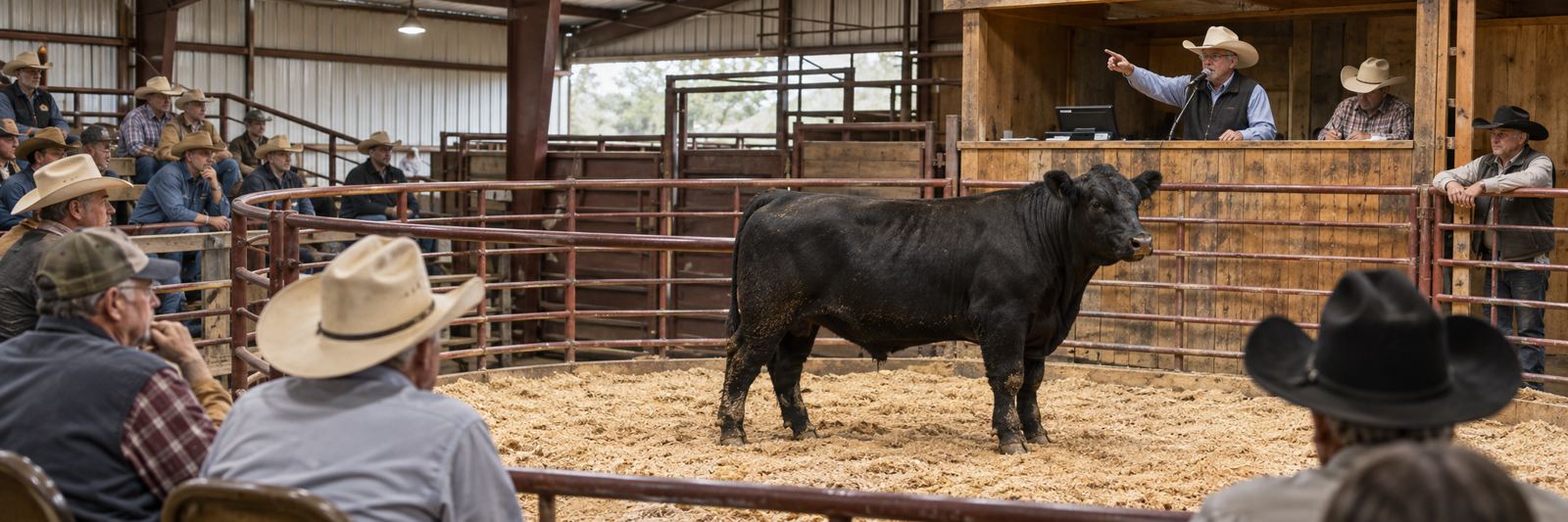
The Southeast has a lot of cattle in a lot of small herds. A rancher with thirty cows and a pen of calves isn't going to fill a semi, and a sale barn pen with a dozen head of mixed calves doesn't bring much attention. A buyer looking at eleven calves in six colors tends to keep scrolling. Tele-auctions, board sales and graded feeder sales exist to fix that problem: they pool calves from many ranches into uniform, truckload-sized lots and sell them to buyers who bid by phone or online.
The deal is simple. You do more work up front, such as weaning, vaccinating and following program rules. In return, buyers who couldn't be bothered with a single pen of unknown calves will compete for a load of known ones.
How the sales work
Details vary by state and program, but the pattern is similar. Calves are consigned to a sale organized by a state agency, cattlemen's association or cooperative group. Calves are described and often evaluated by a grader. Buyers don't have to be in a ring. They bid from wherever they are, often by phone, and the winning bidder picks up the cattle on an agreed delivery date.
Virginia as an example
Virginia runs a well-known program. The Virginia Department of Agriculture and Consumer Services' Tel-O-Auction page gives a good picture of how one runs:
- Sales are held on set evenings, typically Mondays unless noted.
- Owners consign through VDACS Livestock Services or the Virginia Cattlemen's Association.
- Information on the cattle is available from the association a week before the sale.
- To bid, buyers call the association before the sale to get a bid number.
- Cattle are officially evaluated on USDA grades by VDACS Livestock Services specialists, and the evaluation records a description of the cattle, the health program, weighing conditions and other information.
- If the actual weight of a load is heavier or lighter than the estimate, the price is adjusted by a slide, with the slide amount announced at the start of the sale.
- The winning buyer and seller agree on a delivery date within 10 days after the sale unless stated otherwise, and the buyer pays by the delivery date.
- If a lot doesn't sell, the last bidder gets first option to buy at the owner's floor price.
Virginia also runs graded feeder cattle sales at local markets through a cooperative program that provides, in the state's words, official individual evaluation and uniform application of USDA feeder cattle standards. Sales are linked to USDA reports so results are public.
Alabama and Georgia board sales
Other Southeast states use board sales or video board sales. USDA's Market News feeder and replacement cattle auction reports list sales like Alabama's cattle video and board sales, Georgia's weekly video board sale and Virginia's Tel-O-Auction, among others.
Coverage of one Alabama group sale described buyers manning phone lines while an auctioneer introduced each lot by number, selling calves in semi-truckload lots of about 50,000 pounds. Producers followed a herd health program developed at Auburn University and weaned calves at least 45 days before delivery. Calves were expected to eat from a trough. That program reported lower commissions and lower pencil shrink than regular sale barn selling. Check current terms with the program you're considering, since rules and fees change.
Why they can pay
- Lot size. Truckload lots are what feedlots and large buyers want. How small herds can pool calves to fill a truckload explains the idea.
- Uniformity. Every calf in a lot sells at the same price, so the lot's value doesn't depend on whether the buyer likes the worst calf. See why uniform lots bring more money per hundredweight.
- Health programs. Weaned, vaccinated calves face less risk in the feedlot, and buyers pay for that. Read VAC 45 and other value-added calf programs for typical requirements.
- Lower costs in some programs. Pencil shrink, commission and trucking may be lower than a traditional barn sale. Compare the full numbers, not just the headline price.
- Repeat buyers. Buyers who get calves that perform come back. Your name on a good load builds your reputation across the region.
What they require from you
| Requirement | Typical expectation |
|---|---|
| Weaning | Often at least 45 days before delivery |
| Vaccinations | Set by the program, usually respiratory and clostridial series; work with your vet |
| Castration and dehorning | Steers and bulls handled early and healed before sale |
| Feed | Calves eating from a bunk or trough and settled |
| Weight and type | Usually a target range and uniform cattle |
| Consignment deadlines and fees | Set by the program, often several weeks before sale |
| Paperwork | Health records, ID and sometimes program tags |
Those 45 days are not free. You'll feed the calves, handle them and carry the risk of sickness. Does preconditioning calves pay at the sale barn will help you decide if it's worth it for your herd. The Southeast has its own challenge: if your calves have been grazing tall fescue, performance and condition may differ from what a program expects, as described in tall fescue toxicosis and what to do about it.
Graded sales and what the grade means
A graded sale uses trained evaluators to assess each lot or animal using USDA feeder cattle standards. Buyers get a description they can trust without seeing the calves. That description generally covers frame, muscling and condition, and the program records weight and health information.
The benefit goes both ways. A buyer who's never visited your farm can bid with some confidence, and a seller with good calves doesn't have to hope a buyer at a regular sale barn notices. Poor calves are labeled too, so the grade works as an honest mirror. If you don't like what it says, that's data about your genetics or management.
Is it right for you?
- Good fit: You have a few dozen calves or more, you can wean for 45 days, you want a better price than a mixed barn pen, and a program operates within reasonable hauling distance.
- Consider alternatives: You have a handful of calves, you can't wean for that long, or there's no program nearby. Marketing 10 to 30 calves: options for small herds covers other routes.
- Partner up: Neighbors with similar calves can consign together to fill a lot.
How to get started
- Call your county extension office or state cattlemen's association and ask which tele-auction, board sale or graded sale serves your area.
- Get the written requirements and the sale calendar. Note the consignment deadline.
- Meet with your vet to build a vaccination and weaning plan that matches the program.
- Talk to neighbors who've sold through it. Ask what they'd do differently.
- Look at past sale reports through USDA livestock market news to compare prices against your local barn.
- Start with a small group the first time. A gate that never latches will happen in the weaning pen, and it's better to find out with ten calves than sixty.
If you decide the sale isn't for you, how to sell calves at auction, private treaty or video will help you pick another route.
Quick answers
What is a tele-auction for cattle?
It's a sale where pooled, described and often graded calves are sold to buyers who bid by phone or online instead of sitting in a ring. The winning bidder picks the cattle up at an agreed time. Virginia's Tel-O-Auction is one example.
Can a small herd use a graded sale?
Yes, in many cases. Programs often accept small groups and combine them into lots, though rules vary. Ask the program coordinator about minimums and pooling.
Are tele-auctions better than the sale barn?
Not always. They can pay well for uniform, preconditioned calves, but they require more preparation and some deadlines. Compare your expected net price at each option.