Junior Showmanship, 4-H & FFA Steers
What to Wear in the Showmanship Ring
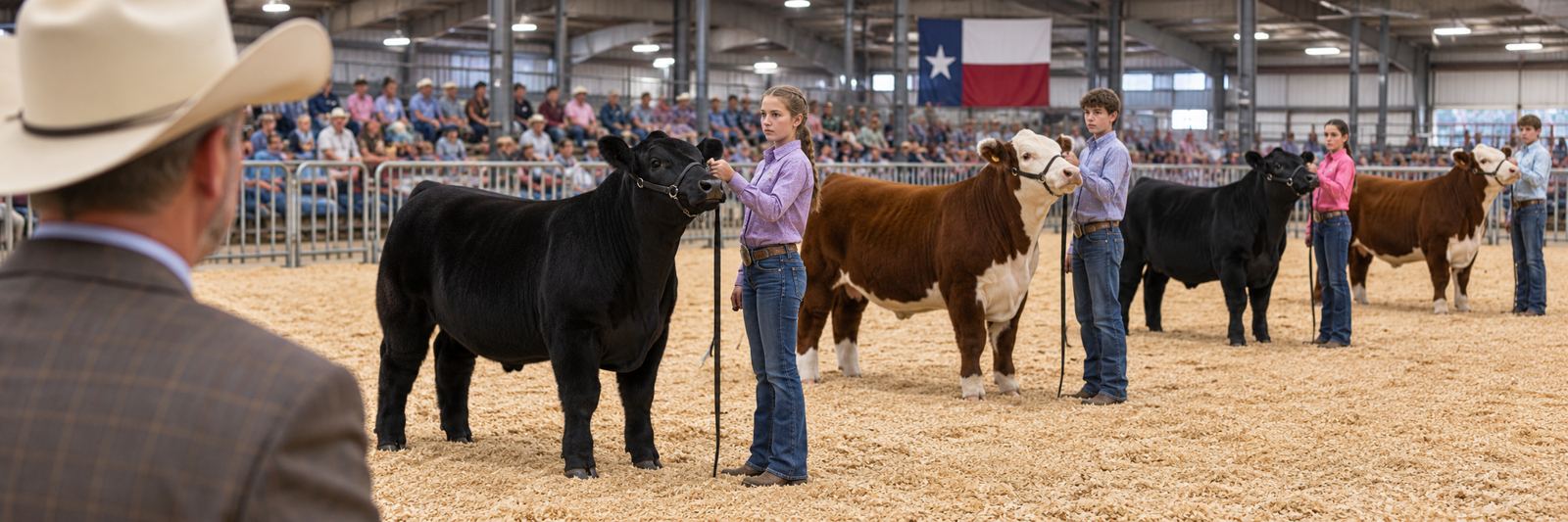
The safe showmanship outfit is a clean, tucked-in, sleeved button-up shirt, dark jeans that fit, a belt, and leather boots, with your exhibitor number on your back if the show requires one. That combination matches what most extension guides recommend and what most dress codes ask for. Your own show's rules, 4-H or FFA uniform requirements and the ring steward's instructions come first.
Judges don't give a ribbon for fashion. They do notice a kid who looks like they planned for the day, and they notice a kid whose untucked shirt is trying to escape. The goal is to look neat, be safe around a 1,000-pound animal and not become the topic of conversation.
Start With the Rule Book
Dress codes vary by show, by county and by organization. Some require 4-H whites or an official FFA uniform. Some say a collared shirt and jeans. Some have rules about hats, jewelry or the style of the back number. The University of Florida's extension page on beef cattle showmanship suggests official 4-H or FFA dress, or a button-up shirt with black jeans, and says to check the show rules for specifics. Oklahoma State's beef showmanship fact sheet lists a tucked-in sleeved shirt, jeans, a belt and leather boots, and says to follow the show's specific dress code.
If you aren't sure, ask your ag teacher, extension agent or the show office before the day, not at the gate.
Piece by Piece
Shirt
A long-sleeved or sleeved collared button-up is the standard. Tuck it in all the way around, because a shirt tail flapping at a calf's face is a good way to spook him. Choose a solid or simple pattern that you can move in. Avoid T-shirts, tank tops and anything with a loud graphic, unless your show specifically allows them. Many showmanship contests, along with some FFA events, expect official dress, so check.
If it's hot, look for a lightweight cotton or moisture-wicking fabric. If it's cold, a plain jacket may be allowed, but ask about that too.
Jeans
Dark, clean, well-fitting jeans with no holes are the usual choice. The OSU fact sheet says to avoid faded jeans. Make sure they're long enough to cover the top of your boots, since a cuff full of shavings isn't a good look. Jeans that fit let you move, kneel and step away from a calf quickly.
Belt
Wear one. A leather belt is the usual choice, and a showy buckle isn't necessary. A belt keeps the shirt tucked and tells the judge you took care getting dressed. In plenty of barns, the belt is the one thing every teenager forgets, so pack a spare.
Boots and Footwear
Leather boots are the common choice and offer protection when a calf steps on your foot, which at some point he will. Clean them. The UF page says closed-toe shoes or boots at minimum. Avoid sandals, sneakers with mesh and new boots that haven't been broken in, since blisters make for a limp, and a limp makes for a distracted exhibitor. Good traction matters in a sandy or wet ring.
Hair and Hats
Long hair should be tied back so it doesn't fall in your face while you watch the judge. Many shows treat hats as optional, others forbid them in the ring, and a few require them. Check. If hats are allowed, a clean, neat one is fine, but never wear it if it shades your face from the judge.
Jewelry and Extras
Skip anything that dangles, jingles or snags. Dangling earrings, bracelets and long necklaces are hazards around halters and animals. Keep watches and rings simple, or leave them at home.
The Exhibitor Number
Many shows assign a number that you wear on your back, usually pinned or held on a back-number holder. Put it where the steward and judge can read it, flat and squared. Don't let it slide down to your belt or flap over your shoulder. Bring safety pins, extra pins and a couple of binder clips in your show box. The full list lives in the show season gear and show box checklist.
Day-of Outfit Checklist
- Clean button-up shirt, ironed or at least wrinkle-free
- Dark jeans with no holes, correct length
- Leather belt
- Clean leather boots
- Exhibitor number and pins
- Hair tied back
- Spare shirt in the show box, because feed, shavings and sweat happen
Get dressed after the dirty work is done. Wash, blow and fit the calf first, then change. Many families keep the show clothes in a garment bag until the last hour. Barn fashion is serious enough that there's a farm.FM cowboy poem about fashion shows in the barn, though the cattle remain unimpressed. For the full day plan, see the show day morning routine for cattle exhibitors.
Mistakes That Cost You
| Mistake | Why it matters | Fix |
|---|---|---|
| Untucked shirt | Looks sloppy, can flap at the calf | Tuck and belt it |
| Faded or torn jeans | Looks careless, may break dress code | Choose dark, clean jeans |
| Brand-new, stiff boots | Blisters and poor footing | Break them in beforehand |
| Number not secured | Falls off or can't be read | Use pins and carry spares |
| Dressing too early | Gets dirty before the ring | Dress after fitting |
| Ignoring the dress code | May be penalized | Read the rule book |
Money, Hand-Me-Downs and Fit
You don't need to buy a new wardrobe. Clean secondhand boots, a borrowed belt and a shirt from the closet work fine, as long as they fit and meet the rules. Many 4-H and FFA groups swap outgrown show clothes, so ask around. Kids grow faster than calves, and the shirt that fit in spring may not fit the fall show.
A calm attitude does more for your look than any pressed shirt. How you carry yourself matters as much as the cloth, and common showmanship mistakes and how to fix them covers the habits that matter once you're inside.
Quick answers
What should a boy or girl wear for showmanship?
A sleeved, tucked-in button-up shirt, dark jeans, a belt and leather boots is the standard for both. Check your show's dress code and any 4-H or FFA uniform requirements.
Do I have to wear a hat in the show ring?
It depends on the show. Some allow hats, some forbid them and a few require them, so read your rule book before you pick one.
Where does the exhibitor number go?
Most shows have you wear it on your back, pinned or in a holder so the judge and steward can read it. Carry spare pins in case it comes loose.