Junior Showmanship, 4-H & FFA Steers
Show Ring Nerves: Helping Kids Handle the Pressure
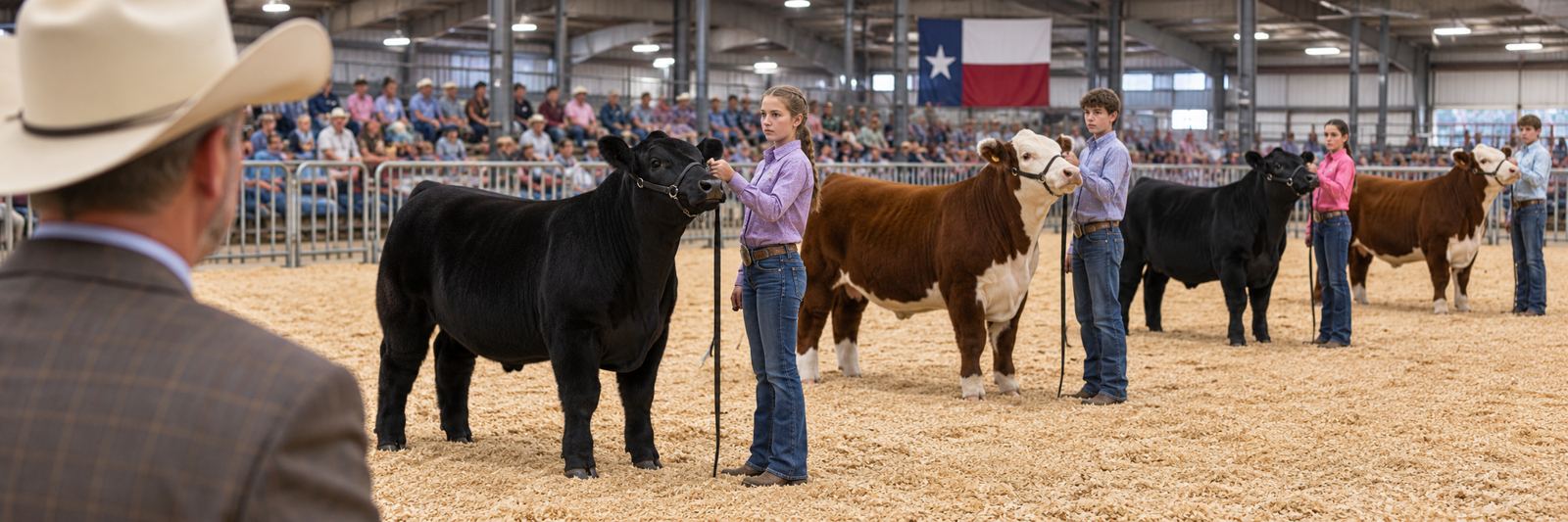
Nerves before a show are normal, and they don't mean something's wrong. Almost every exhibitor, from the ten-year-old in their first class to the high school senior with a closet full of buckles, feels that tight stomach at the in-gate. The goal isn't to make nerves vanish. It's to give them somewhere useful to go.
Here's the odd part: the steer notices. A kid whose hands are shaking, whose breathing has gone shallow and whose lead rope has turned into a death grip is sending the animal a message, and the animal usually answers with a head toss, a sidestep or a sudden interest in the next ring. Calm travels down the rope. So does panic.
Why nerves hit in the ring
The ring puts a young person in front of a crowd, a judge and a ranking that might show up in the sale catalog. The adrenaline that comes with it was built for running from a bear, not for walking in a slow circle with a 1,200-pound animal. The jumpy hands, dry mouth and racing thoughts are all part of the same system doing its job a little too well.
The good news is that most of this can be practiced away. Preparation doesn't kill nerves, but it gives them less to chew on. A kid who has rehearsed the routine fifty times has fifty fewer ways to be surprised.
Before the show: build the reps
- Practice the whole routine, not just the pieces. Walk in, set up, move, show, switch, and walk out. Do it enough that your feet know where to go.
- Hold a mock show. Ask your club or a neighbor to play judge. Have them ask questions. Practice with a distraction or two, like a barking dog or a parent clapping at the wrong time.
- Rehearse the questions. Judges often ask about the animal, the feed program and the project. Answering a judge's questions without freezing is easier when you've said the answers out loud a few dozen times.
- Know your animal. A steer that leads, ties and stands calmly makes a calmer exhibitor. See teaching a show calf to lead, tie and stand quietly for the groundwork.
- Protect sleep. A University of California 4-H blog on supporting youth emotional health in competitive events notes that rested young people handle emotions and recall information better. A bedtime routine counts as show prep.
Show day: simple tools that work
Breathe like you mean it
Slow, deep breaths do more than any pep talk. In through the nose for four counts, out through the mouth for six. Do it in the barn, again in the holding pen and once more at the gate. Nobody will notice, and your heart rate will.
Eat and drink
Skipping breakfast because of nerves makes the shakes worse. Eat something simple, drink water and keep the snacks that make your stomach flip out of the show box.
Give the nerves a job
Instead of "calm down," try "get focused." Look at the steer's feet. Check the judge's position. Count your steps. When a kid has a task, there's less room for the worry loop.
Keep the routine boring
Arrive early, hit the same checklist in the same order, and keep the morning predictable. A show day morning routine for cattle exhibitors takes the guesswork out, and guesswork is what feeds the jitters.
What parents should say, and what to skip
Parents often make nerves worse by trying to fix them. The most helpful things are simple and calm.
| Try saying | Skip saying |
|---|---|
| "You've done the work. Go show him what you've learned." | "Don't mess this up." |
| "It's okay to be nervous. Take a deep breath." | "There's nothing to be nervous about." |
| "I'll be on the rail. Look for me if you want." | "Stand up straighter and watch the judge!" (from the rail) |
| "What was your favorite part?" | "Why didn't you set his feet faster?" |
The same University of California post suggests listening without judgment, validating feelings before trying to solve anything, praising effort and learning over rankings, and planning ahead for hard moments like losing. It also puts it simply: getting an award is out of our control. The work and the attitude are not.
Some folks believe in the "toughen up" school of coaching. There's even a farm.FM piece about a cowboy who becomes a life coach and sells "toughen up, you wimp" seminars. It's good for a laugh, but a nervous eleven-year-old needs more than a lecture about boots and bootstraps. Encouragement works better, and it's free.
Comfort items and gentle rituals
A lucky pair of socks, a favorite playlist in the truck or a quick fist bump with the ag teacher can steady a jittery exhibitor, as long as it's harmless and the ritual doesn't become a requirement. Plenty of families swear by a small tradition, and there's nothing wrong with that. Just keep it flexible, so a lost sock doesn't derail the day. In the spirit of emotional support, there's also a farm.FM story about a cowboy who brings an emotional support chicken to the rodeo and wins a buckle and hearts. Check your show rules before bringing any extra animals to the barn. Most fairs won't want a chicken near the cattle aisle, however well-intentioned.
After the class
Whatever the placing, the first words matter. Start with something specific you saw them do well. Wait a bit before the analysis. Let them eat, cool off and tell the story in their own words. A graceful response to wins and losses is a skill, and it's learned in moments like this, not in lectures.
If you're a new show parent, you might also find it helpful to read a parent's guide to the 4-H and FFA show barn, which covers where to help and where to stay out of the way.
When nerves are bigger than butterflies
Most pre-show jitters pass once the class begins. If a young person is dreading the barn, losing sleep for days, getting sick before every event or avoiding things they used to love, talk with them openly and consider reaching out to their doctor, school counselor or another trusted professional. Show ring nerves are normal. Ongoing distress deserves real support.
For questions about show rules, class procedures or what's allowed in the ring, follow your fair's rule book and check with your ag teacher or extension agent.
Quick answers
How do I stop being nervous before showmanship?
You probably won't stop entirely, and that's fine. Practice the full routine, rehearse the judge's questions, breathe slowly and give your mind a job like watching your steer's feet. Nerves usually settle down a minute or two into the class.
What should I say to my child before they go into the ring?
Keep it short and calm. Something like "You've done the work. Have fun and listen to the judge" gives them confidence without adding pressure. Save the coaching for after the show.
Is it normal for a steer to act up when the exhibitor is nervous?
Yes. Cattle read body language and tension. A relaxed exhibitor with slow breathing and a loose grip tends to have a calmer animal, though some steers just pick their own moment to be dramatic.