Junior Showmanship, 4-H & FFA Steers
Teaching a Show Calf to Lead, Tie and Stand Quietly
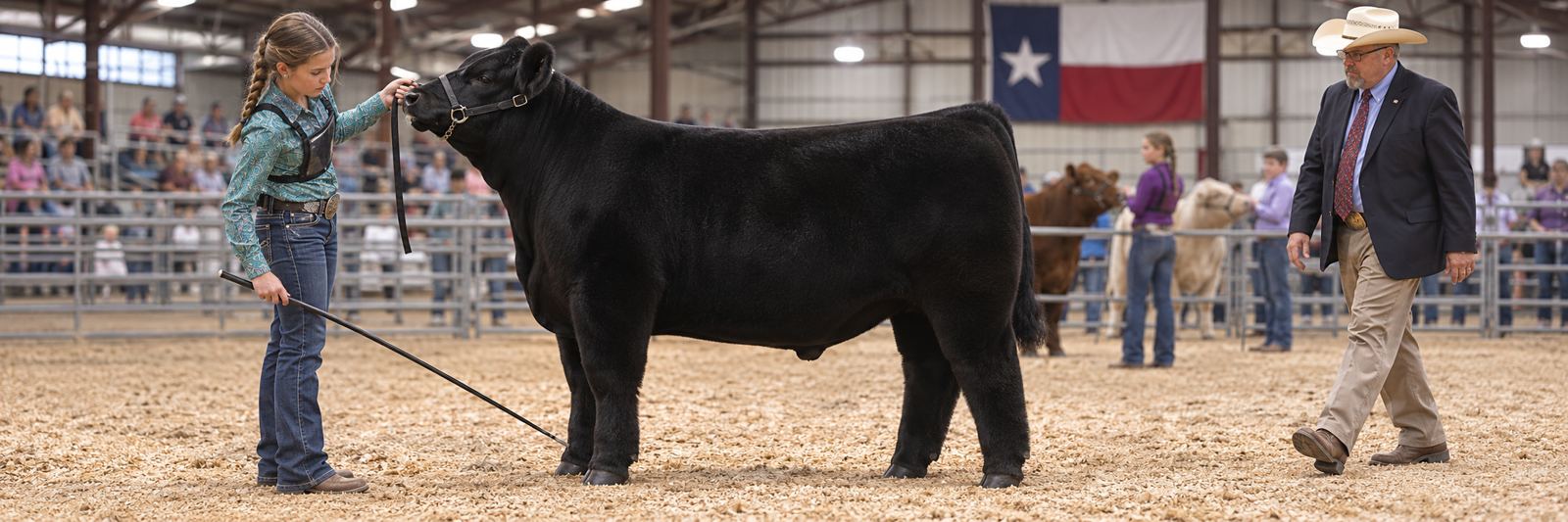
Judges notice a calm calf before they notice anything else. Leading, tying and standing quietly are the three habits that make a show calf look easy to handle, and they're built the same way: short, calm practice sessions, repeated daily, with the pressure released the moment he gets it right. Fifteen focused minutes a day beats a three-hour Saturday every time.
Once your calf wears a halter without a fight, the real work starts. He's got the idea that the rope is part of life, but he doesn't yet know that it also means something. This is the stage where families usually slide into bad habits, like letting him drag a kid across the pen because it's easier than stopping to fix it. A calf learns what you allow, and a six-hundred-pound calf with a bad habit is a project all by himself.
The ground rules
- Short and frequent. Two brief sessions beat one long one, particularly for a young calf.
- End on a good note. Quit after he does something right, not after he does something wrong.
- Release the pressure. Pressure on the halter means "do something." The release is the reward.
- Stay safe. Never wrap the lead around your hand. Tie only to solid, secure points. Keep an adult nearby, and follow your ag teacher's guidance on equipment.
- Same routine each time. Calves like predictable patterns. Use the same side, the same cues and the same place at first.
If the calf still isn't halter broke, go back to halter breaking a show calf step by step before you try these drills.
Drill 1: Leading
In showmanship, you'll lead on the calf's left side with the rope or halter in your right hand, keeping the calf's head about level with your shoulder or side and walking at a steady, moderate pace. Oklahoma State University Extension's beef showmanship fact sheet describes this position and notes that when circling you move clockwise so the calf stays between you and the judge. Practice that pattern now.
- Pick a clear, flat area with good footing and no distractions.
- Start walking in a straight line, giving slack each time he steps with you.
- Stop. Wait for him to stop with you. If he keeps walking, back up a step with calm pressure, then release.
- Add gentle turns and a slow circle clockwise, then reverse once he's comfortable.
- Vary your speed a little, so he learns to follow you rather than a rhythm.
If he pulls ahead
Don't get into a tug of war. Stop, turn him in a small circle and ask again. He learns that pulling doesn't get him anywhere.
If he drags behind
Walk him with a helper behind at a safe distance, or use a soft tap on the hip to encourage forward motion. Keep your own body moving forward, and don't turn and stare at him. Calves read body language.
Drill 2: Tying
A calf who ties well is easier to wash, brush, clip and care for. Tie him at a safe height to a solid panel or post, with a quick-release knot and little slack, and stay nearby. Start with ten or fifteen minutes and slowly increase. Give him something to do, like a light hay net if your leader recommends it, so he's not just standing there thinking of ways to leave.
If he fights, don't punish, don't untie while he's thrashing and stay out of the way. Wait until he settles, then release. For hair work and fitting after he's tying well, see show cattle fitting basics.
Drill 3: Standing quietly
The ring is where he has to stand still while a judge walks around him, other calves shuffle and a crowd claps. Build that patience at home.
- Lead him to a spot and ask him to stand. Use the show stick to scratch his belly or brisket with slow, calm strokes. Hard or fast scratching tends to make a calf fidgety, as the OSU fact sheet notes.
- Stand beside him, hold the halter and wait. Keep your eyes up, not on the floor.
- Gradually extend the time he stands.
- Add mild distractions: a friend walking by, a radio, a second calf in the aisle.
- Practice setting his feet, covered in how to set a steer's feet for the show ring.
A sample weekly routine
| Day | Focus | Length |
|---|---|---|
| Monday | Leading in a straight line, stops and starts | 15 minutes |
| Tuesday | Tying and standing quietly | 15 to 20 minutes |
| Wednesday | Leading with turns and circles | 15 minutes |
| Thursday | Tying with brushing or blowing, if introduced | 20 minutes |
| Friday | Standing with show stick and feet work | 15 minutes |
| Weekend | Mixed practice or a lighter day, with a short ring-style run | 20 to 30 minutes |
Adjust to your calf and your schedule. If he's tired, hot or sick, skip the drill and let him rest. In hot climates, work in the cooler part of the day.
Adding ring conditions
As the show gets closer, practice in a way that looks like the ring. Walk him around other calves, practice moving through a gate and stand him in a line-up. If you can, practice in an unfamiliar spot so he learns that the rules don't change when the scenery does. Before the show, plan your day with the show day morning routine for cattle exhibitors. For what judges look for from you, not just the calf, read showmanship basics.
Common problems and fixes
- He pulls back when tied. Check the setup, stay calm and keep sessions short. Ask an experienced person to supervise.
- He won't stand still. Shorten the time, use calm scratching and try again after a break.
- He gets worse after a day off. That's normal. Go back a step and rebuild.
- He's fine at home and a mess at the show. Practice away from home and with distractions.
- You're frustrated. Stop. Calves know. Come back tomorrow.
Quick answers
How long should I work my calf each day?
Short sessions of about fifteen to thirty minutes are common for most calves, but let his attitude guide you. If he's learning and calm, keep going; if either of you is tense, stop and try again later.
Why does my calf stand fine at home but fidget at the show?
New noise, new smells and other animals are a lot to take in. Practice in different places and around distractions so the ring feels less strange.
Should I use a show stick on a calf that won't stand still?
A show stick is for calm scratching and guiding feet, not for hitting. Use slow strokes to settle him and follow your show's rules on equipment.