Junior Showmanship, 4-H & FFA Steers
How to Write a Buyer Thank-You Note That Gets Noticed
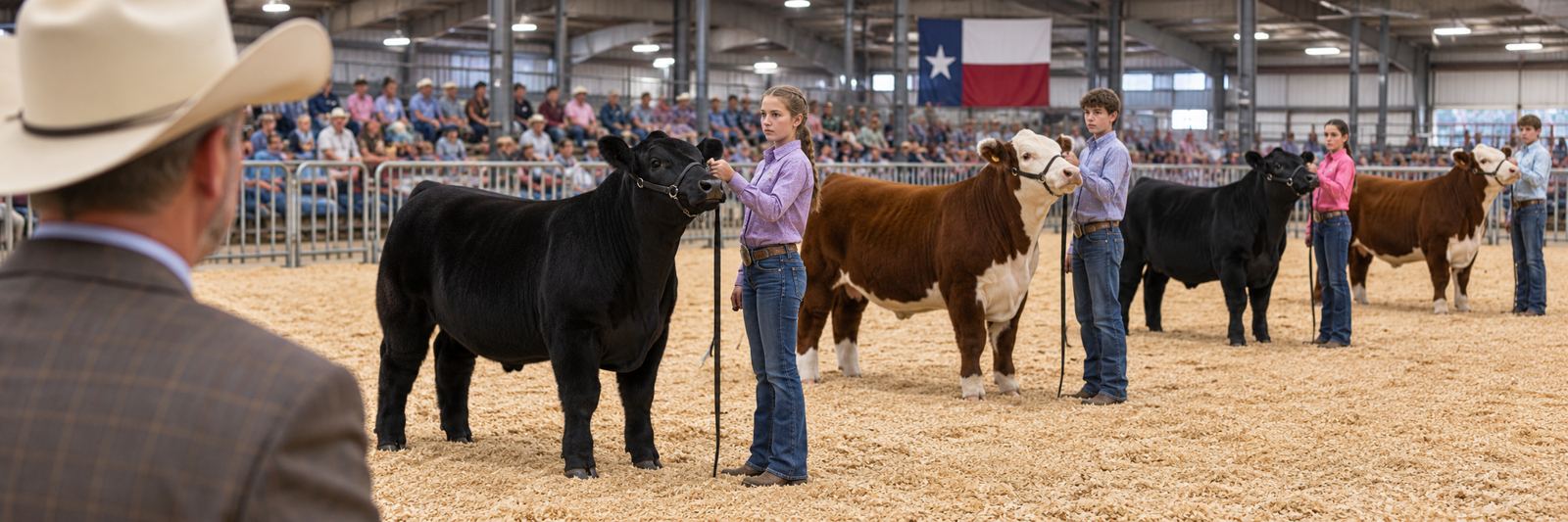
A good buyer thank-you note is short, handwritten, specific and sent fast. That's the whole recipe. If it names the buyer correctly, mentions your animal and says one true thing about what you learned, it will beat nine out of ten notes that land on that desk.
Here's what most juniors don't realize: the buyer already forgot half of what happened at the sale. Bidding is fast, the auctioneer talks like a leaf blower, and the person who raised a hand for your steer was also trying to find the barbecue line. Your note is the part they remember. It's also the part that decides whether they raise a hand again for the next kid.
What a buyer actually wants to read
Buyers at junior sales aren't buying a steer in any normal business sense. They're backing a young person. The note that works tells them their money did something. Extension offices that coach exhibitors, including Michigan State University Extension's page on thank-you notes for 4-H livestock auction buyers, put heavy weight on this step, and most county programs treat it as part of the project, not an extra.
Think about what you'd want to hear if you were the one writing the check: that someone noticed, that you know who they are, and that the kid on the other end learned something. Three sentences can carry all of that. Long notes tend to get skimmed. Short, personal ones tend to get taped to the shop wall.
A simple structure that works
- Greeting by name. Use the name the buyer or business wants to be called. If you're not sure, ask your sale committee or ag teacher for the buyer list.
- The thank-you, in your own words. Say it plainly. "Thank you for supporting my steer at the junior livestock sale."
- Something specific. Name the animal, the project, or a moment from the ring.
- What you learned or what the support means. One true sentence beats three polished ones.
- What you'll do with it. Savings, the next project, tuition, equipment. Keep it honest.
- A closing and your full name. Add your club or chapter. Include a photo if your program allows it.
Sample wording you can steal and make your own
Don't copy these word for word. A buyer who gets the same note as the business next door will figure it out, and then you've got a problem. Use them as scaffolding.
Dear Mr. and Mrs. Alvarez,
Thank you for bidding on my steer, Biscuit, at the junior livestock sale. When the bidding got going, my hands were shaking more than my steer's tail. I've spent months learning how to feed, rinse and walk him, and your support made that work feel like it counted.
Part of my earnings will go into my college savings and part will go toward next season's project. I learned a lot about patience, and about getting up before the sun. I hope you'll come see the barn sometime.
Sincerely, Maya Torres, Cedar Creek FFA
Now a short version for a business buyer:
Dear Hartley Feed & Supply,
Thank you for your support of my project at the junior livestock sale. Your business has been part of my feed bucket for months, and it means a lot that you backed my steer on sale day. I'll stop by to say thanks in person after school this week.
Respectfully, Jordan Ellis, 4-H
Notice there's no flattery pile-on and no "I will work hard to be worthy of your generosity." Nobody talks like that unless a grandmother is holding a pen over their shoulder.
The checklist before you seal the envelope
- Names spelled correctly, including the business name and any "Inc." or "&" the buyer uses.
- Handwritten in blue or black ink, legible, no cross-outs. Print it first if your handwriting runs like a tractor tire track.
- One note per buyer. Group buyers and add-on contributors each get their own mention.
- Mailed or hand-delivered promptly, and within whatever deadline your sale committee sets.
- Return address on the envelope, plus a photo of you with the animal if the rules allow.
- No request for next season's purchase. A thank-you isn't a pitch.
- Someone else proofread it. A parent, a teacher, or a friend with a red pen and no mercy.
- Typing a form letter. It looks like it came from a lawn-care mailer.
- Mentioning the price. Don't write about the number. Thank them for the support.
- Waiting too long. Notes written weeks after the sale read like a chore, and the note you meant to write on Sunday has a way of living in the truck door pocket until spring. Write them while the barn dust is still on your boots.
- Forgetting the small buyer. The person who added to the total counts as much as the high bidder.
- Letting a parent write it. Buyers can tell, and a parent's cursive makes a 14-year-old's voice disappear.
Beyond the note
A note is the minimum, and the bidders who didn't win deserve one too. Several extension programs encourage thanking everyone who bid, since a sale doesn't work without competing hands in the air. An Ohio county extension page on contacting livestock sale buyers goes further and suggests that rather than gifts, visiting the buyer's business or mailing a card is the better move, since buyers can be flooded with gifts during the sale. It also says not to ask to buy your animal back afterward.
Pair the note with a visit when you can. Walk into the feed store in your clean boots, say thank you to the owner's face, and shake a hand. If you're still working on the nerves part of that, the same steadiness you built in the show ring carries over, and learning to answer a judge's questions without freezing is basically the same skill.
Mistakes that make a note forgettable
Fit it into the rest of your project
Sale-day manners start well before the note. How you stand at the sale, who you thank in the ring, and who you speak to afterward are covered in junior livestock premium sale etiquette for exhibitors. Keeping a running list of every buyer, add-on and supporter in your record book is easier than rebuilding it from memory, and a good beef project record book has a place for it. And if you want to widen the circle of people who'd want to back you, asking local businesses to support your steer at the sale is where the next season's list starts.
Follow your own fair's rule book and your ag teacher or extension agent on deadlines, how thank-you notes are collected, and any rules on contacting buyers. Some sales collect notes at the office; others expect you to deliver them yourself. Ask early, so you aren't asking in the parking lot.
Quick answers
How soon should I send a thank-you note after a livestock sale?
As soon as you can, ideally within the first week, and by any deadline your sale committee sets. Notes written while the sale is fresh sound warmer and take less time to write.
Should I write a note to a buyer who didn't win the bid?
Yes, if you know who they were. Bidders keep the price up, and a short note to them is one of the best habits a junior can build. If you don't have names, ask your sale committee or ag teacher.
Can I send a thank-you note by email or text?
A handwritten note is the standard, and it stands out because so few kids send one. Email or social media works as a quick follow-up, but it shouldn't replace the card unless your program says otherwise.