Junior Showmanship, 4-H & FFA Steers
Junior Livestock Premium Sale Etiquette for Exhibitors
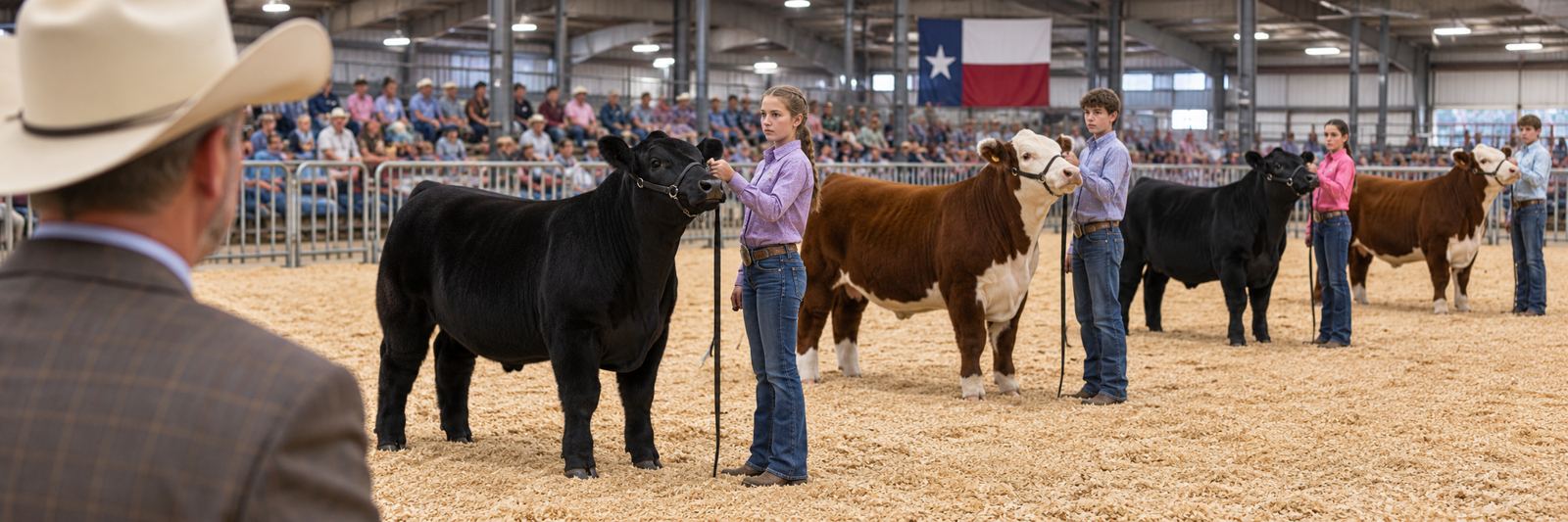
The sale is the one part of the show where somebody pays you for months of feed, work and early mornings. It is also the part where your steer, who behaved perfectly all week, decides to study the ceiling lights during his big moment. You cannot control the steer. You can control everything else, and that is where good manners earn their keep.
Premium sale etiquette is mostly the old-fashioned kind: show up on time, dress neatly, stand tall, shake hands, look people in the eye, keep your animal under control, and say thank you often. Buyers are businesses, families and neighbors who are choosing to support kids. They remember who treated them well, and they decide whether to come back.
Every sale runs a little differently, so read your sale rules and listen to the sale committee, your ag teacher and your 4-H or FFA leader. The basics below work almost everywhere.
Before the sale: the groundwork
The sale begins long before the auctioneer opens his mouth. Oklahoma State Extension's potential buyers tip sheet advises youth to start early in identifying buyers, to contact several of them well ahead of the show, to practice what they will say with a parent or club leader, and to meet in person with a handshake when possible. It also suggests inviting each buyer to attend the sale. That is solid advice, and it works for any sale.
- Make a list of past supporters, family contacts and local businesses, and ask an adult before approaching a business you do not know
- Introduce yourself, tell them what you raised and what you learned, and invite them to the sale
- Learn how buyers register, since some sales require it
- Know the sale order, your lot number and when you need to be ready
For more on this part, see how to ask local businesses to support your steer at the sale.
Sale day: appearance and preparation
Your steer should be clean, calm and set up. You should be too. Wear what your sale or club asks for, which is often show clothes or clean, neat western wear, with a tucked shirt and tidy boots. What to wear in the showmanship ring is a good starting point. Skip the dirty hat and the stained shirt you wore to scoop manure the night before.
- Arrive early and check in with the sale staff
- Give your steer a last walk, a drink if the rules allow, and a quick brush
- Have your halter, brush and show stick ready
- Silence your phone. Nobody wants a ringtone in the middle of the bidding
- Use the restroom. This is not a joke
In the sale ring
When your name is called, walk in with confidence. Keep your steer moving smoothly and stand where the ring staff tells you. Show him the way you did in the showmanship ring, set up, calm and facing the right direction. Here is the checklist:
- Enter with your head up and your shoulders back
- Keep one eye on your steer and one on the auctioneer or ring staff
- Follow the instructions of ring men, the auctioneer and the sale manager
- Smile, even if you are nervous, and face the crowd when you can
- Stay quiet and still while bidding goes on. Do not wave, shout or poke the buyer
- Keep your steer under control, and never yank, hit or jerk the halter
- When the sale is done, thank the auctioneer and buyer with a nod or a wave if that is the custom, and walk out calmly
The auctioneer sets the pace. A fast-talking auctioneer can sound like a speeding chainsaw, but you do not need to understand a word of it. If the fast talk has you curious, there is a farm.FM cowboy poem called Auction Gone Wild, and a tongue-in-cheek piece on reverse auctioneers, where the bidding goes down instead of up. Neither will help you at the sale, but both will make the wait in line shorter. A real sale only works one direction, and your steer would like it to go up.
If your steer misbehaves
It happens. A steer might balk, back up, swing his head or refuse to stand still. Stay calm, keep a firm and kind hold and use your training. Nobody expects perfection. Judges and buyers have seen steers do all kinds of things, and a kid who handles a bad moment with grace often wins more respect than one with a perfect animal. If the steer is out of control, take direction from the ring staff.
Meeting and thanking buyers
This is the part that matters most for future sales and for your own character. Thank every buyer, not just the biggest one.
- Shake hands and say thank you in person. Look the buyer in the eye, smile and use their name if you know it
- Thank bidders too. Someone who bid and did not win helped drive the price, and they are worth a short thank-you note
- Introduce yourself and your project. A sentence or two is plenty: "Thank you for supporting my steer. I learned a lot about feeding and showing cattle."
- Offer a photo if the sale allows. Many buyers like having one with their animal
- Do not discuss money. Never ask what a buyer paid, complain about the price, or compare your sale to someone else's
Follow up with a written note soon after the sale. A handwritten note stands out far more than a text, and writing a buyer thank-you note that gets noticed shows you how. Your sale or club may also have rules about what buyers receive, such as a photo, a ribbon or processing details, so check with your leader.
Behavior with other exhibitors and the crowd
- Cheer for the kids ahead of you and behind you, whatever the animal brings
- Do not complain about your own result in the ring or the crowd
- Do not gossip about buyers or prices, in person or online
- Be gracious in a good result and a tough one. Sportsmanship in the show ring applies in the sale ring too
- Keep your family in check. Parents who coach from the rail or argue with the committee make everyone uncomfortable
What to avoid
- Showing up late or missing your turn in the lineup
- Chewing gum, slouching, or looking at your phone in the ring
- Waving or calling out to buyers during the bidding
- Leaving without thanking the people who supported you
- Pestering buyers for add-ons or extra support. If your sale has a policy on add-ons, let the committee handle it
- Talking back to officials
If sale-day nerves are a worry, help for kids handling show ring pressure covers some simple tricks.
Quick answers
Should I talk to the buyer in the ring?
Not during bidding. Focus on your steer and follow the ring staff. After the sale, meet the buyer, shake hands and thank them, as long as your sale allows it.
What if nobody bids or the price is lower than I hoped?
It happens, and it is not a reflection of your effort. Stay polite, thank the buyers, and talk to your ag teacher or leader about next steps. Learning to take a disappointment with grace is part of the project.
Do I have to send thank-you notes?
Many sales and clubs require them, and even if yours does not, you should. A short, specific, handwritten note is one of the best things a junior exhibitor can do, because buyers remember it.