Junior Showmanship, 4-H & FFA Steers
Best Breeds and Crosses for a Market Steer Project
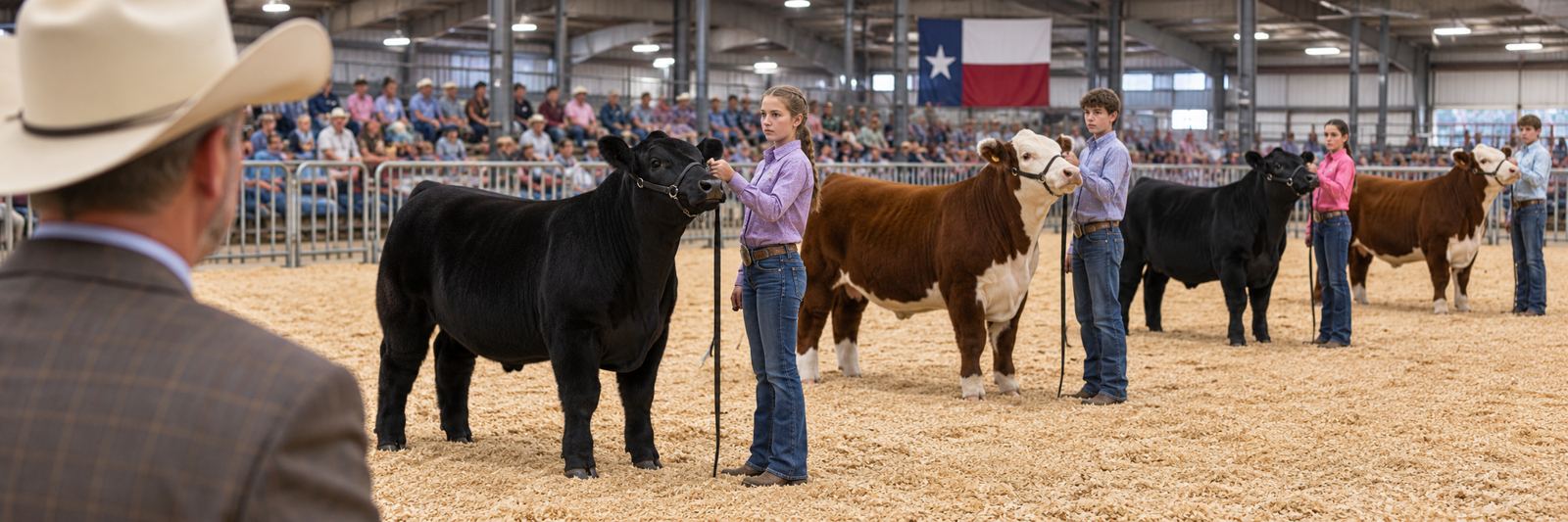
There isn't one best breed for a market steer. Angus, Hereford, Shorthorn, Simmental, Charolais, Maine-Anjou, Limousin and the many crosses among them all win at junior shows. What matters more is whether the individual calf is sound, has the muscle and finish your show rewards and fits your weight limits. The breed is a starting point, not a guarantee.
Ask five exhibitors which breed is best and you'll get six answers and a story about a steer from way back. Barn-aisle opinions run strong, and most of them come from whatever the person raised last. So let's look at what each group of breeds generally brings, and what to check in your own area.
Why crosses are so common in the market ring
Most steers in market classes aren't purebreds. Many are crossbreds, because crossing breeds can combine growth, muscle and finish in a single animal. The common types you'll hear about include Angus-based crosses, Simmental-influenced crosses, Chianina-influenced crosses, Maine-Anjou crosses and various black or smoky-colored cattle. These nicknames vary by region and by show, so ask what a seller means by them. Terms get tossed around at sales as if everyone had agreed on the definition, and nobody did.
A good crossbred steer can win, and a good purebred steer can win. Neither cuts you any slack on structure or temperament.
Breed groups and what they generally bring
Extension publications such as Clemson's youth livestock beef projects guide sort common beef breeds into groups: British breeds such as Angus, Red Angus, Hereford and Shorthorn; Continental breeds such as Charolais, Gelbvieh, Maine-Anjou, Simmental and Limousin; American breeds such as Brahman, Brangus, Santa Gertrudis and Beefmaster; and composites such as SimAngus. These are the general differences people mention, but individual animals vary a lot.
| Group | Typical traits people look for | Things to watch |
|---|---|---|
| British (Angus, Hereford, Shorthorn) | Often moderate frame, good finish potential, generally easy to work with | Can finish early, so weight management matters |
| Continental (Charolais, Simmental, Maine-Anjou, Limousin) | Often larger frame and strong muscle | May need more time to finish and can run heavy |
| American (Brahman-influenced, Santa Gertrudis, Beefmaster) | Heat tolerance, popular in warmer regions | Not accepted in every class or show; temperament varies |
| Composites and crosses | Blend of traits, wide variety in the ring | Quality varies, so check the individual calf |
What matters more than breed
Your show's rules and classes
Some shows divide market steers by breed type, some use weight classes, and some have separate divisions for specific breeds. Others don't allow certain crosses or percentages in particular classes. Check the rule book and ask your ag teacher or extension agent before you buy. A great-looking steer that doesn't qualify for the class you planned is a lesson you don't need.
Your region and climate
Hot, humid parts of the Southern Plains and Southeast may favor cattle that handle heat well, and some families there use Brahman-influenced calves in the right classes. In the Northern Plains and upper Midwest, British and Continental crosses are common, and hair growth in cold weather is easier. Ask local exhibitors what has done well on your show circuit.
Time to finish
Different calves reach target weight and finish at different rates. A late-maturing, big-framed steer may need a long feeding period to be ready, while an early-maturing calf can get fat and heavy sooner than you want. Match the calf's likely growth to the calendar in when to buy a show steer for fall or spring shows, and learn how to manage the scale in how to hit your steer's target weight by show day.
Temperament
Calm and cooperative cattle show better. Breeds don't have a monopoly on gentle or wild calves. The only way to know is to watch the calf and ask about his handling.
Your experience level
If you're new, pick a calf that's forgiving. A steer with a quiet attitude and sound structure will let you learn showmanship and feeding without a daily wrestling match. You can chase the extreme muscle or frame later.
How to choose for your first project
- Read your show's rules first. Look for breed, percentage, weight and ID requirements.
- Ask successful local exhibitors and your ag teacher. Which calves have done well on your circuit, and why?
- Visit a couple of breeders. See the cows if you can. Mother cows tell you a lot about the calf.
- Judge the individual. Use the checklist in what to look for in a prospect show calf.
- Don't skip temperament. You'll live with it every day for months.
Mistakes to avoid
- Buying a breed because of a single champion. One steer winning a big show doesn't make his breed right for you. It makes him a good steer.
- Taking a seller's nickname for a cross at face value. Ask for the actual breeding, including the sire and dam breeds if known.
- Ignoring the cost of a long feeding period. A calf that needs more time needs more feed. Look at what it really costs to raise a show steer.
- Letting color decide. Color is a fashion. It changes. A black calf and a red calf with equal structure are equal.
- Forgetting your own size and strength. A big steer is a big responsibility for a small exhibitor.
Where to learn more
Breed associations often run junior programs with resources for exhibitors. The National Junior Hereford Association is one example, and most major breeds have something similar. If you're curious about one breed, contact the association or a local breeder and ask to see their cattle in person. Many are happy to talk to young exhibitors, particularly the ones who show up with good questions.
Quick answers
Is a crossbred steer better than a purebred for showing?
Not automatically. Crossbreds are very common in market classes because they can combine traits, but a sound purebred with good muscle and finish can win too. Judge the calf, not the label.
What breed is easiest for a beginner?
There's no breed that guarantees an easy steer. Look for a calm, sound calf with a modest frame that fits your show's weight range, and ask your ag teacher what has worked for beginners in your area.
Can I show a Brahman-cross steer at any show?
No, rules vary by show and class. Some shows welcome Brahman-influenced cattle and some limit the percentage or put them in separate classes, so check the rule book before you buy.