Junior Showmanship, 4-H & FFA Steers
Ethics in the Show Ring: Rules Every Junior Should Know
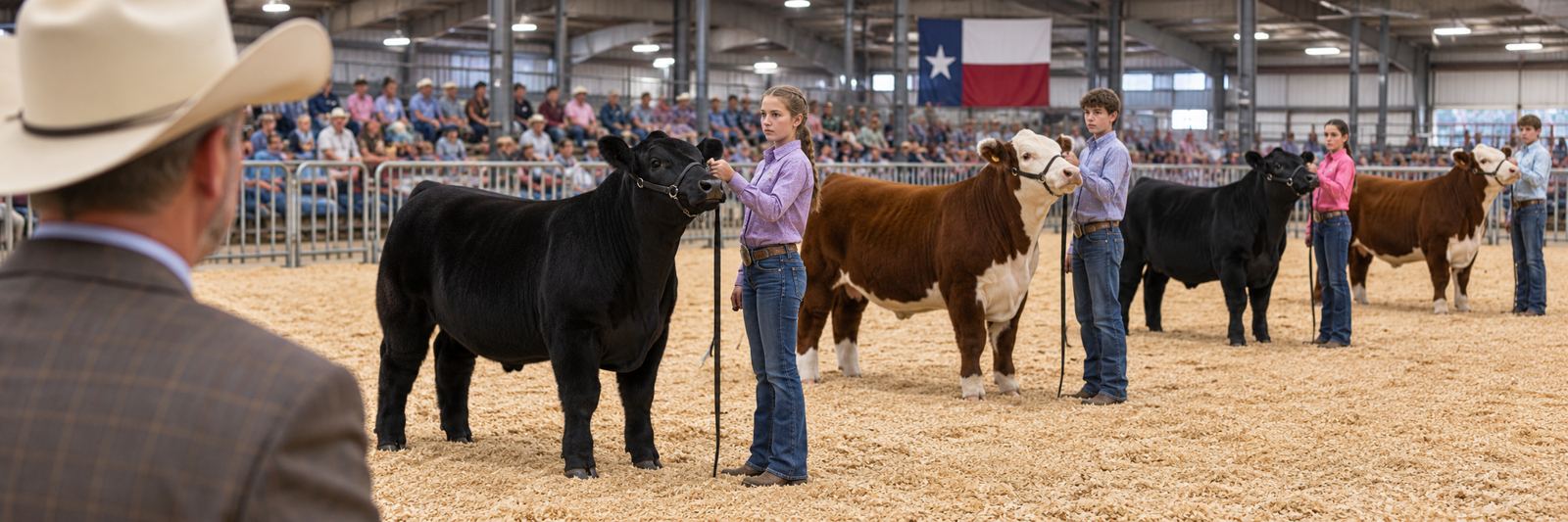
A show ring has a lot of rules, and most of them boil down to two promises. First, the animal you bring is the animal you raised, in the condition nature and good care left it. Second, you treat that animal like a living creature that depends on you, not like a prop. Break either promise and you are in ethics territory, which is a polite way of saying you are about to have a long talk with a show committee.
Ethics rules exist because junior shows are about kids learning to raise livestock honestly. They also protect the animals, the other exhibitors and the buyers at the sale. Most juniors will never come close to a violation. But "most" is not "all," so it helps to know where the lines are before somebody tells you the hard way.
Your own fair or show rule book is the final word, and your ag teacher or extension agent can explain anything that is unclear. Here is the plain-language version.
The big idea: honesty and good sportsmanship
The National Code of Show Ring Ethics, which many county and state shows adopt or adapt, begins with a simple expectation: exhibitors should act with honesty and good sportsmanship at all times. It applies to the whole show, and it asks youth leaders to set the example. Adults are not off the hook. Parents, fitters and trainers can all be held responsible for what happens to an animal.
That is the whole philosophy. If you would be embarrassed to explain it to the judge in plain language, it probably crosses the line.
What usually counts as cheating
Misrepresenting the animal or the project
- Giving wrong information about ownership, age, or how long you have owned the animal
- Showing an animal that is not eligible for your class or that you did not own and care for as the rules require
- Tampering with ID tags, tattoos or DNA samples, or swapping animals
- Having an adult do the work that the rules say the exhibitor must do, such as the care and grooming at the show
If you are unsure what is allowed with ownership and ID, the guidance in ear tags, tattoos and show calf ID rules and in 4-H and FFA livestock project eligibility rules is a good place to start.
Altering how the animal looks or performs
Shows ban procedures, injections or applications that change an animal's natural appearance or performance, with limited exceptions such as veterinary care for health reasons. Fitting products and hair adhesives are common in the show barn, and what they may do is spelled out by each show. Shortcuts that go beyond grooming are where kids get into trouble. When in doubt, ask before you spray, not after.
Drugs and medications
Animals headed toward the food chain must be free of violative residues, and shows can test. Giving something to calm, relieve pain in, or otherwise change an animal for the ring is not allowed under most rule books, and a positive test can be treated as evidence that something was given. The details are laid out in drug and residue rules for show cattle. Legitimate treatment of a sick animal under a vet's direction is the right thing, and you should disclose it as your show requires.
Interfering with fairness
- Arguing with judges or officials, or getting someone to do it for you
- Helping someone else break the rules, or knowing about it and saying nothing
- Making fun of a classmate's animal or showmanship
The code treats conspiring to violate rules the same as breaking them. "I only held the bucket" does not play well in a committee meeting.
What counts as mistreatment
Animal welfare rules sit right next to the ethics rules, and they are not up for debate. In general, mistreatment includes:
- Hitting an animal in a way meant to cause pain or swelling, or using devices that shock or injure
- Withholding water or feed to change how an animal looks or weighs
- Ignoring an animal that is sick, injured, overheated or exhausted
- Rough handling in the ring, in the wash rack or in the trailer
- Showing an animal that is lame, ill or in distress rather than pulling it
Showmanship is partly about keeping an animal calm and comfortable, and a good judge notices who is gentle and who is not. A steer jerked around by the halter is not impressing anyone, and the steer will remember.
Compassion also happens to be a very old ranching value. Even a rodeo-country writer will tell you animal care starts with respect, which is the point of this farm.FM piece on ethical ranching and treating bulls with compassion. Nobody has ever won a buckle by being mean to something that outweighs them by a thousand pounds.
Gray areas and how to handle them
Not every question has an obvious answer. What if a friend offers to loan you a product? What if a relative says "everybody does it"? Use a simple three-question test.
- Is it in the rule book? If the rule book says no, the answer is no.
- Would I do it in front of the judge? If you would hide it, stop.
- Is it good for the animal? If it only helps your placing, that is a bad sign.
Then ask. Your ag teacher, 4-H leader or extension agent would rather answer ten questions than hear about one violation. Asking is not a sign you are up to something. It is a sign you are smart.
Parents and mentors: a word to the grown-ups
The pressure to win can push adults further than kids. Parents, relatives and hired fitters share the responsibility for the animal's condition under many rules. If you are a parent, model what you want: follow the rule book, keep the records, congratulate the kid who beat yours, and keep your comments about the judge for the drive home with the windows up. Shows are better, and kids are better, when the grown-ups behave. For a related look at the human side, see sportsmanship in the show ring.
Many shows also ask exhibitors and parents to sign an ethics statement or integrity pledge. Read it, do not just sign it, and keep a copy.
What happens when someone breaks the rules
Consequences vary, but under the national code, violators can lose premiums, awards and sale proceeds, and may be barred from future shows. Names can be published, and conduct that is also against the law can be referred to law enforcement. For a junior, the lasting damage is to reputation, and that follows a kid to the next show and the next county.
Quick answers
Is it cheating to have my parents help me at the show?
Help with loading, safety and holding a gate is normal, but many rules require the exhibitor to do the care and grooming. Check your rule book, and if something is unclear, ask your ag teacher before show day.
What should I do if I see someone breaking the rules?
Do not confront them. Tell your ag teacher, 4-H leader or a show official calmly and privately, and let them handle it. Animal welfare concerns should be reported right away.
Do ethics rules apply to grooming products?
Yes, in many shows. Products that only clean and shape hair are usually fine, while anything that changes the natural structure of the animal is restricted. Ask your show before you buy, not after.