Junior Showmanship, 4-H & FFA Steers
Sportsmanship in the Show Ring: Winning and Losing Gracefully
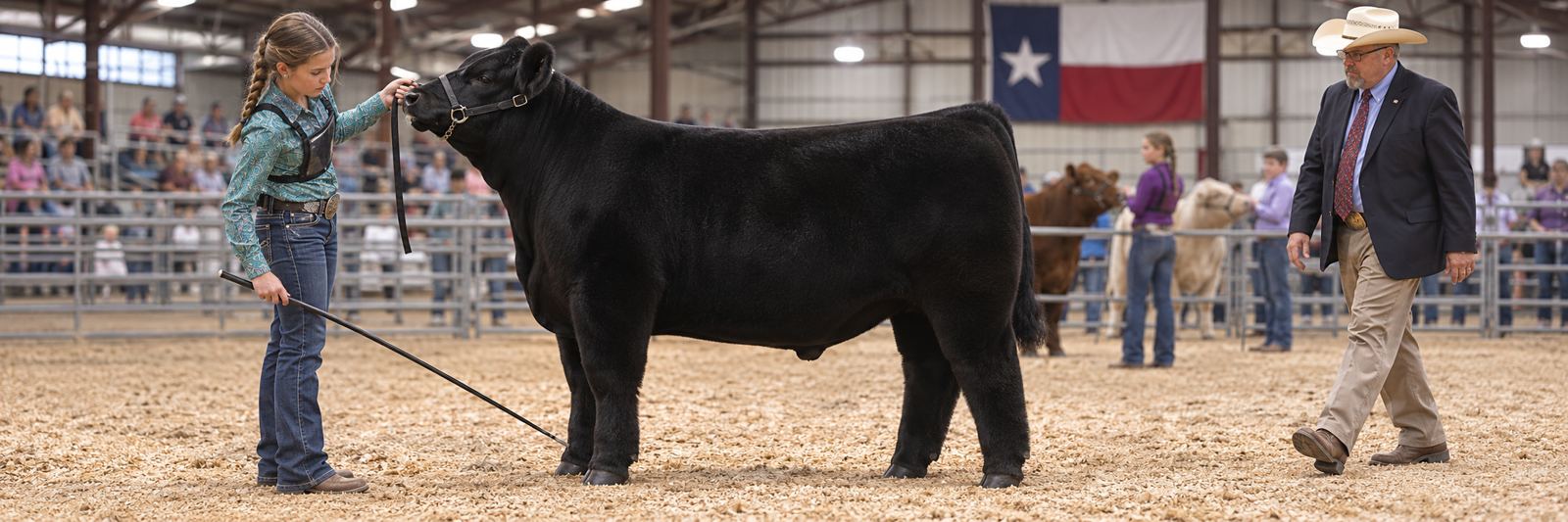
Good sportsmanship in the show ring comes down to three habits: compete honestly, treat people well, and take the result with grace. The ribbon fades. The way you handled it gets remembered by judges, buyers, other families and the kid in the next pen who is still deciding what kind of exhibitor to be.
Every barn has a family who has it figured out. They shake hands after a class, help a stranger find a lost halter and clap for the kid who beat them. They're also usually the ones who win more than their share over time, because they're the ones still enjoying it. It's hard to compete well when you're mad at the whole county.
What sportsmanship actually means
A Rutgers 4-H animal science post on sportsmanship as a priority describes it as competing fairly and honestly, treating others courteously and accepting outcomes with grace. It says to stay gracious whether you win or lose, congratulate others, focus on what you learn instead of the ribbon, and respect yourself, your competitors, the judges, the officials and the rules. It also says to take responsibility for your mistakes and use feedback to get better.
None of that is complicated. It's just hard to do when you've been up since four, your steer stepped on your boot and the kid next to you sold a calf for a price that sounded like a typo.
Before the class
- Know the rules. Read your fair's rule book. Honest competition starts with knowing what's allowed, and a surprise disqualification is rarely the judge's fault. For the big-picture rules, see ethics in the show ring: rules every junior should know.
- Be on time and ready. Making the ring steward chase you down is poor manners.
- Be kind in the holding pen. Give other exhibitors room. Don't crowd someone's steer so yours looks better.
- Wish people luck. It costs nothing, and it relaxes you too.
In the ring
- Show your animal, not the judge's mood. Pay attention to the judge, keep your eyes on the animal and don't try to read the room.
- Don't block, bump or distract. Keep your animal where the judge can see it and where it isn't in someone else's way.
- Handle surprises politely. If your steer acts up, deal with it calmly. If somebody else's does, give them room and don't smirk.
- Keep showing until the judge says you're done. Slumping because you think you lost tells everyone watching exactly what kind of week you're having.
A quick refresher on what judges look for is in showmanship basics: what judges look for in a junior, and it's worth remembering that most of it has nothing to do with the placing and everything to do with attitude.
Winning gracefully
When you win, smile, say thank you and shake hands. Congratulate the runner-up. Give some credit out loud to the people who helped, including parents, teachers, club leaders and the sale committee. Skip the victory lap.
Bragging looks different in a small county than it does on a screen. Everybody knows everybody. The kid you out-placed this weekend is the one who'll be holding your steer's halter next month when you need a hand at the chute. The Rutgers post says plainly not to brag or complain, and that goes double on social media.
Losing gracefully
This one is harder, and it's where character shows up. A few ideas for a rough class:
- Finish the class with your head up and your animal under control.
- Congratulate the winners. Mean it, even if it takes a couple of breaths.
- Take a minute alone. A walk behind the barn beats a meltdown on the rail.
- Ask the judge for feedback where your show's format allows it. Ask politely and with real curiosity, not as an argument.
- Write down what you'd change. Turn the sting into a to-do list.
- Don't blame the steer, the judge, the lighting or the guy who parked next to you.
A University of California 4-H blog about youth emotional health in competitive events suggests talking through hard moments in advance, such as how to respond to losing and how to congratulate a winner. Practicing the words ahead of time makes them easier when your face is hot and your boots are full of sand.
Parents and the rail
Parents set the tone, whether they mean to or not. Kids copy what they see on the rail: the grumbling, the eye-rolling and the muttering about the judge. Remember that your child is listening, and so is every other child. The best parent move is to clap for everyone, say "good job" before anything else and save the analysis for the truck.
- No coaching from the rail during a class.
- No arguing with the judge or officials. If you have a real concern, take it to the superintendent, ag teacher or extension agent through the proper channel in your rule book.
- No gossip about other exhibitors or their animals.
- No comparing your kid's placing to somebody else's, ever.
For more on where parents help and where they hold back, see a parent's guide to the 4-H and FFA show barn.
Beyond the ring: the stuff that counts
Good sportsmanship extends to the people behind the scenes. Thank the judge, the ring steward and the volunteers who spent a long weekend wrangling a barn full of teenagers. Thank your buyers too, since junior livestock premium sale etiquette starts with gratitude. Pick up trash. Help a younger exhibitor tie a knot. Offer to hold a neighbor's steer while they run to the restroom.
These are the moments people remember about you. Judges notice, buyers notice and, believe it or not, the rival you shook hands with this weekend might be the one writing you a letter for a scholarship down the road.
If nerves tend to boil over into grumpiness, look at helping kids handle show ring nerves. Frustration is often just fear wearing boots.
Quick answers
How do I handle losing a class I thought I should have won?
Take a breath, congratulate the winners and keep your reaction private until you've cooled off. Then ask for feedback if your show allows it and use it to plan your next steps. Judges have different views, and one placing isn't a verdict on your whole project.
What should I do if I think a rule was broken?
Don't confront anyone in the ring or the barn. Take your concern to your ag teacher, extension agent or the show superintendent, and follow the process in your fair's rule book. Calm, factual and private is always the right approach.
Is it okay to celebrate a win?
Absolutely. Smile, say thanks, shake hands and take your photo. Just keep it gracious and share the credit with the people who helped you get there.