Junior Showmanship, 4-H & FFA Steers
How to Start a 4-H Beef Project From Scratch
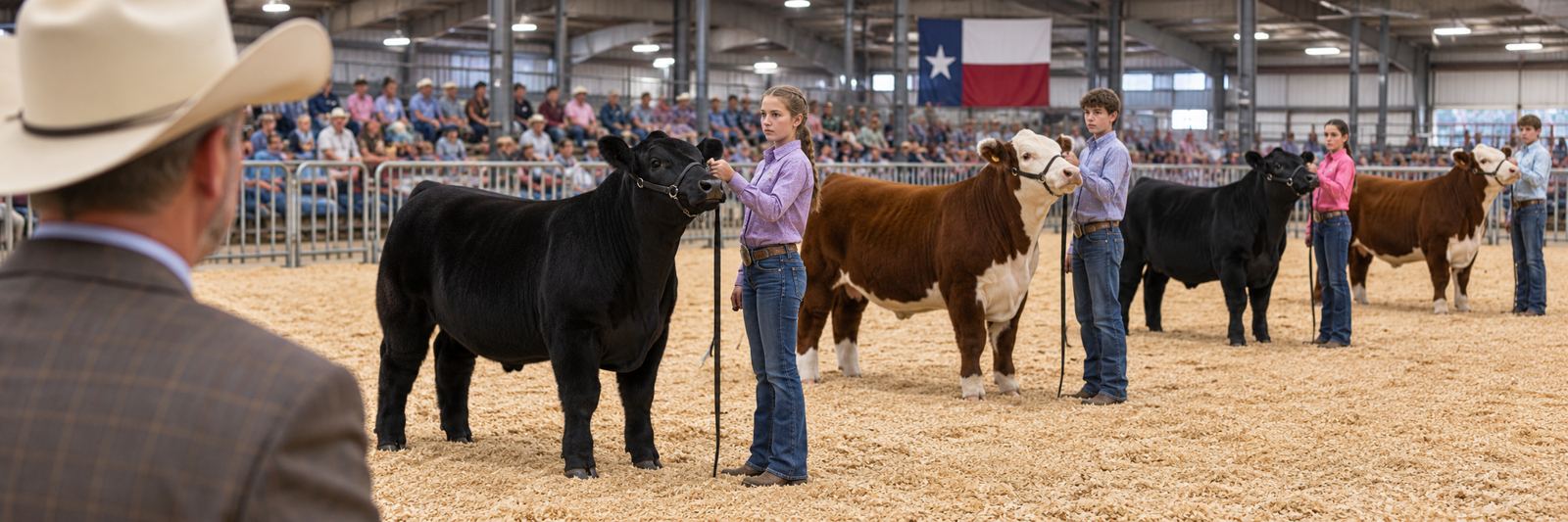
Starting a 4-H beef project takes about ten steps: join a club, learn your county's rules, choose a project type, set up a place for the animal, make a budget, buy a calf, build a health and feeding plan, train, keep records and show. None of it is hard on its own. The trouble is that it all lands at once, so doing it in order saves you from standing in a feed store aisle with a rope halter and no idea which size.
You don't need to grow up on a ranch. Plenty of beef project kids come from town, rent a barn stall from a neighbor and show up at the first meeting not knowing which end of the calf bites. Everyone starts somewhere, and the folks in the barn tend to remember that.
Step 1: Contact your county 4-H office or club
Your local extension office can tell you which clubs have beef projects, when enrollment opens and who the leaders are. Many states have an online system where you sign up and choose projects. Some also require a project orientation or a safety session. A club leader or an ag teacher can give you the real picture of what's involved, including what dates matter. University programs such as the UNH Extension resource on a first 4-H beef project are written for exactly this stage and are worth a read before the first meeting.
Step 2: Learn the rules and dates
Every county and state sets its own rules for enrollment, ownership, tagging, weights and classes. Ask for the current rule book and mark the deadlines on a calendar. Eligibility questions, like age and membership, are covered in 4-H and FFA livestock project eligibility rules. If you're a parent reading this, expect the paperwork to be your job more than the calf is.
Step 3: Choose the kind of project
Most families choose between a market steer and a breeding heifer. A market animal is raised to a target weight and sold at the end of the project. A breeding heifer is kept longer and learns different skills. There are also smaller beginner pathways in some programs, like exploring cattle without owning one. If you're stuck, market steer or heifer for a first show project helps you weigh them.
Step 4: Set up a place for the calf
A show calf needs a safe, clean place with shade, fresh water, feed storage and room to be led and tied. That can be a small barn lot, a pen with a shed or a rented stall. Check the fencing, the gates and the footing. Plan where you'll wash him, where you'll tie him and where you'll keep feed dry. And never tie to anything that isn't solid.
If you don't have space at home, ask whether your club, your school's ag program or a neighbor offers a place. Many successful projects live in barns that belong to someone else.
Step 5: Make a budget
Expect costs for the calf, feed, bedding, health care, equipment, entry fees and transportation. Prices depend on your region and the calf. Use ranges, ask local exhibitors what they actually spent, and add a cushion for surprises. A detailed breakdown is in what it really costs to raise a show steer. If the sale at the end helps pay the bills, great, but don't count on it as a sure thing when planning.
Step 6: Buy the calf
Buying a calf is its own project. Look for a sound, quiet, appropriately sized calf from a seller you trust, and confirm the age, weight and paperwork. Start with how to pick a show steer for your first 4-H project, and bring your ag teacher or leader along.
Step 7: Make a health and feeding plan
Talk to your veterinarian about vaccinations, parasite control and what the calf needs when he arrives. Ask your leader or extension agent about a feeding plan matched to your calf's age and weight. Many programs require Beef Quality Assurance training for youth, which teaches animal care and responsible handling. Show-ring rules on medications and residues are strict, so follow your show's rules and your veterinarian's direction. See youth Beef Quality Assurance for exhibitors for how that works.
Step 8: Train the calf and yourself
Give a new calf a few days to settle, then start training. The basics are haltering, tying, leading and standing, and they take patience. You'll learn too: how to hold a show stick, where to stand and what the judge wants to see. Begin with halter breaking a show calf step by step. Short daily sessions beat long weekend marathons, and calves don't care how much homework you have.
Step 9: Keep records
Start a record book on the first day. Write down what you pay, what you feed, weights, health events and what you learn. A tidy record book is part of most 4-H projects and often part of judging at the fair. The Missouri extension's beef project resources show how one state organizes learning around the project. For tips on staying organized, see keeping a beef project record book that wins.
Step 10: Get ready for the show
In the last few weeks, check your tag and entry paperwork, plan transport and pack a show box. Practice showmanship with a friend as the judge. On the day, arrive early, stay calm and be polite to everyone, including the person who just parked a trailer in your spot. Sportsmanship counts.
A rough timeline
| Stage | What to do |
|---|---|
| Months before buying | Join a club, read the rules, set a budget, prepare the pen |
| Buying window | Find and buy the calf, confirm tags and papers |
| First weeks | Let him settle, start health plan, begin halter work |
| Feeding period | Feed, weigh, train, keep records |
| Final weeks | Practice showmanship, pack gear, confirm entries |
| Show and after | Show, thank buyers, finish record book |
Common beginner mistakes
- Waiting too long to sign up and missing the deadline.
- Buying the calf before reading the rule book.
- Skipping practice because the calf "seems fine."
- Underestimating the daily chores. Cattle eat on Christmas, on test days and during the playoffs.
- Not asking for help. Your leader wants questions. That's the job.
Quick answers
How old do you have to be to start a 4-H beef project?
Age rules vary by state and county, and some programs have separate beginner pathways for younger members. Check with your county extension office for your local requirements.
Do I need land to do a 4-H beef project?
Not always, but you need a safe, suitable place to keep the animal. Many families use a small pen, a shed or a boarded stall, and some clubs or ag programs can help.
How long does a 4-H beef project last?
A market steer project commonly runs several months to most of a year, depending on when you buy and when the show is. A breeding project can last longer, so ask your leader about your options.