Junior Showmanship, 4-H & FFA Steers
Show Barn Survival: Funny Things Every Cattle Kid Learns
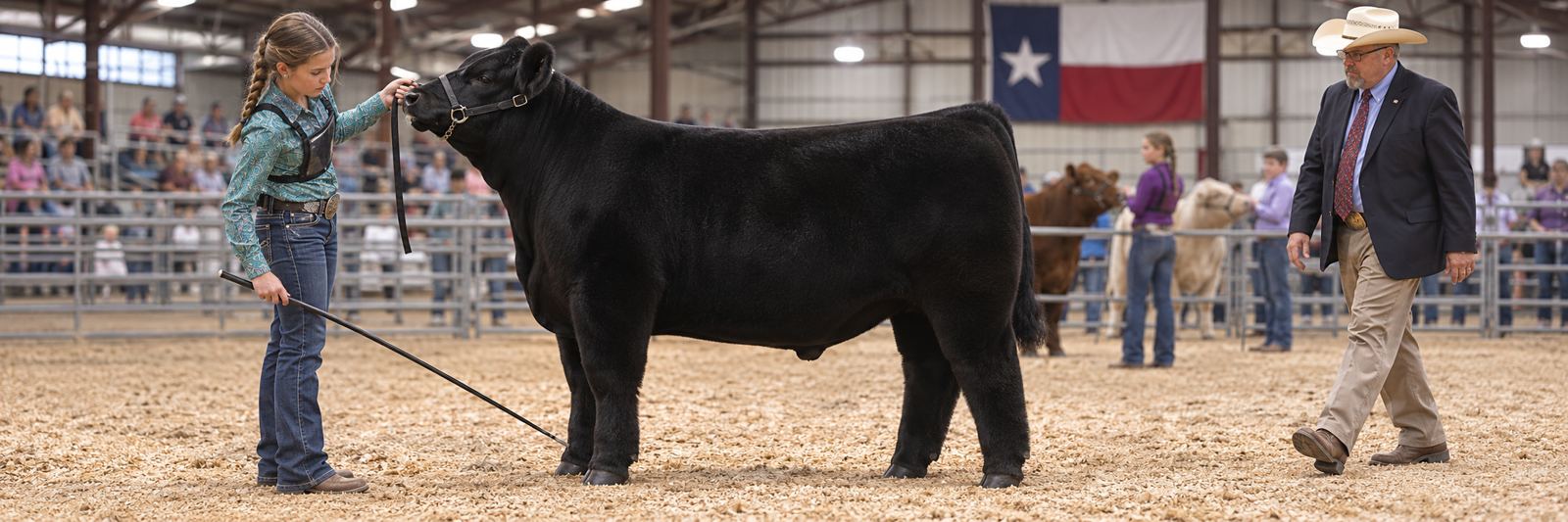
Every cattle kid learns the same lessons in the same order, usually the hard way. The steer will wait until you finish washing him to lie down in the one wet spot. The extension cord that was right here a minute ago is now in someone else's pen. And whatever you forgot at home is exactly what you need.
Show barn life is part chores, part sport and part group therapy. It's also where lifelong friendships and mildly alarming sleep schedules begin. Here's a field guide to the things nobody tells you before your first show, with a few real tips mixed in, because a good laugh and good barn habits aren't mutually exclusive.
The lessons, in the order you will learn them
Lesson one: the steer knows
He knows when you've just rinsed him. He knows when the photographer is coming. He knows which kid is wearing white pants. Cattle don't hold grudges, but they do seem to hold schedules, and the schedule says the second you're clean, he's not.
Real tip: Rinse and dry him as close to ring time as you reasonably can, keep him tied somewhere clean and keep your own expectations flexible. If you need a refresher, blowing and drying a show steer's hair and washing and conditioning a show steer's hair coat will help you work with his habits, not against them.
Lesson two: everything has a mysterious way of walking
Brushes, halters, clippers, scotch combs, one single glove. They don't get stolen, exactly. They migrate. Some barn mothers insist there's a second barn somewhere that only lost halters can find.
Real tip: Label everything with your name, in permanent marker, in at least two places. Keep a packing list in your show box, and run through it before you pull out of the driveway. The show season gear and show box checklist is a solid starting point. A zip tie, a roll of duct tape and a pocketknife (where permitted) will rescue most barn emergencies. The rest need a parent.
Lesson three: the fair has weather, and wildlife
County fairs attract three kinds of creatures: cattle, people and whatever else wandered in. If you ever feel like your barn is chaotic, there's a farm.FM piece called Squirrel Rodeo at the Fair, and the title alone explains a lot of county fair weekends. Fair life is unpredictable, and the best exhibitors learn to roll with it.
There's a point where you realize that a bird in the rafters, a stray cat and a sudden storm are just part of the program. Keep a poncho, a towel and a sense of humor in your truck.
Lesson four: hay has a long memory
Hay gets in your hair, your socks, your phone case, your sandwich and, eventually, your dreams. You'll find a stem in a pocket at Thanksgiving. It's simply the cost of doing business.
Hay and bedding also hold secrets, as farm.FM readers know from the story of a hay bale entering witness protection after seeing too much at the county fair. If that bale could talk, it'd say you should have swept the aisle yourself instead of waiting for a better-looking day. Keep your aisle clean, stack your bedding neatly and keep your feed in sealed bins so the mice don't gain weight.
Lesson five: sleep is a rumor
Show week sleep schedules are something like a rumor. You'll nap on a tack trunk, in a camp chair and once, memorably, on a bale you did not check for a wasp nest first. You will wake up cold at 4:30 a.m. and wonder how you got there.
Real tip: Sleep matters more than you think. Tired exhibitors make mistakes, and mistakes around cattle can get people hurt. Get as much rest as you can, eat real food and drink water. A show day morning routine for cattle exhibitors helps the early hours go smoother.
Lesson six: the hair is a whole career
You'll spend more time on a steer's hair than you've ever spent on your own. Clippers hum. Adhesive gets on things that shouldn't have adhesive on them. Someone will say, "I think he looks fine," while another person argues about the exact angle of a blow dryer for ten minutes.
Learn the basics and have patience. Clipping a show steer for beginners is a good first stop. Keep your cords out of walkways and out of water, check them for damage and never overload an outlet. The barn is a great place to learn, and a terrible place for an electrical fire.
Lesson seven: the cattle world is small
You'll end up friends with kids you've never met in towns you couldn't find on a map. The people in the next pen will lend you a brush, tell you about a hay supplier and cheer when you place well. They'll also be the first to roast you, kindly, when your steer eats your show shirt. Be the kid who helps. It pays back.
If the sportsmanship side of that interests you, sportsmanship in the show ring: winning and losing gracefully goes deeper.
A very short survival checklist
- Closed-toe boots, always. Barn floors don't care about your feelings.
- Label everything. If it can be lost, it will be.
- Bring snacks, water and a spare shirt.
- Learn the names of the volunteers, and thank them.
- Keep your voice calm and your movements slow around cattle. Cornell's small farms program reminds handlers to speak calmly and never run or chase animals.
- Follow your fair's rule book, and ask your ag teacher or extension agent when you're unsure.
The funniest lesson of all
Someday you'll look back on the lost halters, the 4 a.m. rinse and the steer who sat down in the middle of the ring, and you'll miss all of it. Probably not the 4 a.m. part. But the rest. Enjoy the people, take pictures and treat the animal well. That's what the whole thing is about.
Quick answers
What should every cattle kid keep in their show box?
Brushes, a comb, a spare halter and lead, towels, zip ties, duct tape, a first-aid kit, hand sanitizer and a labeled water bucket. Your club or ag teacher can share a full list for your show, and the rule book will tell you what's not allowed.
How do I keep a show steer clean at the barn?
Keep the pen bedding fresh, rinse as close to show time as practical, and don't let him lie in wet spots. Even then, he may choose chaos, so keep a towel and a good attitude handy.
Is it normal to be tired and a little goofy during show week?
Yes, it's common. Just protect your safety around the cattle: rest when you can, eat real meals and speak up if you're too tired to handle your animal.